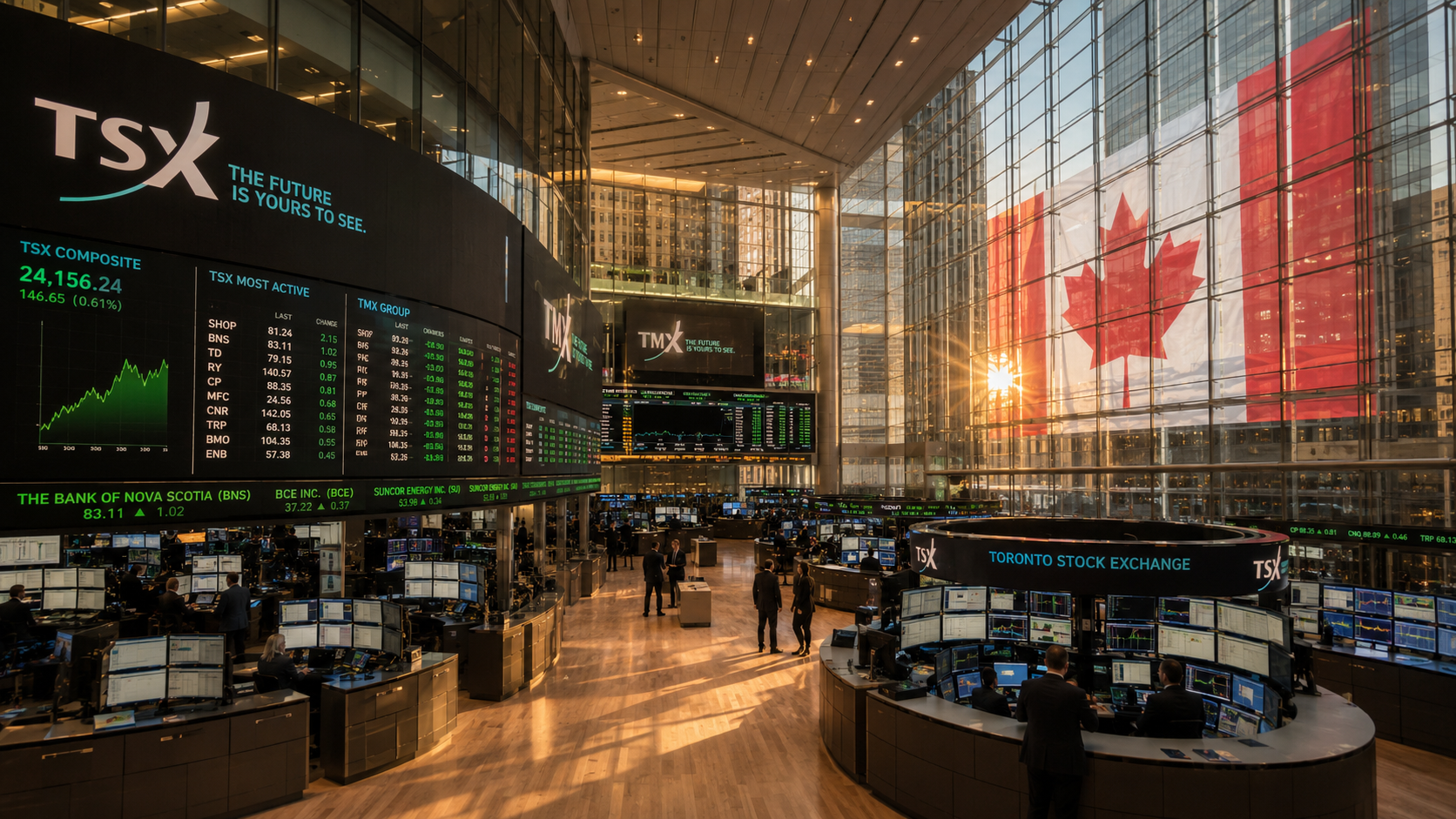


Canadian bank stocks moved higher on the TSX as a combination of geopolitical relief and renewed domestic political stability provided investors with reasons to add financial exposure. BMO Financial Group (TSX: BMO) gained 1.65%, Bank of Nova Scotia (TSX: BNS) climbed approximately 2.03%, and Royal Bank of Canada (TSX: RY) advanced 1.35%. TD Bank (TSX: TD) added 1.23%. The moves came as the TSX financials subgroup posted a 1.3% gain, one of the top-performing categories during Tuesday’s session.
The dual catalyst for bank stocks was the Strait of Hormuz reopening — which reduced stagflation risks that had weighed on interest rate expectations — and PM Mark Carney’s consolidation of a parliamentary majority. Carney secured the majority government status following a series of byelection wins and floor crossings, bringing the Liberals to 173 seats. For Canadian banks, a majority government reduces legislative uncertainty and increases the probability that key economic and trade policy decisions can be executed without coalition-style political friction. Analysts have been gradually lifting price targets on RBC, with the average now approaching CA$245.

The political stability factor matters for Canadian banks because the country’s ability to navigate the ongoing trade war with the United States has direct implications for credit quality, corporate lending, and consumer confidence. Carney’s majority government also increases the credibility of Canada’s trade diversification strategy, including a closer economic partnership with China on canola exports and a potential pipeline project connecting Alberta oil sands to the BC coast. Both initiatives could support resource-sector credit volumes for major banks.
Also Read: Safe investments for new investors
Upcoming earnings reports from Canadian banks in the next quarter will be the real test of how effectively the sector has absorbed higher operating costs and credit normalization following the pandemic-era cycle.
Also Read: Dividend paying stocks Canada
Investors should focus on net interest margin trends and provisions for credit losses, which will reflect how banks are managing the dual pressures of elevated rates and trade-related economic uncertainty.
Sign Up For our Newsletters to get latest updates