


- Market Context
- What Happened
- Why It Matters
- Sector Breakdown
- Risks to Watch
- What to Watch Next
- Final Outlook
Market Context
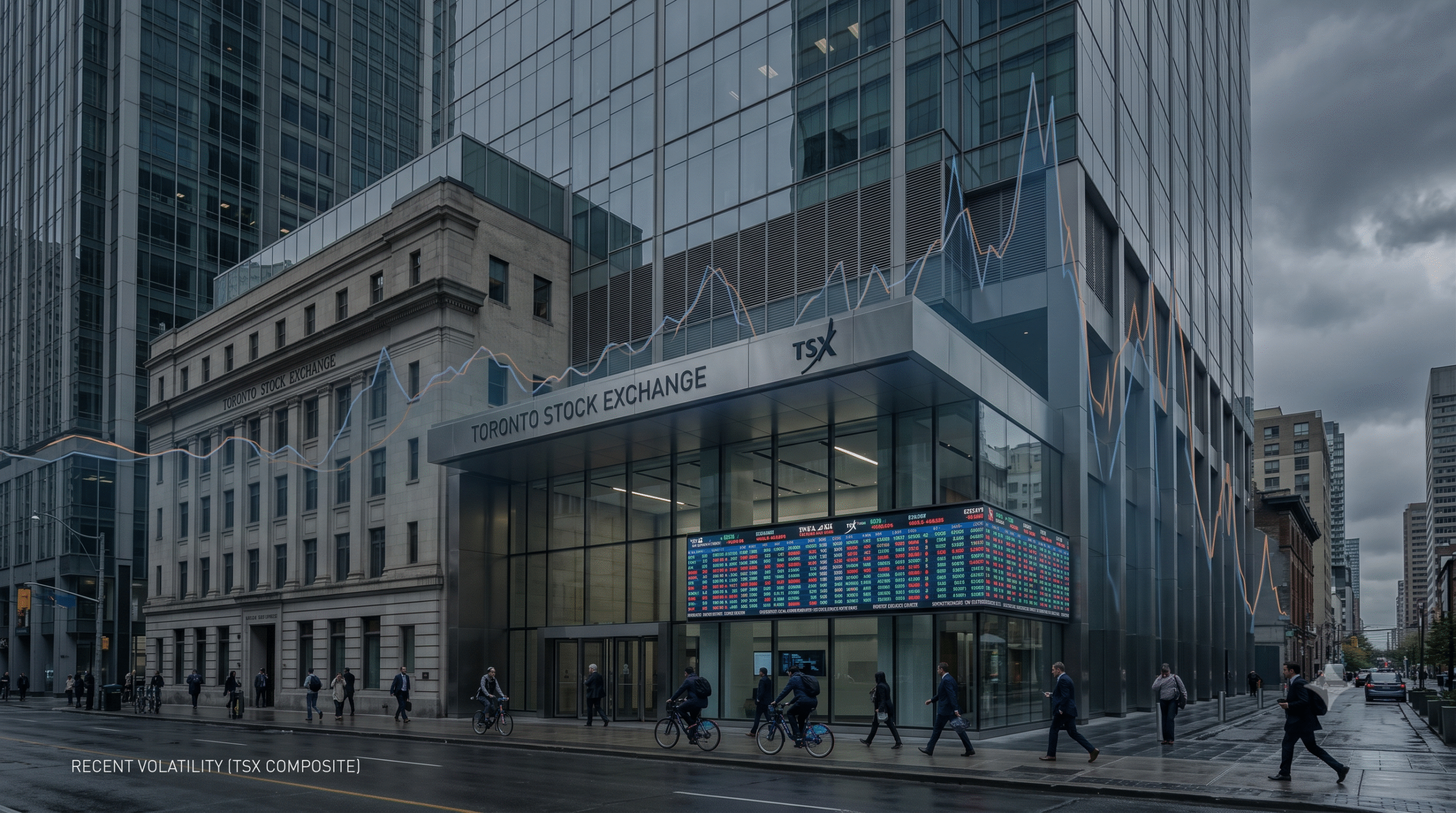
The investment framework that has governed TSX positioning for the past several months — energy overweight on geopolitical oil premium, financials under pressure from stagflation, technology managing discount rate uncertainty, gold steady on safe-haven demand — has been materially disrupted by a single diplomatic event. The US-Iran interim peace deal signed June 17, 2026, followed by IAEA confirmation of readiness to implement on June 18 and IEA support for the Strait of Hormuz reopening, represents the kind of low-probability, high-impact event that invalidates the prevailing investment consensus with unusual speed. For Canadian investors whose TSX portfolios have been tilted toward the geopolitical risk premium trade, the adjustment required is both substantial and immediate.
The TSX entered 2026 with WTI oil near US$57 per barrel. The Iran conflict pushed that benchmark to near US$95 at peak escalation, lifting the energy sector more than 35% year-to-date and forcing a broad repricing of inflation expectations, Bank of Canada rate path assumptions, and sector allocations across the index. The deal’s signing does not reverse all of that — oil at US$80.75 is still 42% above where it started the year — but it removes the uncertainty premium and introduces an Iranian supply return that structural oil supply-demand models were not pricing. That partial repricing is what June 19 is navigating.
The closest recent analog is the April 8 TSX response to an earlier, more temporary ceasefire announcement: futures spiked as oil fell, financials rose sharply with RBC and TD adding over 2%, technology gained on improved rate expectations, gold advanced to near three-week highs, and energy producers lost over 6%. The June 18–19 edition of this pattern is being driven by a more formally structured deal with IAEA verification architecture — a detail that could make the repricing more durable than the April episode proved to be.
What Happened
Trump announced the signing of the US-Iran agreement on June 17. On June 18, oil prices closed down 4.8% (WTI to US$80.75) and 4.7% (Brent to US$83.17) — the largest single-day oil price decline since the conflict began. The IAEA stated it was ready to implement the deal the same day. The IEA Executive Director welcomed the agreement from Istanbul and called for the Strait of Hormuz to be reopened “without conditions.” Global stocks rose on June 18, though “only moderately” — reflecting the market’s experience that previous ceasefire signals had not always held, and that partial scepticism was warranted even as the immediate price adjustment reflected the changed risk assessment.
The Enghouse Systems story adds a company-specific layer to the June 19 TSX narrative. Analysts cut the technology company’s fair value estimate to CA$16.75, with several firms including RBC Capital, CIBC, and TD Securities revising targets to a CA$16–CA$18 range while maintaining neutral to sector-perform ratings. Revenue growth expectations were reduced from 3.60% to 2.31%, and net profit margins from 16.02% to 14.69%. The story illustrates that even as the macro environment shifts dramatically with the Iran deal, individual TSX names continue to trade on their own fundamental realities.
Also Read: Top Canadian tech AI stocks
Why It Matters
The TSX’s Year-to-Date Framework Has Changed — But Not Uniformly
For investors whose portfolios were positioned for the geopolitical risk premium trade, the Iran deal creates an immediate review requirement. Energy overweights need to be assessed against a lower oil price assumption that may persist. Financial underweights — held in expectation that stagflation would continue to suppress bank valuations — need to be reconsidered against a backdrop where bond yields are easing and inflation expectations are moderating. Technology positions, which had been pressured by the Bank of Canada’s two-way rate language, benefit indirectly from any reduction in rate hike probability — and the Iran deal’s reduction of oil-driven inflation is precisely the development that reduces that probability. The reassessment is genuinely cross-sectoral, and the investors who can execute it calmly will be better positioned than those who react emotionally to a single dramatic session.
The Bank of Canada’s July 30 Decision Is Now More Dovish
Governor Macklem’s June 10 statement explicitly placed a rate hike on the table, primarily because of oil-driven consumer inflation running at approximately 2.4% and the surprise strength of the May employment report. The Iran deal, by removing the primary driver of that oil-driven inflation, significantly reduces the case for a July 30 rate hike. Lower gasoline prices — the CAA had reported prices nearly 30% above prior-month levels at the peak — will provide direct relief to Canadian consumers and reduce the CPI readings that were forcing the Bank of Canada’s hawkish language. This is a structural positive for every rate-sensitive segment of the TSX.
Sector Breakdown
The Iran deal’s sector-level impact on the TSX mirrors the April ceasefire pattern with additional durability given the deal’s formal structure. Financial stocks — the banks and insurance companies — are the primary beneficiaries, rising as bond yields ease and the rate hike risk that had been weighing on their valuations diminishes. Gold and mining names are mixed to positive — gold advanced on the deal as portfolio rebalancing supported the metal even as the safe-haven geopolitical premium partially deflated. Technology names including Shopify and Constellation Software are benefiting from improved rate expectations, with Constellation Software trading with a positive bias as its June 19 ex-dividend date for the CA$1.00 quarterly dividend provides an additional near-term catalyst. Energy is the clear sector under pressure, with the scale of the year-to-date gains providing meaningful room for a correction that does not necessarily take valuations to distressed levels.
Also Read: Best long term Canadian stocks
Risks to Watch
Deal implementation risk is the primary concern. The IAEA noted on June 18 that it must work with U.S. and Iranian officials to define the concrete implementation steps — a process that is structured but not instantaneous. Previous diplomatic signals in this conflict have repeatedly proven less durable than markets initially priced, and the June 18 session’s “only moderate” rise in global stocks reflected precisely this scepticism. USMCA remains an unresolved structural risk for Canadian equities with cross-border exposure — President Trump has previously suggested the U.S. might not extend the agreement, a comment that created market unease even amid the Iran deal optimism. OPEC+’s July production increase adds structural oil supply pressure that compounds the Iran deal’s oil price impact.
What to Watch Next
The IAEA’s progress reports on Iran deal implementation will be watched daily as the verification of the deal’s durability. The Bank of Canada’s July 15 Monetary Policy Report is the next major domestic policy signal — it will explicitly incorporate the Iran deal’s inflation implications into the Bank’s rate path guidance. USMCA news flow between now and the July 1 review date deserves monitoring. Q2 earnings season beginning in mid-July will provide the first real corporate data on how businesses absorbed the conflict’s macroeconomic effects and what their forward guidance looks like in the post-deal environment.
Final Outlook
The TSX on June 19 is adjusting to a materially changed geopolitical environment. The investment framework built around oil price elevation, stagflation risk, and Bank of Canada hawkishness is being revised in real time. The revision favours financial stocks, benefits technology through lower rate expectations, is mixed for gold, and is negative for the energy sector that led the index for most of 2026. These directional moves are rational responses to genuinely changed conditions.
Investors should resist the temptation to make dramatic all-or-nothing portfolio moves on a single day’s news. The Iran deal’s formal structure gives it more credibility than previous diplomatic signals, but implementation takes time and the history of this conflict warrants maintained vigilance. The barbell approach — quality energy operators on one side, financials and technology on the other — continues to serve as the most appropriate risk management framework for this still-uncertain environment.
Sign Up For our Newsletters to get latest updates