


Table of Contents
- Market Context
- What Happened
- Why It Matters
- Sector Breakdown
- Risks to Watch
- What to Watch Next
- Final Outlook
Market Context
Canada’s economy in June 2026 is the kind of story that defies simple classification. On paper, the country has entered a technical recession: GDP contracted in Q4 2025 and edged down a further 0.1% in Q1 2026. Yet beneath those headline numbers lies a considerably more nuanced picture. Consumer spending grew 1.5% in Q1, job creation surprised dramatically to the upside in May with 88,000 positions added versus expectations of 10,000, and the unemployment rate fell to 6.6% from 6.9%. The IMF expects Canada to post the second-fastest GDP growth in the G7 over 2026 and 2027.
The Bank of Canada has held its overnight rate at 2.25% through five consecutive meetings, most recently in June. Governing Council acknowledged that headline inflation — running at 3.2% in May, the highest since September 2023 — is almost entirely driven by energy prices linked to Middle East conflict, while core inflation remains near 2.1%. The central bank’s posture is to look through the energy-driven spike rather than tighten into a fragile economy, while committing not to allow energy inflation to become entrenched. It is a difficult line to walk, and the July 15 Monetary Policy Report will be scrutinised for any shift in that balance.
For Canadian investors, this macro backdrop creates a nuanced environment. Rate stability supports dividend equities and removes the downside risk of sudden monetary tightening. Economic softness limits consumer-facing sectors. Energy price moderation — as Hormuz tanker traffic recovers — may gradually ease headline inflation and open a future rate-cut pathway. The question is timing.
Also Read: Top Canadian tech AI stocks
What Happened
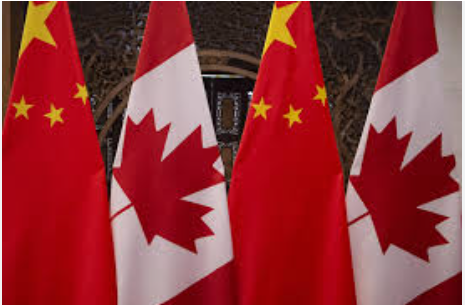
The most significant macro development in the past 24 hours is the continuation of a week in which global markets processed the implications of a hawkish U.S. Federal Reserve under new Chair Kevin Warsh. The hawkish tilt sent the U.S. dollar to new 2026 highs in trade-weighted terms, pressuring commodity prices broadly — including gold and oil — while pushing bond yields higher. That dynamic weighed on Canadian bank stocks and rate-sensitive dividend equities on Friday, even as gold miners and Shopify held ground. Separately, B.C. Premier David Eby departed for China on Saturday to explore trade diversification opportunities, reflecting Ottawa’s broader push to reduce dependence on U.S. trade relationships ahead of the July USMCA review.
Why It Matters
The BoC Is Caught Between Two Uncomfortable Choices
If core inflation remains contained near 2.1% while energy-driven headline inflation gradually fades — as WTI crude retreats toward pre-conflict levels — the Bank of Canada may find itself with room to consider modest rate reductions in 2027 to support the economy. RBC Economics, for example, expects no change in rates through 2026, with only the possibility of modest movement in 2027. However, if core inflation begins drifting higher — perhaps as energy costs partially transmit to goods and services — the BoC’s calculus changes significantly. The July 20 CPI release will be the most important data point for answering that question.
Trade Diversification Is a Long Game
B.C.’s outreach to China, Canada-Japan mining cooperation announced last week, and Ottawa’s broader trade strategy reflect a recognition that U.S. trade dependence carries structural risk in the current geopolitical environment. These diversification efforts are unlikely to produce near-term economic results, but they signal a multi-year shift in Canadian trade policy that could eventually benefit commodity and resource exporters with flexible market access.
Sector Breakdown
The economic backdrop creates clear winners and losers across TSX sectors. Energy companies benefit from higher commodity prices even as consumers face squeezed purchasing power — a dynamic that reflects Canada’s unique position as a major net oil exporter. Financial institutions face a mixed environment: strong capital ratios and resilient earnings contrast with rising household insolvencies, elevated mortgage debt, and housing affordability that has not meaningfully improved. The technology sector — largely insulated from domestic economic softness by global revenue — continues to outperform on an earnings basis. Consumer-facing retailers and companies dependent on domestic spending face the most direct headwind from a household sector dealing with elevated energy costs, mortgage pressure, and residual trade uncertainty affecting employment confidence.
Risks to Watch
The USMCA review starting in July is the most significant economic risk for Canada in the near term. Trade policy deterioration would directly affect manufacturing, energy exports, and agricultural sectors, adding a meaningful growth headwind to an economy already running at minimal expansion. A second risk is the potential for energy inflation to prove stickier than the BoC’s current “look through” posture anticipates — if core CPI climbs above 2.5%, the probability of a rate hike increases substantially, which would be damaging for an already fragile economy. Housing market deterioration remains a slow-burning risk: declining home prices, slow population growth, and mortgage renewal cliff risk for variable-rate borrowers continue creating household balance sheet pressure that has not fully resolved.
Also Read: Best long term Canadian stocks
What to Watch Next
The July 15 Bank of Canada decision and Monetary Policy Report is the single most important near-term economic event for Canadian investors. The July 20 CPI release will set the context for that decision. USMCA review proceedings and any signals from Washington about trade posture toward Canada will be closely watched by corporate Canada. U.S. payrolls and inflation data will continue influencing Fed expectations, which in turn affect Canadian bond yields and currency.
Final Outlook
Canada’s economic situation in late June 2026 is one of resilience under stress rather than genuine strength. The labour market is behaving better than GDP suggests, commodity revenues are supporting public finances, and the Bank of Canada’s patient policy stance is appropriate given the uncertainty. But the technical recession is real, household finances are under pressure, and the trade relationship with the United States — still Canada’s dominant export market — faces a formal review within weeks.
For investors, the most practical implication of this macro backdrop is sector discipline. Energy, gold, and globally-oriented technology companies are better positioned than domestic consumer names. The Bank of Canada’s stability removes the worst-case rate scenario, but it does not provide a catalyst for broad market expansion. Markets are navigating a period where macro risks are genuinely balanced between upside and downside, and portfolio construction should reflect that balance.
Sign Up For our Newsletters to get latest updates