

Table of Contents
- Market Context
- What Happened
- Why It Matters
- Sector Breakdown
- Risks to Watch
- What to Watch Next
- Final Outlook
Market Context
Leadership matters more than usual when a single company anchors an entire investment theme. Nvidia has been the most closely watched stock in the artificial-intelligence trade for three years, supplying the chips that data-centre builders, cloud providers and AI developers depend on. When the person who built that franchise leaves suddenly, investors have to ask what changes and what does not.
That question arrived on Thursday. Nvidia announced in a regulatory filing that co-founder Jensen Huang had resigned as president, chief executive and director, effective immediately, with chief financial officer Colette Kress named interim chief executive and venture investor Harvey Jones appointed the company’s first board chair. Reports tied the resignation to a board investigation involving relationships that included one with a person U.S. officials suspected of links to Chinese intelligence. The Chinese government has denied the allegations, and the company said operations and its product roadmap would continue without interruption.
The shock landed in a market already uneasy about AI spending, and it will be tested again this week.
What Happened
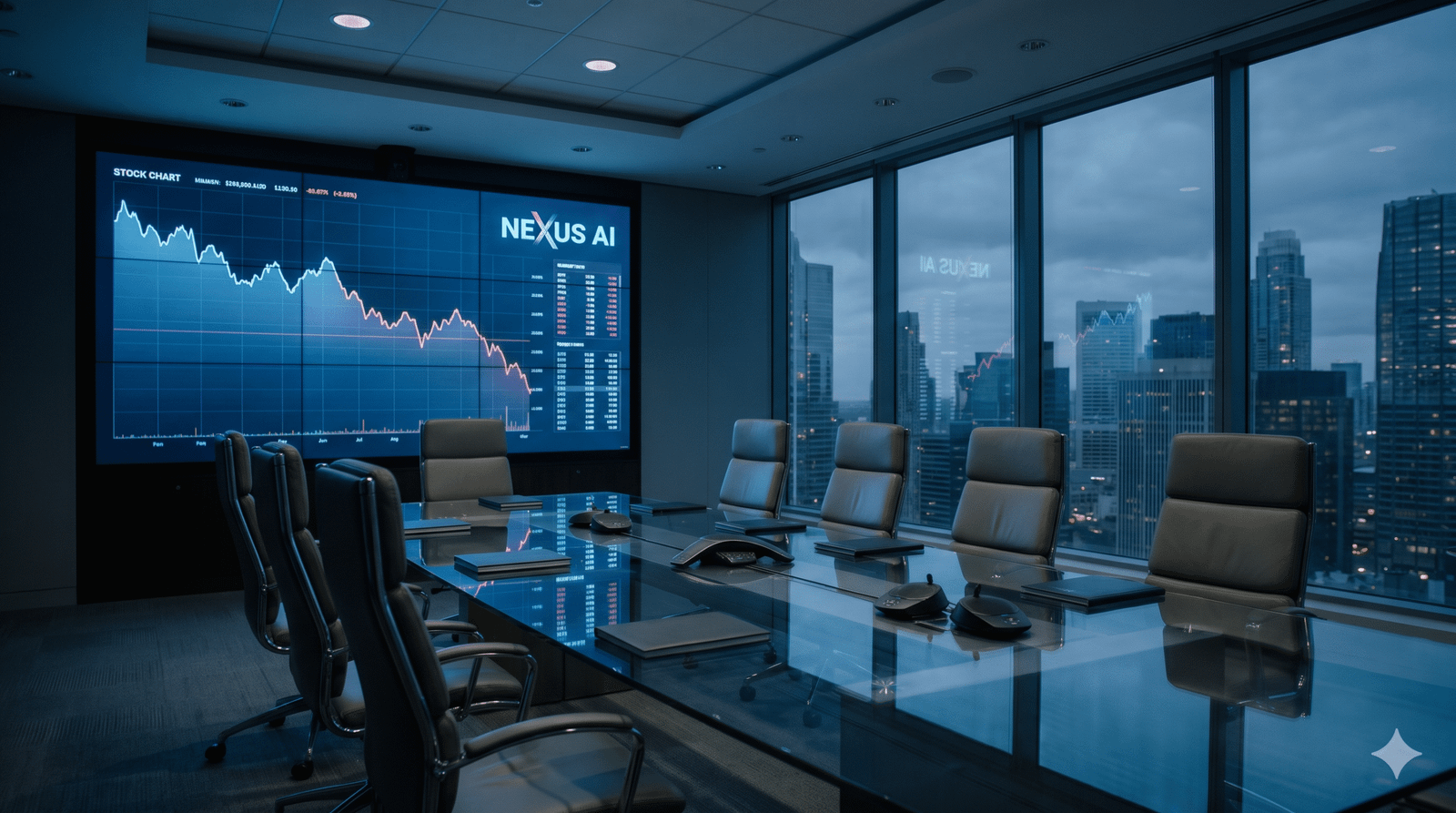
Nvidia shares fell about 4.3% on Thursday to US$166.19 after plunging more than 14% at one point, and slipped another 2% on Friday to US$162.85, leaving the stock down about 13% for the week, its worst since April 2025. One market summary put its market value near US$3.9 trillion, compared with roughly US$5.8 trillion in early October. Analysts reportedly cut price targets but left earnings forecasts largely unchanged. Nvidia reports quarterly results on Tuesday after the close, with analysts expecting growth of nearly 100% from a year earlier.
On the TSX, which edged 0.1% lower to 36,106 on Friday, the spillover was visible. Celestica, which supplies AI data-centre hardware, fell about 5.3%, while Shopify inched up 0.2% and Constellation Software slipped 0.1%. In the United States, a renewed chipmaker selloff pulled the S&P 500 down about 0.3%, though Meta gained about 2.9%. The previous week’s rebound had been driven by CoreWeave’s results, which showed a backlog of about US$132.5 billion.
Why It Matters
Demand has not changed, but trust has been tested
Nothing in the reporting suggests that orders for AI hardware have fallen. The concern is governance, regulatory scrutiny, including probes into whether export restrictions were circumvented in sales to Chinese companies, and uncertainty about strategy under an interim leader.
The next few days are a compressed test
Nvidia’s earnings on Tuesday and Anthropic’s expected pricing and Nasdaq debut later in the week arrive within days of each other. Investors are watching management commentary, guidance and demand signals for evidence that the AI buildout is intact.
Sector Breakdown
Chipmakers and hardware suppliers are the most exposed, since Nvidia’s results and guidance set the pace for the supply chain. Celestica is the TSX’s closest proxy, with third-quarter revenue up 83% from a year earlier and a raised full-year outlook, but its shares have swung sharply, rising about 8.4% on November 11 before this week’s drop.
Cloud and infrastructure providers such as CoreWeave depend on access to chips and on financing, and their stocks tend to move with Nvidia. Large platform companies are more mixed, with Meta gaining on Friday while Alphabet and Oracle slipped. Shopify and Constellation Software use AI in their products rather than building the hardware, so their valuations depend more on merchant growth, margins and interest rates. Canada’s 10-year yield rose above 3.8% on expectations of a Bank of Canada hike before year-end.
Risks to Watch
Leadership risk is the new variable: an interim chief executive and a board search create uncertainty about strategy. Regulatory and political risk is elevated, with congressional and law-enforcement attention reported and scrutiny of export controls. Valuation risk remains high across AI leaders, even after the selloff.
Financing risk matters for smaller AI infrastructure companies, which depend on credit markets. Rate risk is a further factor, with U.S. long-term yields above 5% and Canadian yields rising. Customer concentration and supply constraints could also affect results.
What to Watch Next
Investors should watch Nvidia’s results and guidance on Tuesday, especially commentary on demand, China exposure and leadership. Anthropic’s pricing on Wednesday and its first day of trading on Thursday will show how investors value AI companies after the selloff. Canadian inflation data due this week and the Bank of Canada’s rate outlook will influence Canadian technology valuations.
Also Read: Top Canadian tech AI stocks
Final Outlook
The AI trade is being tested by a governance shock rather than a demand shock, which is a different kind of risk. If Nvidia’s results and guidance reassure, the leadership change may prove a short-term disruption. If they do not, the group could face another leg of selling. For Canadian investors, selectivity and attention to valuation and financing strength may matter more than trying to time a rebound.
Verdict: Watchlist candidate, not a broad buy signal. Monitor Nvidia’s guidance and Celestica’s follow-through.
Sign Up For our Newsletters to get latest updates