

Table of Contents
- Market Context
- What Happened
- Why It Matters
- Sector Breakdown
- Risks to Watch
- What to Watch Next
- Final Outlook
Market Context
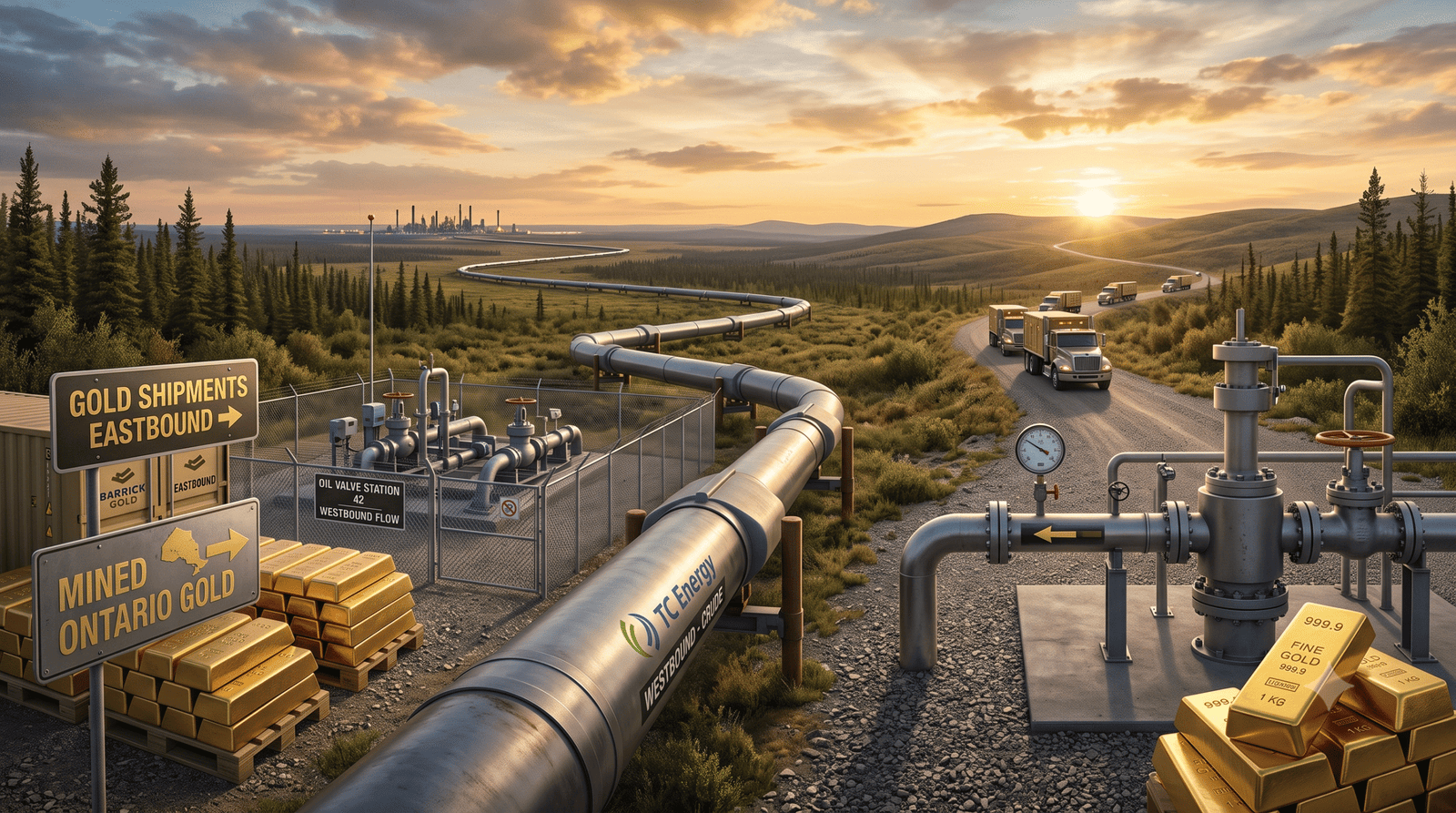
Canada’s resource sector sits at the epicentre of the most consequential geopolitical event to affect global energy markets in years. The US-Iran conflict, which began in late February 2026, has effectively shut down a significant portion of global oil transit through one of the world’s most critical waterways. For a country whose economy is structurally tied to energy exports, and whose flagship exchange lists more mining and resource companies than almost any other bourse in the world, the implications are profound.
Benchmark oil prices have risen more than 50% over the past month, and the average price of gasoline in Canada has jumped nearly 40 cents a litre as the Strait of Hormuz closure reverberates through supply chains. That has placed Canadian energy producers in a curious position: commodity prices are strongly supportive of cash flow, yet broader economic damage — slower GDP growth, rising inflation, the threat of rate hikes — is creating headwinds for equity valuations.
Gold has played its own role in this story. Gold prices remain up more than 45% from a year ago, sustained by safe-haven demand driven by economic and geopolitical uncertainty, keeping Canada’s sizable gold mining sector well-supported even as some profit-taking has emerged in recent sessions.
What Happened
On May 4, the S&P/TSX Composite edged lower as investors assessed renewed tensions over the Strait of Hormuz. Iran’s navy reported turning away enemy warships attempting transit of the strait, while US Central Command stated no ships had been hit. Oil prices jumped earlier in the session on those reports.
Energy producers traded with mixed signals despite elevated commodity prices. Canadian Natural Resources edged down, while Suncor fell approximately 0.5% on May 4, even as crude prices moved higher — a reminder that rising input costs, including labour and services inflation, can compress margins even when headline oil prices are favourable. Meanwhile, in the gold sector, Agnico Eagle fell 0.4% and Wheaton Precious Metals lost nearly 1% as gold prices slipped modestly from recent highs.
Why It Matters
Energy: A Double-Edged Sword for Canada
The Iran conflict has created a complex situation for Canadian oil producers. Higher crude prices directly boost revenue and free cash flow for integrated and conventional producers. Yet the ongoing Strait of Hormuz closure — in effect since the war began February 28 — has pushed oil prices to levels not seen in four years, and that spike is now beginning to feed into broader Canadian inflation readings, complicating the Bank of Canada’s policy path.
Gold Miners: Structural Tailwinds Intact
Barrick Gold (TSX:ABX) remains the most prominent gold stock on the TSX, supported by a disciplined production structure and high-volume mines with low all-in sustaining costs. Agnico Eagle Mines is positioned to keep driving earnings higher with gold prices expected by many analysts to remain in the US$4,000–5,000 range, even as near-term price volatility creates occasional pullbacks.
Sector Breakdown
The Canadian resource sector is dominated by three sub-themes in the current environment. Oil sands producers — Canadian Natural Resources, Suncor, Cenovus — are generating substantial free cash flow but facing market scepticism around OPEC+ output increases announced for June. OPEC+ agreed to increase output in June, which weighed on energy producer stocks even as crude prices remained elevated, creating an expectation gap between current prices and near-term supply additions.
In gold, the big producers are benefiting from the commodity run, but junior miners — particularly those with development-stage projects — are where the more significant share-price torque has been concentrated. Montage Gold, focused on its Koné project in Côte d’Ivoire, delivered a year-to-date gain of approximately 38% as of late March 2026, while Allied Gold, a multi-mine producer in Africa, was the subject of a C$5.5 billion acquisition by Zijin Gold International, demonstrating the M&A appetite in the sector at current gold prices.
Critical minerals round out the picture. Uranium, copper, and lithium remain investor priorities as the global energy transition accelerates, and Canada’s resource-rich geology keeps it well-positioned to supply those materials.
Risks to Watch
The most acute risk for resource stocks is a sudden resolution to the Iran conflict. A ceasefire or peace agreement that reopened the Strait of Hormuz would likely trigger a sharp pullback in oil prices, hitting energy sector cash flow assumptions quickly. For gold, any reduction in geopolitical risk premiums could also pressure prices.
On the regulatory and policy side, Canadian 5-year bond yields are at 3.1% and are expected to remain volatile as the June US-CUSMA trade review approaches, adding another layer of uncertainty for resource companies that rely on debt financing for capital projects.
Also Read: Best long term Canadian stocks
What to Watch Next
Investors should monitor oil price movements closely as US-Iran diplomatic talks — which have failed to gain traction so far — continue to develop. The OPEC+ June output increase decision could weigh on crude if supply additions materialise while demand concerns persist. For gold miners, quarterly production reports and updated guidance from Barrick and Agnico Eagle will be important near-term data points. The June 10 Bank of Canada rate decision is also critical: a surprise hike could tighten financial conditions and weigh on leveraged resource companies.
Also Read: Safe investments for new investors
Final Outlook
The TSX resource sector is navigating one of its more complex environments in recent memory — simultaneously enjoying historically favourable commodity prices and confronting macro risks that could unwind those gains quickly if geopolitical conditions shift. For long-term investors, Canadian oil sands producers and established gold miners offer relatively resilient positioning given strong balance sheets and high free cash flow. More speculative resource plays carry meaningful downside risk if sentiment rotates.
The Canada Strong Fund announcement signals government commitment to domestic resource development, which may provide regulatory and financial tailwinds over the medium term.
Sign Up For our Newsletters to get latest updates