


Table of Contents
Market Context
What Happened
Why It Matters
Sector Breakdown
Risks to Watch
What to Watch Next
Final Outlook
Market Context
Canada’s economic narrative in mid-2026 continues to be defined by a balancing act between domestic weakness and external pressure. The Bank of Canada has now held its benchmark overnight rate at 2.25 percent for a fifth consecutive meeting, a decision policymakers described as balancing the competing risks of soft economic growth and the potential for renewed inflation. The central bank’s opening statement noted that GDP edged down 0.1 percent in the first quarter, weaker than its own April projections, and that the economy is expected to remain in excess supply despite an anticipated near-term rebound.
At the same time, the central bank flagged that oil prices had been running higher than assumed in its April Monetary Policy Report, a development tied directly to the ongoing conflict in the Middle East, which it said was likely to nudge up the inflation outlook even as there has so far been limited evidence of broad-based pass-through from energy prices to other consumer prices. Inflation in Canada rose to 2.8 percent in April, largely due to energy costs, while the core inflation rate moved down to around 2.1 percent.
Trade policy uncertainty with the United States also remains a live issue for the Canadian economy, with the central bank noting that economic activity has been weak amid this uncertainty, and with the CUSMA joint review deadline falling in June 2026 representing a potential source of further change to how tariffs affect Canadian inflation and growth.
Also Read: Stock investment Canada for beginners
What Happened
The most significant development affecting the Canadian economic outlook in the past 24 hours was the news that the United States and Iran have reached a preliminary peace agreement aimed at ending nearly four months of conflict, with the deal expected to take effect on Friday and to include a reopening of the Strait of Hormuz. This triggered a sharp decline in oil prices, with West Texas Intermediate falling more than 3 percent to the mid-US$80s per barrel and Brent crude retreating toward the high-US$80s — among the lowest levels in roughly two months.
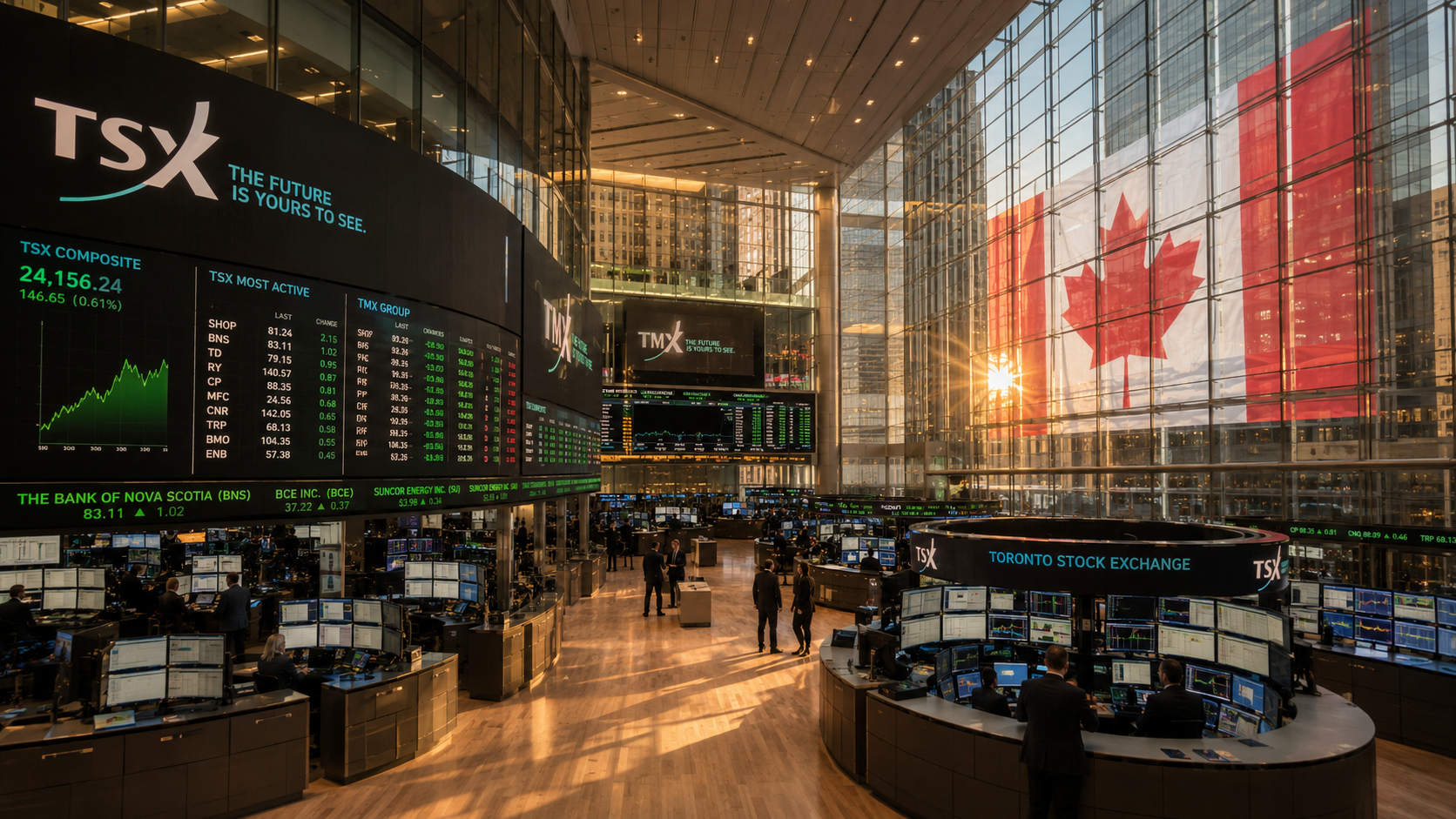
This shift directly addresses one of the specific inflation risks the Bank of Canada highlighted in its June 10 statement. Asian and North American equity markets responded positively to the news, with the easing of geopolitical risk also reflected in lower measures of expected market volatility. On the TSX, the S&P/TSX Composite Index gained on the day, supported by financials and mining names, even as energy stocks came under pressure from the drop in crude prices.
Why It Matters
A Key Inflation Risk May Be Easing
The Bank of Canada’s June statement explicitly emphasized policy flexibility, noting that uncertainty remains “unusually elevated” and that the central bank stood ready to either cut rates if US trade restrictions weaken growth, or potentially deliver “consecutive increases” if Middle East-related energy shocks led to persistent, broad-based inflation. A sustained decline in oil prices following the US-Iran agreement could reduce the likelihood of the latter scenario, potentially giving the central bank more room to respond to domestic economic weakness if growth data continues to disappoint.
Also Read: Best long term Canadian stocks
Growth Remains the Underlying Concern
Even with the positive development on the energy front, the central bank’s own assessment is that growth came in materially lower than its previous projections in the first quarter, leaving meaningful slack in the economy. This slack is expected to help offset some of the inflation pressure from energy prices, but it also underscores that Canada’s economic challenges extend well beyond the energy price story, encompassing broader questions about trade policy, business investment, and consumer demand.
Sector Breakdown
The immediate market reaction to the US-Iran news was broad-based but uneven across sectors. Canadian financials, including TD Bank, BMO, and RBC, advanced as the reduced risk of an oil-driven inflation spike eased concerns about future rate increases — a dynamic directly tied to the central bank’s stated balancing act. Mining stocks also advanced despite the moves in underlying metal prices, with Agnico Eagle, Barrick, and Wheaton Precious Metals all posting gains, reflecting how sentiment toward the resource sector can be influenced by broader macro conditions as much as by commodity prices themselves.
In contrast, energy stocks retreated, with Imperial Oil specifically noted losing ground, illustrating the direct tension between what is good news for the inflation outlook and what represents a headwind for producer revenues. Meanwhile, technology shares traded in a mixed pattern, with Shopify declining even as Celestica gained, in a period that has also seen significant attention on technology and growth names following SpaceX’s record-setting public market debut earlier in the week.
Risks to Watch
The durability of the US-Iran agreement remains the central near-term risk to this more constructive economic narrative. Officials on both sides have cautioned that a final, signed deal is not yet guaranteed, and the conflict has seen setbacks in diplomacy before. On the domestic side, the ongoing trade policy uncertainty with the United States, including the CUSMA joint review with its June 2026 deadline, represents a separate and potentially significant risk to Canadian growth and inflation, independent of how the Middle East situation evolves. The combination of weak first-quarter growth and elevated uncertainty means the central bank’s policy path remains genuinely difficult to predict, with the Bank itself acknowledging that risks “could shift” and that it stands ready to move in either direction.
What to Watch Next
Investors and observers should watch for the formal signing of the US-Iran agreement and any signs of how quickly oil flows through the Strait of Hormuz normalize if the deal proceeds. On the domestic front, further data on Canadian GDP, employment, and inflation will be important inputs ahead of the Bank of Canada’s next scheduled rate announcement in July. Developments related to the CUSMA joint review and broader US trade policy will also be significant, given the central bank’s explicit linkage between trade uncertainty and weak economic activity.
Also Read: Best long term Canadian stocks
Final Outlook
Canada’s economic picture in mid-June 2026 remains one of competing forces: a domestic economy showing real signs of slack and softness, set against an external environment where one major source of inflation risk — elevated oil prices tied to the Middle East conflict — may now be easing following the preliminary US-Iran agreement. The Bank of Canada’s decision to hold rates steady for a fifth consecutive meeting reflects an attempt to balance these forces rather than a clear signal in either direction.
For TSX investors, the immediate market reaction — gains in financials and mining alongside losses in energy — illustrates how a single piece of geopolitical news can ripple unevenly across the Canadian equity landscape. The path forward will likely depend as much on how trade policy uncertainty with the United States evolves as on how the Middle East situation develops.
Sign Up For our Newsletters to get latest updates