


Table of Contents
- Market Context
- What Happened
- Why It Matters
- Sector Breakdown
- Risks to Watch
- What to Watch Next
- Final Outlook
Market Context
At 12:01 a.m. this morning, Canada crossed a threshold that no government in its history had been compelled to cross in this form. The Government of Canada’s retaliatory tariff package — covering CA$27.6 billion worth of U.S. goods at rates of 15%, 25%, and 50% — took legal effect, responding dollar-for-dollar to the U.S. Section 338 tariffs that took effect August 22. The list of targeted U.S. products includes steel (now at 50%, doubled), dairy, appliances, agricultural equipment, pulp and paper, plastics, and electronics. More than 700 individual tariff classifications are now subject to new Canadian duties on goods originating from the United States. Prime Minister Carney described the decision as taken “reluctantly but confidently,” and Finance Minister Champagne acknowledged that “costs are going to go up, prices are going to go up” for Canadians as a direct result.
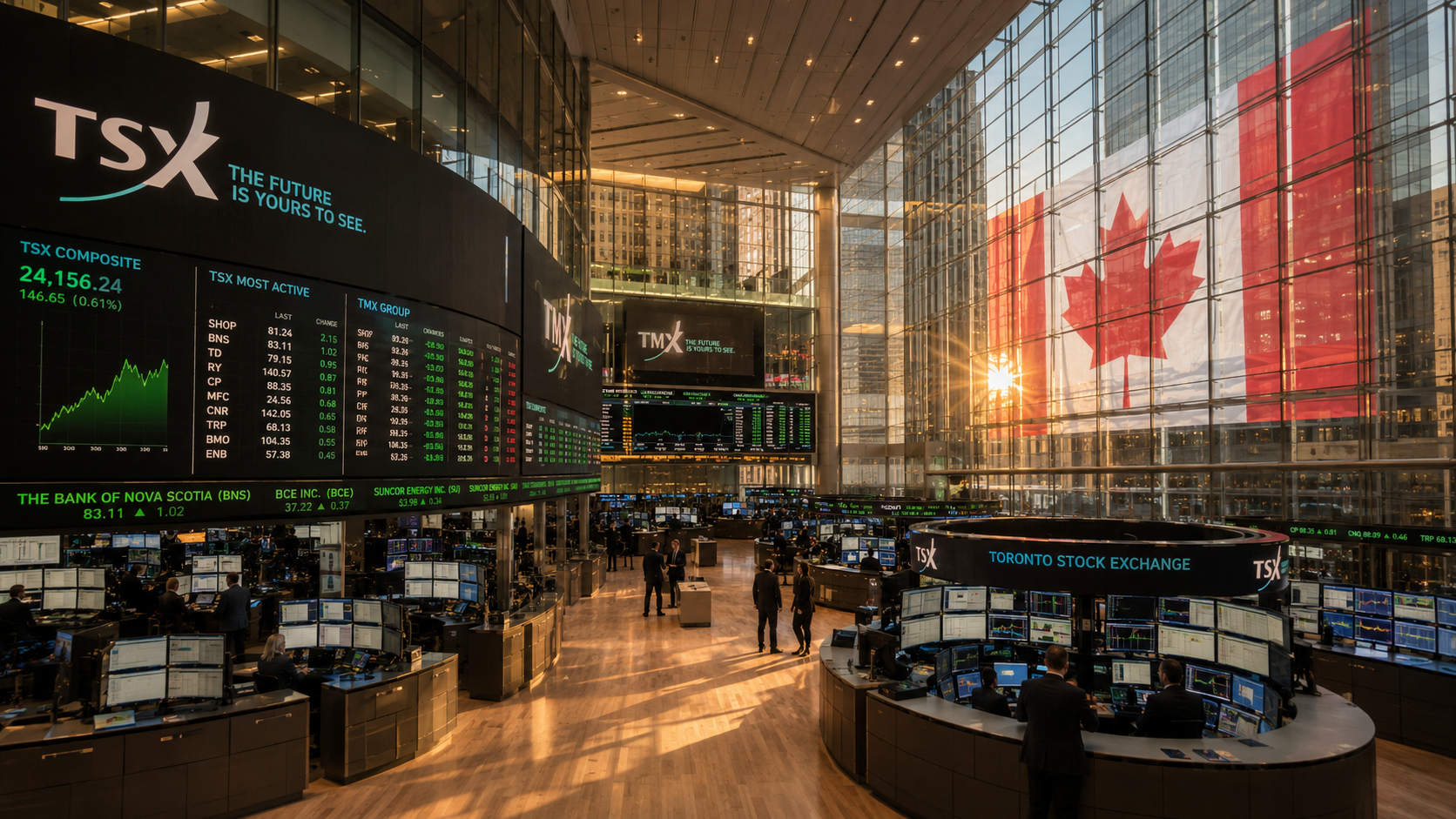
The TSX reopens tomorrow morning at 9:30 a.m. ET — and it does so in a world that is materially different from the one it left on Friday afternoon. Not only are Canada’s retaliatory tariffs now live, but the U.S. August non-farm payrolls — released Friday at 8:30 a.m. ET — showed 162,000 jobs added, three times the consensus forecast, pushing Fed rate-hike odds for the September 15–16 FOMC meeting to approximately 60%. On top of those two seismic developments, Trump announced in the days preceding Labour Day that existing auto tariffs on Canadian vehicles would double to 50% effective January 1, 2027 — a threat to Ontario’s manufacturing sector that is separate from and additive to the current tariff package. Canadian businesses and investors are walking into Tuesday’s market open carrying three new burdens that were not present at Friday’s close.
The Canadian government has acknowledged the economic pain that these measures entail. A CA$7.5 billion business support package — including emergency loans, bridge financing, and sector-specific relief programmes — was announced alongside the tariff details. Canadian Industry Minister Joly was explicit that the tariff list was designed with political strategy in mind, targeting U.S. states with political leverage over congressional trade policy as a way of applying pressure ahead of November’s U.S. midterm elections. Canada is not trying to win a trade war on economic merit alone — it is trying to create political conditions in the United States that make de-escalation more attractive to the Trump administration’s domestic coalition.
What Happened
Effective 12:01 a.m. today, September 7, 2026, Canada’s counter-tariffs began applying to products crossing the border from the United States. The specific rate structure — 15%, 25%, or 50% — mirrors the applicable U.S. rate for the same goods, implementing the “dollar-for-dollar” matching that Carney committed to when he walked away from last-minute trade negotiations on August 22. U.S. steel and aluminum now face 50% Canadian counter-tariffs, matching the 50% U.S. tariffs on Canadian steel and aluminum that have been in effect since earlier in 2026. Dairy products face new tariffs. Agricultural equipment — used by Canadian farmers who also depend on U.S. customers for their own exports — faces new duties. Electronics and appliances, which Canadian consumers and businesses purchase from U.S. suppliers, now carry additional import costs. In-transit goods that were already physically moving toward Canada when the tariffs took effect are excluded — a standard carve-out in trade law that limits the most disruptive effects of abrupt implementation. Separately, and as a consequence of the 162,000 August NFP released Friday, U.S. Treasury yields rose at the short end and stock futures fell post-release, pricing a higher probability of a September Fed hike into global financial conditions.
Why It Matters
The Inflation Feedback Loop Is Now the BoC’s Most Urgent Problem
Canada’s September 8 retaliatory tariffs create a direct inflation pathway that the Bank of Canada cannot ignore. When Canadian importers pay 15–50% more for U.S.-originating steel, electronics, dairy, and agricultural equipment, those costs are partially absorbed by businesses and partially passed on to end consumers through higher prices. Statistics Canada’s July CPI already showed headline inflation at 3% — above the Bank of Canada’s 2% target midpoint and at the top of its 1%–3% control range. Tariff pass-through costs could push August and September CPI readings higher, creating a situation where the BoC is fighting inflation it explicitly acknowledged it cannot resolve through monetary policy — because the inflation source is trade policy, not excess domestic demand. The Bank’s September 2 statement said “upside risks to inflation have increased.” Tuesday’s markets will be pricing the degree to which the tariff implementation confirms that risk as now materialised rather than prospective.
The November Midterm Strategy Is Canada’s Most Important Long-Term Bet
Canadian Industry Minister Joly’s explicit statement that the tariff list was designed to target U.S. states with political leverage — maximising pressure ahead of November’s U.S. midterm elections — is the most strategically revealing comment of the trade war period. It signals that Canada’s government does not believe a near-term negotiated resolution is achievable under the current U.S. administration, and has chosen instead to invest in a political change strategy: create economic pain in politically sensitive U.S. districts, wait for the midterms to shift congressional power, and then re-engage diplomatically in a more favourable environment. That is a coherent long-term strategy, but it implies that the trade war’s full economic impact — on Canadian manufacturing, consumer prices, business investment, and employment — will accumulate through October and November before any diplomatic circuit breaker is available.
Also Read: Safe investments for new investors
Sector Breakdown
Tuesday’s TSX open will reprice the tariff-affected sectors with the specificity that the weekend’s news flow now makes possible. Steel and aluminum producers — including Canadian names that use U.S.-originating steel inputs — will face a double adjustment: lower demand from tariff-constrained cross-border activity and higher input costs on U.S. materials they import. The agricultural sector faces a paradox: Canadian farmers who export to the U.S. are already affected by American tariffs on Canadian goods; now they also face higher costs on U.S.-originating agricultural equipment they depend on for production. Appliance retailers and electronics distributors will need to reprice U.S.-sourced inventory, with near-term margin compression before price increases can be passed through to consumers. The banking sector will immediately begin assessing credit quality implications in their trade-exposed lending books — steel, agricultural equipment, and electronics financing portfolios all face new risk parameters. Consumer staples names — particularly discount retailers like Dollarama — may see paradoxical demand benefits if consumers trade down in response to higher prices on tariff-affected categories. Healthcare names, by contrast, are among the most insulated — provincial drug reimbursement frameworks and long-term care provincial funding agreements are not affected by U.S.-Canada tariff schedules.
Risks to Watch
The most immediate escalation risk is a U.S. response to Canada’s September 8 counter-tariffs. The Trump administration’s pattern in 2026 has been to view Canadian retaliation as an invitation for further measures — and the auto tariff doubling to 50% from January 1, 2027 was announced before Canada had even implemented its September 8 package. If the administration responds to the September 8 counter-tariffs with additional U.S. measures — targeting energy, agriculture, or financial services — the economic damage to Canada would compound well beyond current estimates. Canada’s CA$7.5 billion business support package is meaningful but cannot offset the revenue impact of a fully escalated trade war. Small and medium-sized businesses — identified by Al Jazeera’s reporting as facing potential bankruptcy at current tariff levels — represent the most vulnerable segment of Canada’s economic ecosystem. The FOMC September 16 rate hike, if confirmed, adds a monetary tightening layer to the tariff-driven fiscal tightening, creating a doubly contractionary environment for Canadian business investment.
What to Watch Next
Tuesday’s TSX open at 9:30 a.m. ET will be the first real-time market signal on how investors are pricing the combined impact of the September 8 tariff implementation and the 162,000 NFP. Specific sectors to watch: gold miners for the real-yield compression signal, bank stocks for credit quality re-rating, steel and manufacturing names for direct tariff impact, and consumer staples for the paradoxical demand trade-down story. September 11’s U.S. August CPI will determine whether the September 16 FOMC hike becomes essentially certain. Any U.S. government response to Canada’s September 8 counter-tariffs — announced through Trump’s social media channels or through official trade policy statements — must be monitored in real time. November 3 U.S. midterms remain the earliest realistic marker for a diplomatic restart. BlackBerry’s September 24 earnings are the most important company-specific Canadian technology catalyst remaining in September.
Final Outlook
Canada’s retaliatory tariffs are live as of this morning. The TSX reopens tomorrow into an environment that combines a stronger-than-expected U.S. labour market raising Fed rate-hike odds, a domestic trade war entering its most active implementation phase, and a Canadian government that has explicitly chosen a multi-month political strategy over near-term diplomatic resolution. The economy’s exceptional Q2 performance — 3.3% annualised growth, business investment up 9.5% — provides a foundation of strength from which to absorb these shocks. But the absorption will not be painless, and Tuesday’s market open will begin the process of pricing exactly how painful it will be.
Canadian investors who approach the September 8 open with a clear analytical framework — distinguishing tariff-insulated sectors from tariff-exposed ones, monitoring gold price direction as the real-yield signal, and watching bank stocks for the first read on credit quality re-rating — will be better positioned than those reacting to daily headline noise. The structural strengths of the TSX are real. The near-term headwinds are also real.
Verdict: Cautious. September 8’s TSX open is a pricing event for multiple simultaneous macro shocks. Healthcare, regulated utilities, and banks with strong earnings foundations are the most defensible positions. Avoid adding to materials and gold sector positions ahead of Thursday’s CPI. The next two weeks — September 11 CPI and September 16 FOMC — will define the rest of the quarter.
Sign Up For our Newsletters to get latest updates