


Table of Contents
- Market Context
- What Happened
- Why It Matters
- Sector Breakdown
- Risks to Watch
- What to Watch Next
- Final Outlook
Market Context
Canada’s economic picture on September 4 is simultaneously better and worse than it appears. Better, because Q2 2026 GDP came in at 3.3% annualised — the strongest quarterly growth since before the pandemic — reversing the mild contraction of Q4 2025 and the originally reported Q1 2026 decline that was subsequently revised to a 0.3% increase. Business investment surged 9.5% annualised in Q2, consumption rose 3.3%, and exports advanced 14.3%. Canada is emphatically not in a recession — that narrative, which dominated financial media in early June, has been put to rest by the data. Worse, because all of that growth was measured in a quarter that ended July 31, before a single dollar of new U.S. tariffs had taken effect, before Canada’s retaliatory counter-measures were announced, and before the trade war escalation that defined August had materialised.
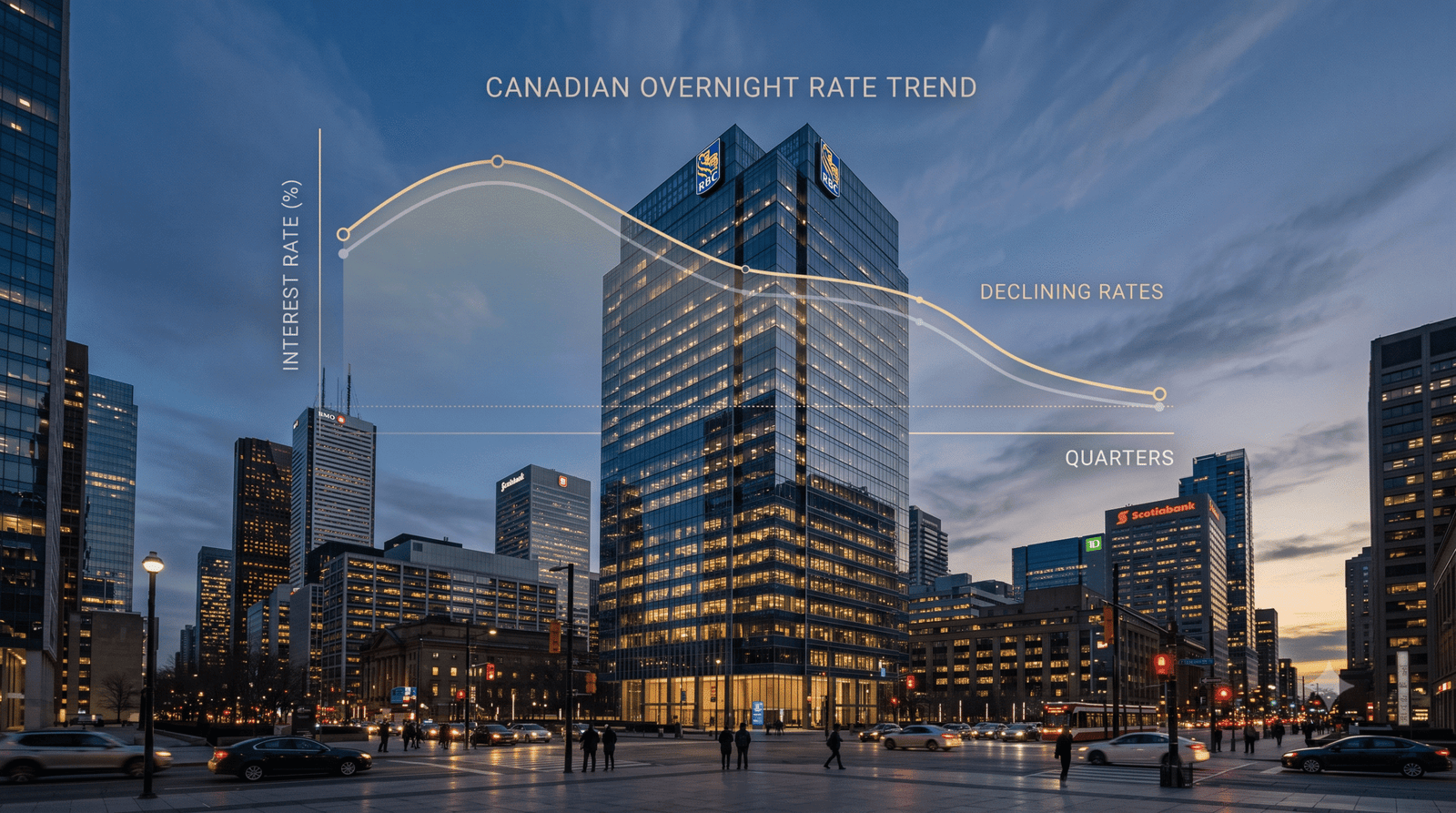
The Bank of Canada acknowledged this temporal asymmetry explicitly in its September 2 statement, holding rates at 2.25% for the seventh consecutive meeting while delivering a carefully balanced message. Governor Macklem said the Q2 data “reaffirm our view of a broadening recovery” — validating the growth story — but simultaneously stated that “upside risks to inflation have increased” and that “new tariffs make growth prospects more uncertain.” He was direct about the central bank’s limitations: “Monetary policy cannot offset the effects of tariffs or influence global energy prices. What we can do is ensure global developments don’t jeopardize price stability in Canada.” That is not a statement of confidence — it is a statement of scope. The Bank of Canada is effectively acknowledging that the two forces most affecting the Canadian economy in the second half of 2026 are both outside its jurisdiction.
Friday’s U.S. August non-farm payrolls report — expected to show approximately 56,000 jobs added with unemployment steady at 4.1% — arrives as the most immediate data event shaping the global economic narrative into which Canada’s September unfolds. Fed Governor Waller’s Thursday remarks — that he is “inclined to be patient on monetary policy” if inflation continues improving — reduced September rate-hike odds from 63% to approximately 50%, triggering the TSX’s 458-point recovery and sending gold back above US$4,450. That recovery sets up Friday’s NFP as a confirmation or reversal of Thursday’s repricing.
What Happened
The defining economic events of the past 24 hours span both the monetary and trade dimensions. On the monetary side, Waller’s Thursday dovish remarks reduced September Fed hike probability to approximately 50% and were followed by a coordinated rally across Canadian and U.S. equity markets, a retreat in government bond yields, and a recovery in gold toward US$4,470 from Tuesday’s low of US$4,396. Canada’s government bond yields also eased, providing modest relief to the financial conditions environment. On the trade side, Canada’s retaliatory tariffs — covering approximately CA$30 billion of U.S. goods at rates between 15% and 50%, averaging approximately 30% — are four days from implementation on September 8. The debate among Canada’s premiers over whether to deploy natural resources — specifically potash, of which Canada is the world’s largest producer — as trade war leverage remains active, with provincial governments divided on the strategy. Lower-income Canadian households face the greatest proportional impact from counter-tariffs, with households earning under CA$30,000 per year expected to lose more than half a percent of their disposable income — over three times the impact on households earning above CA$150,000.
Why It Matters
The Tariff Timing Gap Will Define Canada’s Q3 Economic Narrative
The most important analytical framework for understanding Canada’s September 2026 economic situation is the timing gap between the Q2 data and the tariff implementation. Canada’s 3.3% annualised Q2 growth is real and significant, but it is historical. The economic contraction implied by new tariff headwinds — Goldman Sachs estimated a 0.3 percentage point GDP growth headwind from Trump’s tariffs, though RBC and others warn that escalation beyond current levels could be more damaging — will appear in Q3 and Q4 data that has not yet been collected. This means Canada’s economic policymakers, corporate executives, and investors are simultaneously reading backward-looking strength and forward-looking uncertainty, which explains why the Bank of Canada chose to hold while flagging elevated inflation risks and trade-war growth risks in the same statement.
The NFP’s Canada Implication Goes Beyond the Fed
Friday’s U.S. NFP report matters for Canada’s economic outlook beyond its impact on Federal Reserve rate expectations. U.S. employment is the most important single indicator of American consumer demand — and American consumer demand is the largest export market for Canadian goods across manufacturing, agriculture, energy, and services. If August payrolls come in near the 56,000 consensus — already a historically weak number — it signals that U.S. consumer spending growth is slowing, which directly affects Canadian export revenues. BofA Securities’ note that a payrolls number in line with consensus would give the Fed space for three more hikes in 2026 illustrates the paradox: weak U.S. jobs data simultaneously signals softer Canadian export demand and gives the Fed room for tightening that would further slow both economies.
Sector Breakdown
The economic outlook differentiates sharply across Canadian sectors heading into the tariff implementation week. The energy sector — with WTI crude near US$83–90 this week — continues to benefit from the same Iran conflict that is creating inflationary pressures in the broader economy. Canada’s position as a non-Hormuz oil exporter means higher crude prices improve national income through energy revenues even as they pressure consumer budgets through gasoline costs. The manufacturing sector — particularly automotive in Ontario, softwood lumber in British Columbia, and steel and aluminum nationally — faces the most direct headwinds from tariffs, with trade-exposed industries already experiencing what analysts describe as investment deferral pending trade clarity. The financial sector, while reporting its strongest Q3 earnings in years, is now managing the forward risk of tariff-related credit quality deterioration in precisely these trade-exposed sectors. Consumer-facing companies like Dollarama may paradoxically benefit from trade-war price pressures if consumers trade down to discount channels — a dynamic that Dollarama’s recent annual sales forecast raise, citing resilient demand for cheaper household supplies, appears to confirm.
Also Read: Best long term Canadian stocks
Risks to Watch
The escalation risk is the most consequential. Goldman Sachs’s 0.3 percentage point GDP headwind assumes current tariff levels represent the end state of the dispute — a significant assumption given the pattern of tit-for-tat escalation through 2026. If Trump responds to Canada’s September 8 retaliatory tariffs with a further round of counter-measures, particularly targeting sectors not yet affected — dairy, automotive, or energy — the economic damage would compound beyond current models. The mortgage renewal cliff remains the domestic financial risk that could accelerate any economic slowdown: with one-third of Canadian mortgage holders facing renewal at substantially higher rates than their original terms, a rise in Canadian bond yields from the current 3.18–3.25% range would increase the pace of household financial stress. The Bank of Canada’s explicit acknowledgement that it cannot offset tariff effects or energy price movements underscores the limits of monetary policy as a buffer — the economic adjustment must happen through business and household behaviour.
What to Watch Next
Today’s U.S. August NFP at 8:30 a.m. ET is the morning’s defining data event. September 8 marks Canada’s retaliatory tariffs taking effect — the single most significant domestic economic policy event of the week. The FOMC September 15–16 decision will resolve the September rate hike question. Canada’s next GDP data — for July — will provide the first look at whether the tariff-adjacent slowdown was already visible before August 22’s tariff implementation. Any potash export restriction announcement by Ottawa would represent a significant escalation in Canada’s trade war posture with direct commodity market implications. Premier-level discussions on trade war strategy — currently divided on resource leverage — will shape Canada’s bargaining framework through the autumn.
Final Outlook
Canada’s economy sits at a moment of genuine tension between exceptional historical performance and contested future trajectory. The Q2 2026 data — 3.3% annualised growth, business investment up 9.5%, exports rising 14.3% — is among the strongest in the past five years and definitively ends the recession narrative. But that strength was built before the tariff wall went up, and the Bank of Canada’s careful September 2 language confirms that the institution responsible for managing the economy’s inflation and growth balance is acutely aware of the risks ahead.
The September 8 tariff implementation week, the September 16 FOMC decision, and the autumn data flow on credit quality, business investment, and employment will collectively reveal whether Canada’s Q2 strength was the foundation for a durable recovery or the last pre-tariff growth spurt before a more challenging second half.
Verdict: Neutral with selective opportunities in trade-resilient sectors. Energy and discount retail may benefit from the same forces straining the broader economy. Monitor September 8 tariff implementation, today’s NFP, and October GDP data as the three most consequential near-term signals for Canada’s economic trajectory.
Sign Up For our Newsletters to get latest updates