


Table of Contents
- Market Context
- What Happened
- Why It Matters
- Sector Breakdown
- Risks to Watch
- What to Watch Next
- Final Outlook
Market Context
Canada’s energy sector is navigating a fundamental transition this week. Oil prices have extended their decline toward pre-conflict levels — WTI closed near US$69.83 at the end of June — as commercial shipping through the Strait of Hormuz continues to recover following a framework peace agreement between the U.S. and Iran. Increased oil shipments through the waterway are reducing the supply premium that had kept crude prices elevated through much of H1 2026, and that price normalisation is compressing near-term earnings expectations for Canada’s pure-play producers, even as integrated names benefit from improving refinery input costs. The same geopolitical resolution that is weighing on crude is simultaneously easing energy-driven inflation concerns across Canada and the United States, which is reinforcing expectations that the Bank of Canada will maintain its hold on rates — a constructive backdrop for rate-sensitive dividend-paying energy names like Enbridge (TSX:ENB) and TC Energy (TSX:TRP).
The structural backdrop for Canadian energy remains more favourable than the current commodity price might suggest. April’s GDP data, released this week, showed that Canada’s economy expanded 0.5% in April — the fastest monthly growth rate since July 2025 — with oil and gas extraction surging 2.9% as Alberta’s oil sands production rebounded from earlier maintenance shutdowns. That production rebound confirms that Canada’s energy sector is operationally healthy and fully capable of capturing whatever commodity price environment prevails, whether that is the US$90+ of peak conflict or the US$70 range of the current normalisation phase.
One of the most significant structural developments this week is the announcement by Prime Minister Mark Carney and Alberta Premier Danielle Smith of a preferred route and interested parties for a new bitumen pipeline to the British Columbia coast. The announcement, reported by BNN Bloomberg, signals a major potential expansion of Canada’s export capacity for its oil sands resource — reducing dependence on U.S. pipeline access and diversifying the market base for Alberta crude. For investors in Canadian energy infrastructure names, this represents a long-term optionality catalyst that may not be priced into current valuations.
Also Read: Best long term Canadian stocks
What Happened
In the July 2 session, oil prices extended their decline as increased commercial shipping through Hormuz reinforced the narrative of normalising energy supply. The TSX’s energy sector faced modest headwinds from that price pressure, consistent with the pattern of the past two weeks. However, a critical offsetting development emerged: the Carney-Smith announcement of a new bitumen pipeline to British Columbia’s coast, with TMX and Pembina Partners among the interested parties cited in early reports. That announcement shifts the long-term calculus for Alberta energy producers, providing a potential new export corridor that could reduce the persistent Canadian crude discount relative to WTI and improve netback pricing for oil sands operators. Investors are watching for further details on the pipeline timeline, regulatory approvals, and capital cost estimates.
Why It Matters
The Bitumen Pipeline Announcement Is a Multi-Year Structural Catalyst
The significance of a new bitumen pipeline to the B.C. coast cannot be overstated for the long-term investment case in Canadian energy. Canada’s oil sands production currently relies heavily on the Trans Mountain Expansion (TMX) for Pacific access and on U.S. pipeline networks for the majority of its export volumes. A second B.C. coast pipeline — with partners including Pembina — would provide redundancy and capacity for a production profile that continues to grow. The involvement of Pembina Partners (TSX:PPL), a major midstream operator, suggests that the economic case is being evaluated seriously by companies with operational pipeline expertise. Investors should treat this as a long-dated option rather than a near-term earnings catalyst, but its strategic importance is real.
Integration and Midstream Remain the Defensive Core
As crude prices soften, the investment case for Canadian energy increasingly separates into two categories: companies that benefit from commodity prices directly and those with structural cash flow insulation. Suncor Energy’s integrated model — with refining, upgrading, and retail alongside upstream production — provides a natural hedge where lower crude costs improve refining margins. Enbridge’s regulated pipeline throughput continues generating distributable cash flow independent of oil price movements, making it the most defensively positioned major energy name on the TSX. Canadian Natural Resources (TSX:CNQ), with its multi-decade oil sands reserve life and low-decline production profile, sits between these extremes — commodity-sensitive but also operationally disciplined in a way that makes it more resilient than smaller peers.
Sector Breakdown
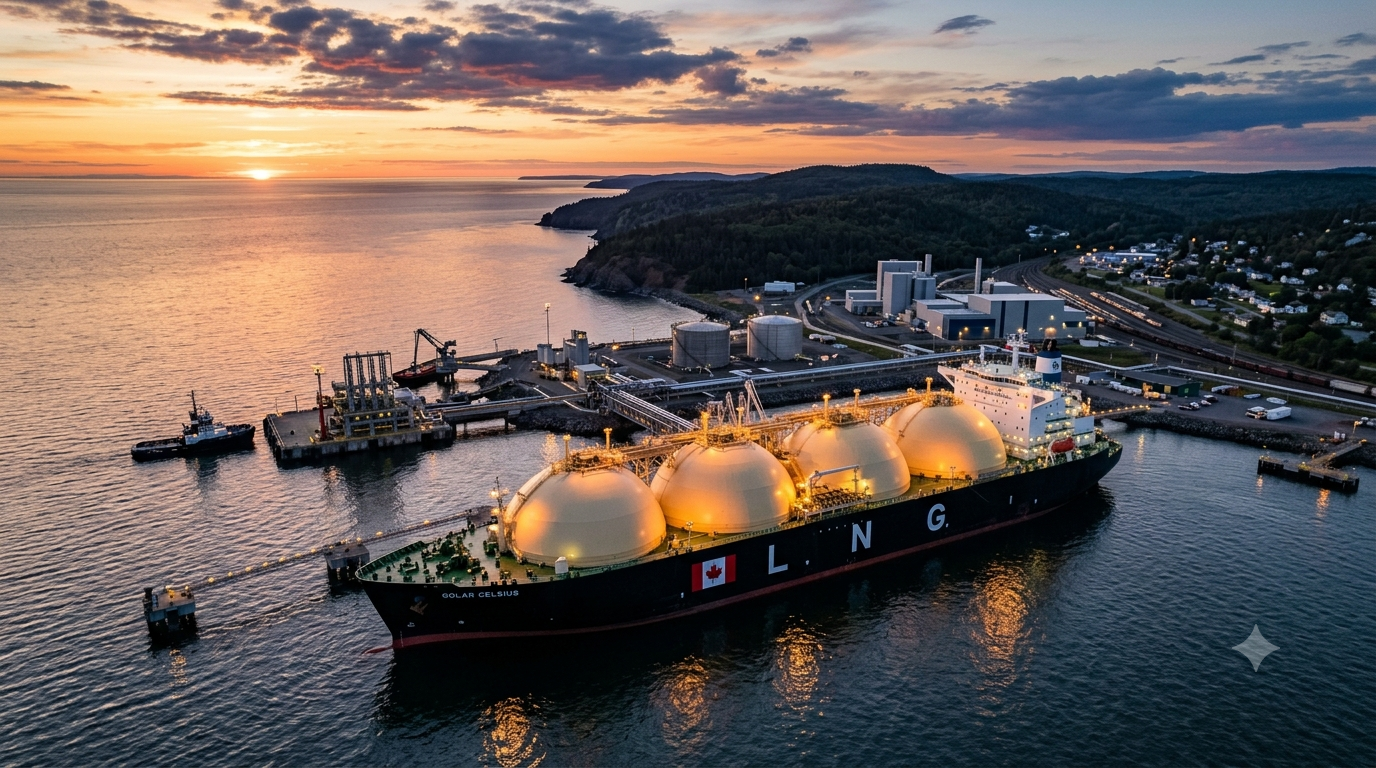
The week’s dominant energy sub-themes divide across three areas. Integrated majors, led by Suncor (TSX:SU), are navigating the commodity softness with their upstream-refining balance acting as a partial offset. Midstream infrastructure names — Enbridge and TC Energy — are benefiting from the easing of rate-hike concerns that followed the weak U.S. jobs report on Thursday, as their regulated cash flows become relatively more attractive when rate expectations moderate. The longer-term pipeline development story now includes the Carney-Smith B.C. coast announcement, which adds strategic optionality to Alberta producers and potentially Pembina’s future project pipeline. Meanwhile, LNG and natural gas exporters are watching Hormuz shipping recovery closely, as normalising LNG flows from the Middle East could affect North American natural gas pricing at the margin.
Risks to Watch
The primary near-term risk for Canadian energy names is a continued decline in WTI crude toward the US$65 level, which would begin to compress free cash flow for producers whose break-even assumptions were built on higher prices. The U.S.-Iran talks concluded another round in Doha this week without a breakthrough — Iran and U.S. envoys reportedly did not even meet directly in the most recent session — meaning that some geopolitical risk premium remains in energy markets, and a renewed conflict escalation could reverse oil’s recent decline quickly. The new bitumen pipeline announcement carries execution risk: regulatory approvals in British Columbia have historically been lengthy and contested, and community and Indigenous consultation timelines could extend the project by years. USMCA uncertainty — with the U.S. having formally rejected renewal this week — creates an ongoing headwind for cross-border energy trade flows.
Also Read: Best long term Canadian stocks
What to Watch Next
The Carney-Smith pipeline announcement will generate regulatory and permitting timelines to watch in the coming weeks. WTI crude price dynamics over the July long weekend — with U.S. markets also closed today for Independence Day — will set the tone for Canadian energy names when the TSX resumes trading next week. Suncor and CNQ Q2 earnings reports, when they arrive, will quantify how the oil price swing from peak conflict levels to current normalised pricing affected actual results versus expectations. Investors should also monitor the U.S. CPI release scheduled for mid-July, which will influence whether rate-hike fears return and affect the rate-sensitive dividend profiles of Enbridge and TC Energy.
Final Outlook
Canada’s energy sector arrives at the July long weekend in a complex but fundamentally sound position. The near-term commodity headwind from normalising oil prices is real and will show up in Q2 earnings comparisons for producers. But the structural story — operationally disciplined oil sands producers, world-class pipeline infrastructure, and now a potential new B.C. coast export corridor — remains intact and arguably strengthened by this week’s pipeline announcement.
Investors who entered Canadian energy names during the oil price spike should assess whether their thesis has evolved from a commodity trade into a quality infrastructure and integration story. Those two framings have different time horizons and risk profiles. The current environment suits the latter more than the former.
Sign Up For our Newsletters to get latest updates