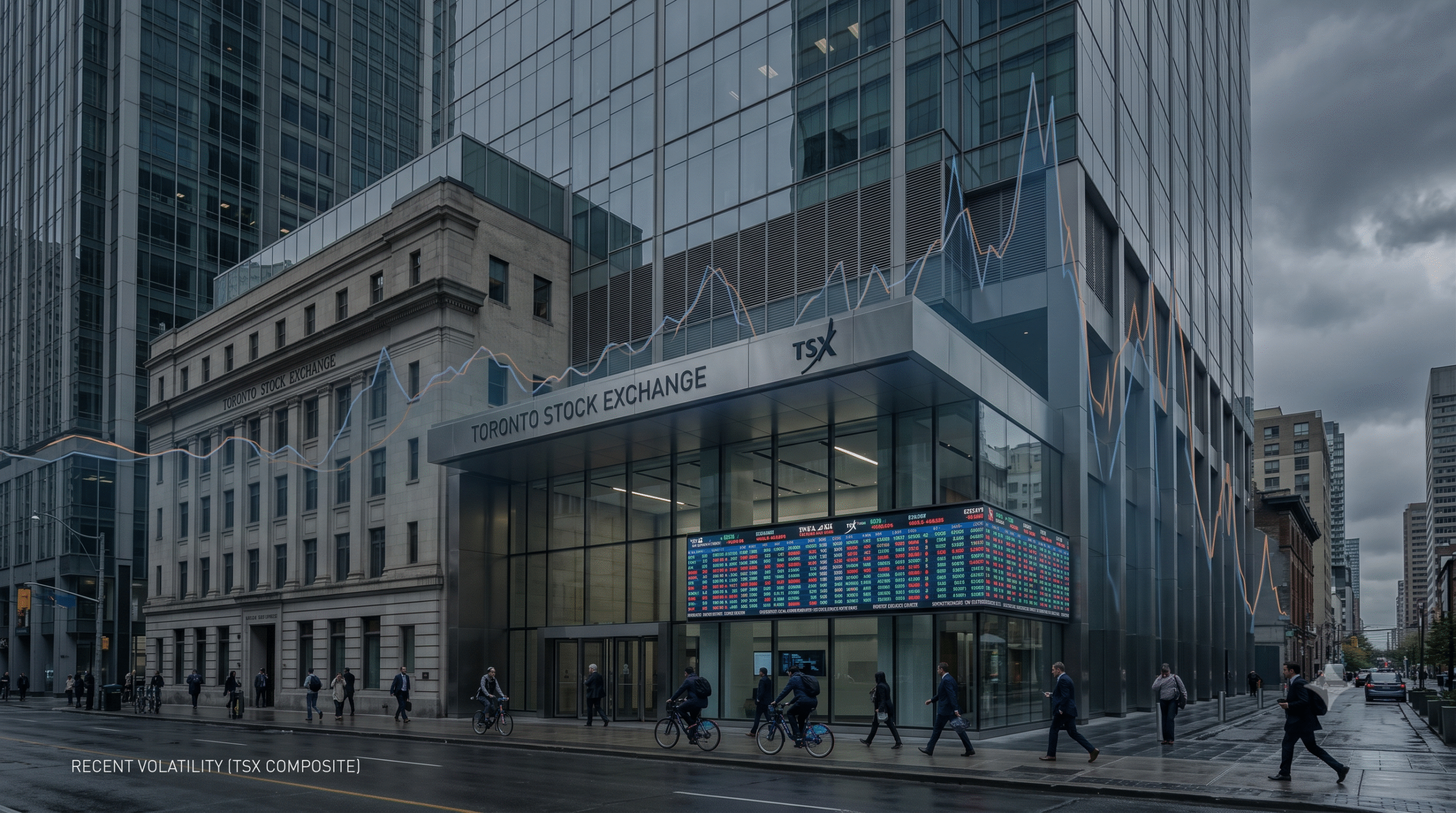


The S&P/TSX Composite Index finished the week essentially unchanged, settling near 33,904 on Friday as a tense geopolitical standoff between the United States and Iran continued to cloud investor sentiment. The index oscillated throughout the session, with gains in select gold miners and retail-facing stocks offset by weakness across the financial and energy subsectors. Volume was lighter than average as market participants held back ahead of further developments in the Middle East.
The trigger for Friday’s muted session was Iran’s continued demonstration of control over the Strait of Hormuz following a U.S. naval blockade. With the critical shipping lane showing few signs of reopening, Brent crude prices remained elevated, threatening to amplify inflation fears and complicate the global growth outlook. Adding to domestic pressure, Statistics Canada data revealed Canadian producer prices climbed 2.4% month-over-month in March — driven primarily by energy, petroleum products, and chemical costs tied directly to the Iran conflict. That reading has renewed speculation about potential rate action from the Bank of Canada, which investors had broadly expected to remain on hold through at least mid-year.
Also Read: Long term investing in Canada
The rate-hike concern weighed most visibly on Canada’s financial sector. Royal Bank of Canada and Bank of Montreal each shed around 0.5%, while Brookfield Asset Management fell 0.6% and TD Bank inched lower. On the positive side, retail stocks drew some buying interest after March sales estimates pointed to a third consecutive month of growth. Technology shares also found modest support after a strong batch of U.S. Q1 2026 earnings filtered through overnight.
Also Read: Stock investment Canada for beginners
Looking ahead, investors will be closely monitoring any Strait of Hormuz ceasefire developments, the Bank of Canada’s next rate commentary, and the upcoming Q1 earnings releases from major Canadian banks. If producer price inflation persists into the April print, the case for a rate hike will strengthen — which would put renewed pressure on rate-sensitive sectors including utilities, REITs, and financials. The TSX remains range-bound between 33,500 and 34,200 until macro clarity improves.
Sign Up For our Newsletters to get latest updates