

Table of Contents
- Market Context
- What Happened
- Why It Matters
- Sector Breakdown
- Risks to Watch
- What to Watch Next
- Final Outlook
Market Context
For the better part of a week, Canadian stocks had been moving sideways under a cloud of uncertainty. A sharp selloff on October 30, a modest rebound on Monday and another decline on Tuesday left the S&P/TSX Composite roughly 4% below its August record, with the month-to-date gain close to nothing. The uncertainty had several sources: a U.S. midterm election with large implications for trade policy, an oil market whipsawed by Middle East headlines, gold prices pressured by rate-hike expectations, and a federal budget on the way. Investors were waiting for any of those to resolve.
On Wednesday, several resolved at once.
What Happened
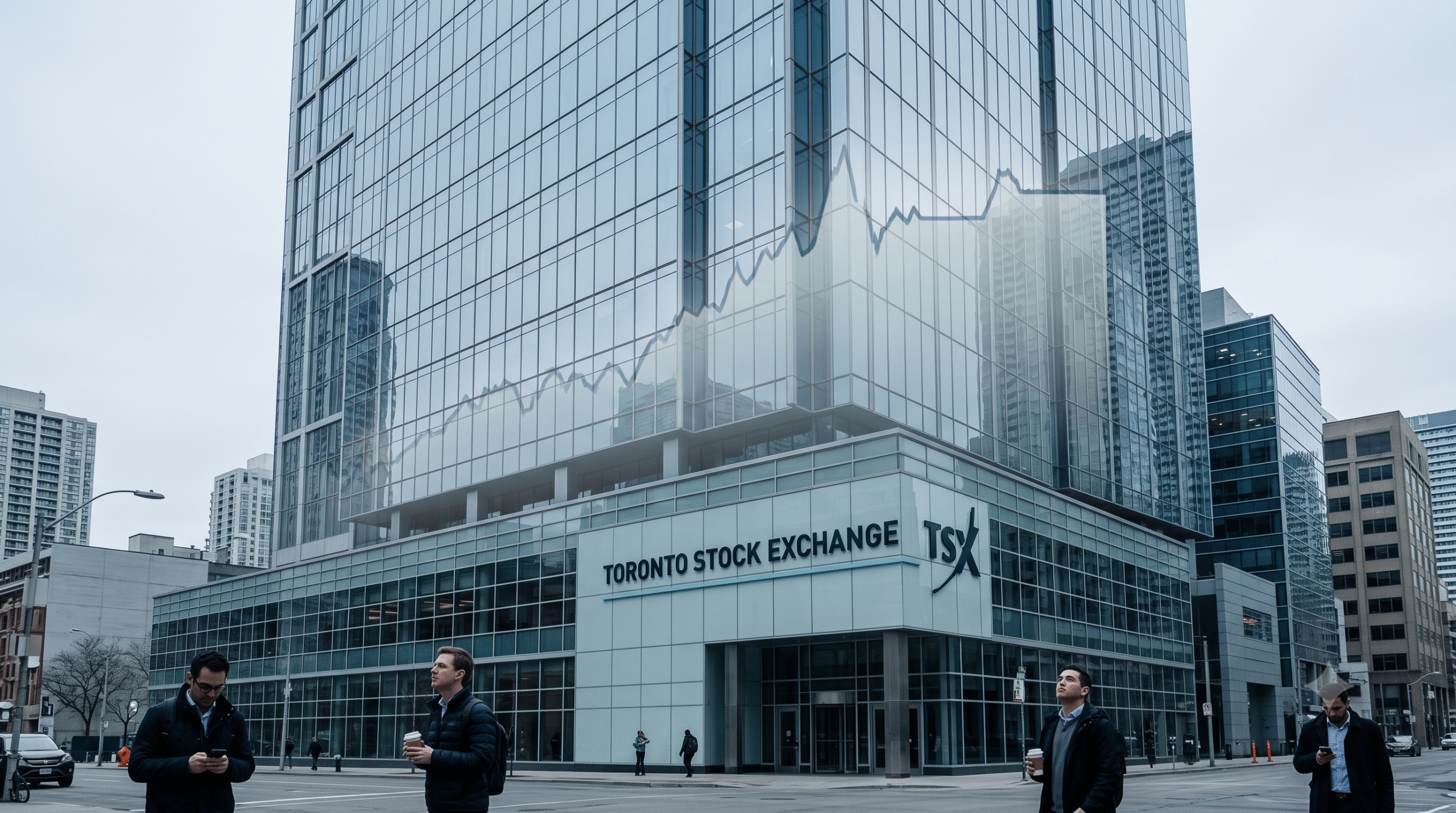
The S&P/TSX Composite jumped 2.3%, or 809 points, to close at 36,341, and the TSX 60 gained about 2.35% to 2,163. The index is now up about 2.3% for the month and about 20.7% from a year ago, and about 2% below its August record of 37,069.
The catalyst was the U.S. midterm result. Democrats regained control of both chambers of Congress, raising hopes of easing trade tensions, since a Democratic majority could constrain some of President Trump’s trade policy decisions. Domestic data helped too: Canada’s trade surplus widened to C$5.35 billion in September as higher energy and gold exports to the United States appeared to offset tariffs, and Canada and China extended a deal reducing Beijing’s agricultural tariffs through the end of 2028.
Auto exporters led, with Magna International up 3.9% and BRP up 7.7%. Gold miners soared, with Agnico Eagle up 9.4%, Barrick up 8% and Wheaton Precious Metals up 11.7%. Banks rose between roughly 2.4% and 2.9% as oil fell, with BMO up 2.9% and RBC up 2.5%. The 10-year Government of Canada yield dropped to about 3.70% and the Canadian dollar reached a two-month high near 1.397 per U.S. dollar.
Also Read: Best long term Canadian stocks
Why It Matters
Political risk premium came out of the market
The rally was unusually broad, which suggests investors had been demanding compensation for political uncertainty. With that risk reduced, money flowed into cyclicals, exporters and rate-sensitive stocks.
Oil and rates moved in the market’s favour
Brent settled near US$94.62, down about 8.7%, on bets that a shift in U.S. power could hasten an end to the Iran war. Lower oil eased inflation concerns, pulled yields down and supported banks, even as it hit energy stocks.
Sector Breakdown
Financials were the biggest contributors by weight, helped by lower yields and reduced inflation fears. Materials were the day’s standout, with gold up about 3.3% to roughly US$4,060 an ounce, silver up about 5% and a weaker U.S. dollar adding support.
Energy was the main drag. Suncor fell about 4.4% and Canadian Natural Resources about 7.7%, despite Suncor and Cenovus both reporting earnings above expectations, at C$3.97 and C$1.83 a share. Enbridge slipped about 0.8%. Industrials benefited from trade hopes, while technology was mixed: Shopify rebounded about 6.3% after Tuesday’s earnings plunge. Soft spots remained in the economy, with Canada’s services activity contracting for a fifth straight month and private-sector activity deteriorating.
Risks to Watch
Policy risk remains. Today’s federal budget could change sentiment, and the Bank of Canada has said it will study it before deciding what to do next. Geopolitical risk is also high, since oil fell on hope rather than agreement, and a reversal could be fast. Trade risk persists because tariffs on steel, aluminum and autos remain in place.
Economic risk is rising, with soft services and composite PMI readings, while valuation after a 2.3% single-day jump leaves less room for disappointment. Gold’s 3.3% surge could unwind if rate expectations change.
What to Watch Next
Investors should watch the federal budget’s deficit and spending priorities, the Bank of Canada’s response, oil prices and any further developments in the Iran process. Trade developments between Ottawa and Washington after the midterms, upcoming Canadian jobs and inflation data, and the Federal Reserve’s stance on a December move will also matter. Third-quarter earnings from remaining companies will add company-level information.
Final Outlook
The TSX closed Wednesday in its strongest position in weeks, supported by falling oil, easing yields, a two-month high in the Canadian dollar and optimism about trade. A move back toward the August record is plausible if those conditions hold, though the rally rests heavily on events outside Canada. After a day like this, follow-through matters more than the headline gain.
Verdict: Cautiously constructive. Monitor oil, the budget and the 37,069 record.
Sign Up For our Newsletters to get latest updates