

Table of Contents
- Market Context
- What Happened
- Why It Matters
- Sector Breakdown
- Risks to Watch
- What to Watch Next
- Final Outlook
Market Context
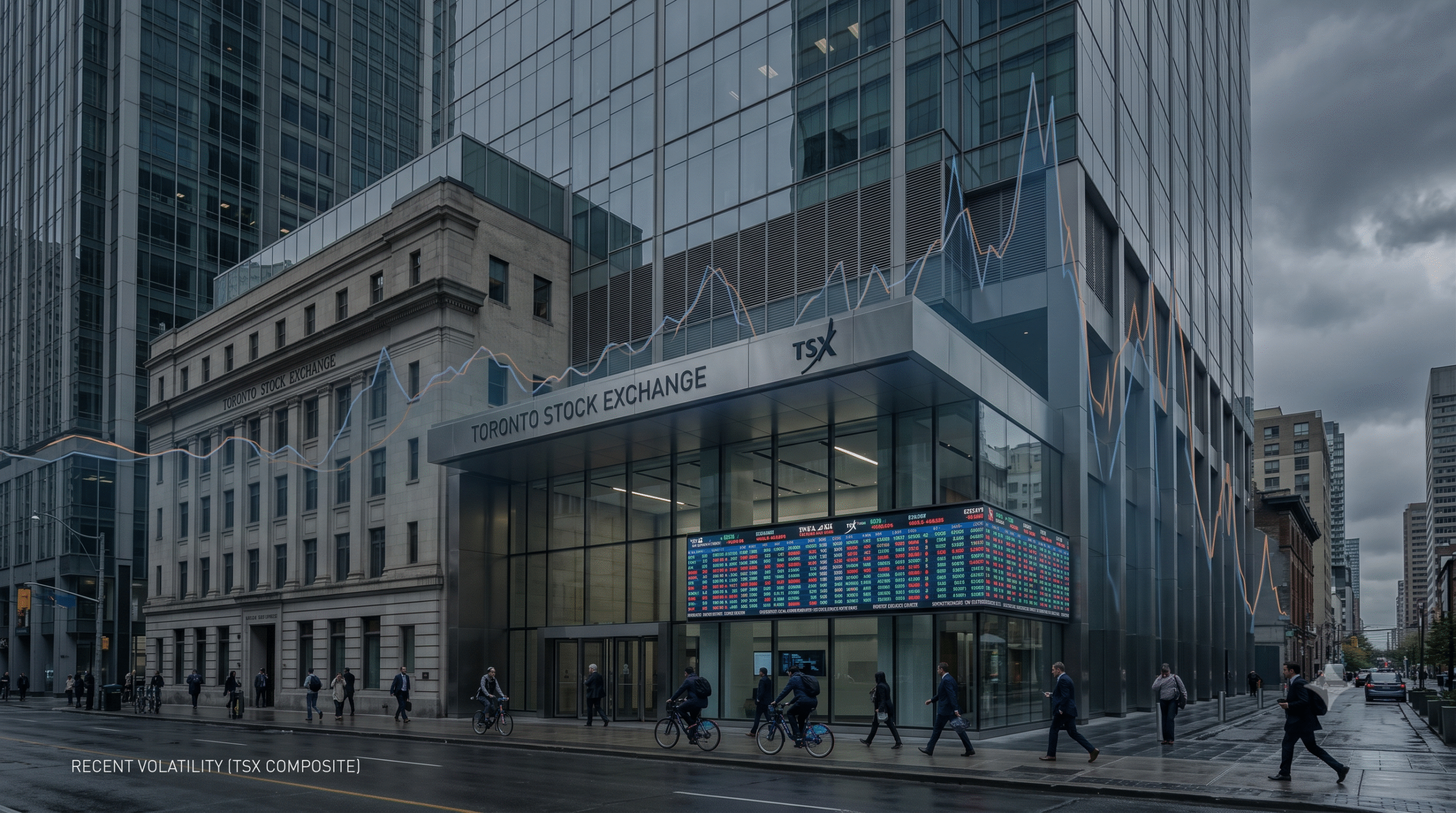
The TSX Composite enters this week having closed out last week with a modest decline, capping off a period in which Canadian equities were pulled in multiple directions by a global semiconductor selloff, rising energy prices, and softer gold. That volatility has carried directly into this morning, with oil prices extending their advance following a fresh, more serious escalation in the U.S.-Iran conflict.
What Happened
The TSX Composite closed Friday down roughly 0.2% at 35,340, weighed down by weakness in mining and banking stocks even as the country’s substantial energy sector benefited from rising crude prices. Gold miners led the session’s declines, with Agnico Eagle Mines falling 3.6%, Wheaton Precious Metals dropping roughly 4%, and Barrick Gold shedding about 3%, while banks including RBC, TD, BMO, and Scotiabank each lost close to 1%. On the technology side, Shopify fell around 1.4%, Constellation Software declined 0.9%, and Celestica extended losses of more than 6% following a 9.3% plunge in the prior session, as part of a broader global semiconductor selloff. South of the border, Wall Street posted a full losing week, with the S&P 500 down 1.6%, the Nasdaq Composite off 2.9%, and the Dow Jones Industrial Average down 0.9%, partly driven by renewed AI valuation concerns following a new model announcement from Chinese startup Moonshot AI. This morning, oil prices extended their rally further, with Brent crude rising roughly 3% to above $91 a barrel following another round of U.S. strikes on Iran that reportedly resulted in American casualties, while U.S. stock futures traded modestly higher, with S&P 500 futures up around 0.2% and Nasdaq-100 futures up closer to 0.5%.
Also Read: Best long term Canadian stocks
Why It Matters
The TSX’s sector composition continues to provide only a partial offset to broader market pressures. Canada’s energy weighting has helped cushion the index against last week’s technology selloff, but weakness in gold miners and banks has been enough to push the broader index modestly negative even as oil prices rally.
This morning’s reported casualties mark a more serious escalation than markets had been pricing. Prior episodes in this conflict generally involved exchanges of fire without confirmed American losses, and today’s news could meaningfully shift how investors weigh the probability of a prolonged conflict versus near-term de-escalation.
Sector Breakdown
Energy remains the TSX’s clearest source of strength amid this ongoing volatility, with the sector’s substantial index weighting providing a meaningful offset to weakness elsewhere. Materials, and gold miners specifically, have shown an unusual pattern of declining even as geopolitical risk has intensified, a divergence that adds uncertainty to how the sector might behave going forward. Technology names with global AI and semiconductor exposure remain the most directly affected by last week’s broader risk-off tone, following the emergence of a credible new AI model from a Chinese competitor that has raised fresh questions about the pace and durability of Western AI infrastructure spending.
Risks to Watch
The most immediate risk is further escalation following today’s reported casualties, which could extend both the oil price rally and broader market volatility well beyond what’s currently priced in. Continued technology sector weakness, following last week’s steep declines in chip-linked names, poses an ongoing risk to the TSX’s growth-oriented constituents. Rising oil prices feeding into inflation expectations could also complicate the policy outlook for both the Bank of Canada and Federal Reserve in the weeks ahead.
Also Read: Top Canadian tech AI stocks
What to Watch Next
Investors should watch closely for further details on today’s escalation and any resulting shift in the broader conflict trajectory. This week’s major earnings reports, including Alphabet and Tesla, will be closely watched for AI capital expenditure guidance that could influence technology sector sentiment. Continued oil price direction remains the dominant variable shaping overall TSX performance in the near term.
Final Outlook
The TSX heads into this week facing genuine uncertainty following a volatile prior week and a fresh escalation in the underlying conflict driving oil prices. The index’s energy weighting offers some resilience, but the breadth of pressures across gold, banking, and technology names suggests continued choppiness is likely.
Sign Up For our Newsletters to get latest updates