


Table of Contents
- Market Context
- What Happened
- Why It Matters
- Sector Breakdown
- Risks to Watch
- What to Watch Next
- Final Outlook
Market Context
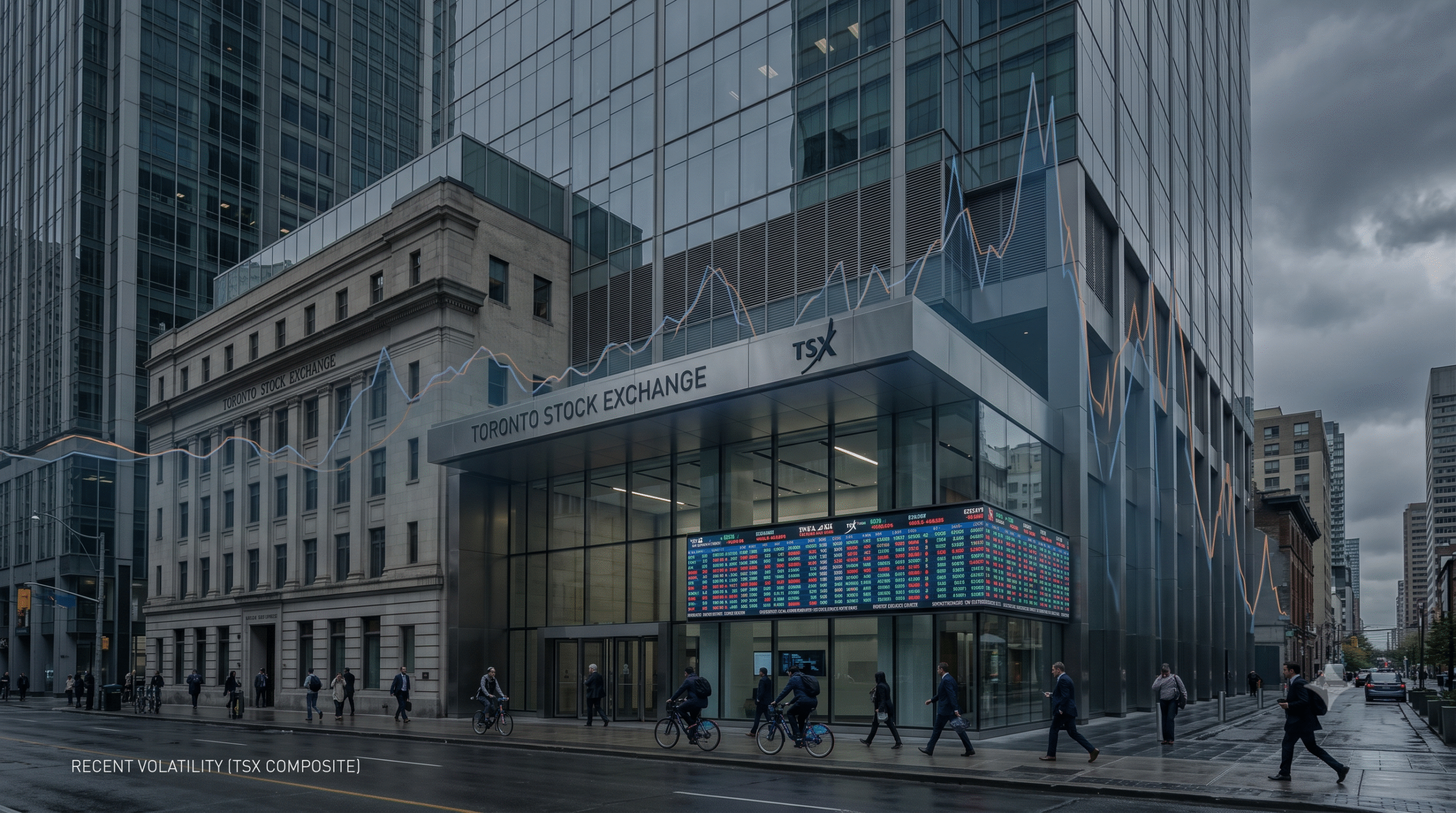
The S&P/TSX Composite continued its recent softer patch Monday, edging lower for a second consecutive session as a slightly hotter-than-expected inflation report added to the profit-taking mood that has characterized trading since the index touched record territory late last week.
What Happened
The S&P/TSX Composite fell 0.17% Monday to close at 36,668, with losses in the information technology, consumer staples, and healthcare sectors leading shares lower. The decline followed the release of Statistics Canada’s July inflation report, which showed headline inflation at 3.0% year-over-year, just above the 2.9% consensus forecast, with core inflation measures tracked by the Bank of Canada also edging higher, largely reinforcing expectations that the central bank will keep interest rates unchanged for the remainder of the year. Retail stocks posted losses, with Alimentation Couche-Tard, Loblaw, and Dollarama all losing about 1%. Software and technology-services stocks traded lower, tracking losses among Wall Street software infrastructure shares, with Shopify shedding more than 1.5%. Oil prices edged higher, supporting energy stocks, with Canadian Natural Resources adding more than 1%, while major banks edged higher ahead of their earnings reports scheduled for next week. On the geopolitical front, tensions in the Middle East persisted, with little sign of near-term resolution. Among individual movers, Spartan Delta gained 5.10% to $12.77, while TerraVest Industries fell 7.88% to $119.54 and Lithium Americas declined 7.66% to $4.34.
Why It Matters
Monday’s decline represents a continuation of the profit-taking pattern that emerged Friday, suggesting the market’s pullback from record territory may extend beyond a single-session reaction to weak U.S. retail sales data. With inflation now providing an additional, distinct headwind, the combination of factors weighing on sentiment has genuinely broadened over the past two sessions.
The explicit connection between rising fuel prices and July’s inflation reading demonstrates how directly energy sector strength is now feeding into the broader Canadian economic picture. This creates a genuinely interesting dynamic where energy stocks benefit directly from the same rising prices that are simultaneously pressuring sentiment across other parts of the index through inflation concerns.
Sector Breakdown
Information technology, consumer staples, and healthcare led Monday’s declines, with technology names specifically tracking continued weakness among U.S. software infrastructure stocks. Retail names faced pressure tied to the broader inflationary backdrop, with Alimentation Couche-Tard, Loblaw, and Dollarama all posting similar roughly 1% declines. Energy stood out as a relative bright spot, with Canadian Natural Resources benefiting from rising oil prices even as the broader index moved lower, while financials showed a mixed picture, with the largest banks gaining ahead of next week’s earnings even as broader inflation-driven caution weighed on other parts of the sector.
Also Read: Dividend paying stocks Canada
Risks to Watch
The most significant risk is that Monday’s hotter-than-expected inflation reading signals a genuine trend rather than a single data point, which could extend pressure on rate-sensitive and growth-oriented sectors in the weeks ahead. Continued Middle East uncertainty remains a persistent source of both oil price support and broader market unpredictability. The unresolved question of whether last week’s profit-taking represents a healthy pause or the start of a more extended pullback from record territory remains an important consideration heading into this week’s trading.
What to Watch Next
Investors should watch next week’s major bank earnings reports closely, given Monday’s positive pre-earnings positioning across the sector. Continued Canadian inflation data will be important for confirming whether Monday’s reading represents a genuine trend. Ongoing developments in the Middle East situation and their effect on oil prices will also remain relevant for both the energy sector specifically and the broader inflation outlook.
Final Outlook
The TSX’s second consecutive lower session reflects a genuinely broadening set of concerns, from continued U.S. technology sector weakness to a hotter domestic inflation reading, even as energy and pre-earnings bank positioning provided some offsetting support. Investors should watch how the index trades through the rest of this week for signs of whether this pullback extends further.
Verdict: Cautiously constructive, with next week’s bank earnings as an important near-term test for broader market direction.
Sign Up For our Newsletters to get latest updates