

Table of Contents
- Market Context
- What Happened
- Why It Matters
- Sector Breakdown
- Risks to Watch
- What to Watch Next
- Final Outlook
Market Context
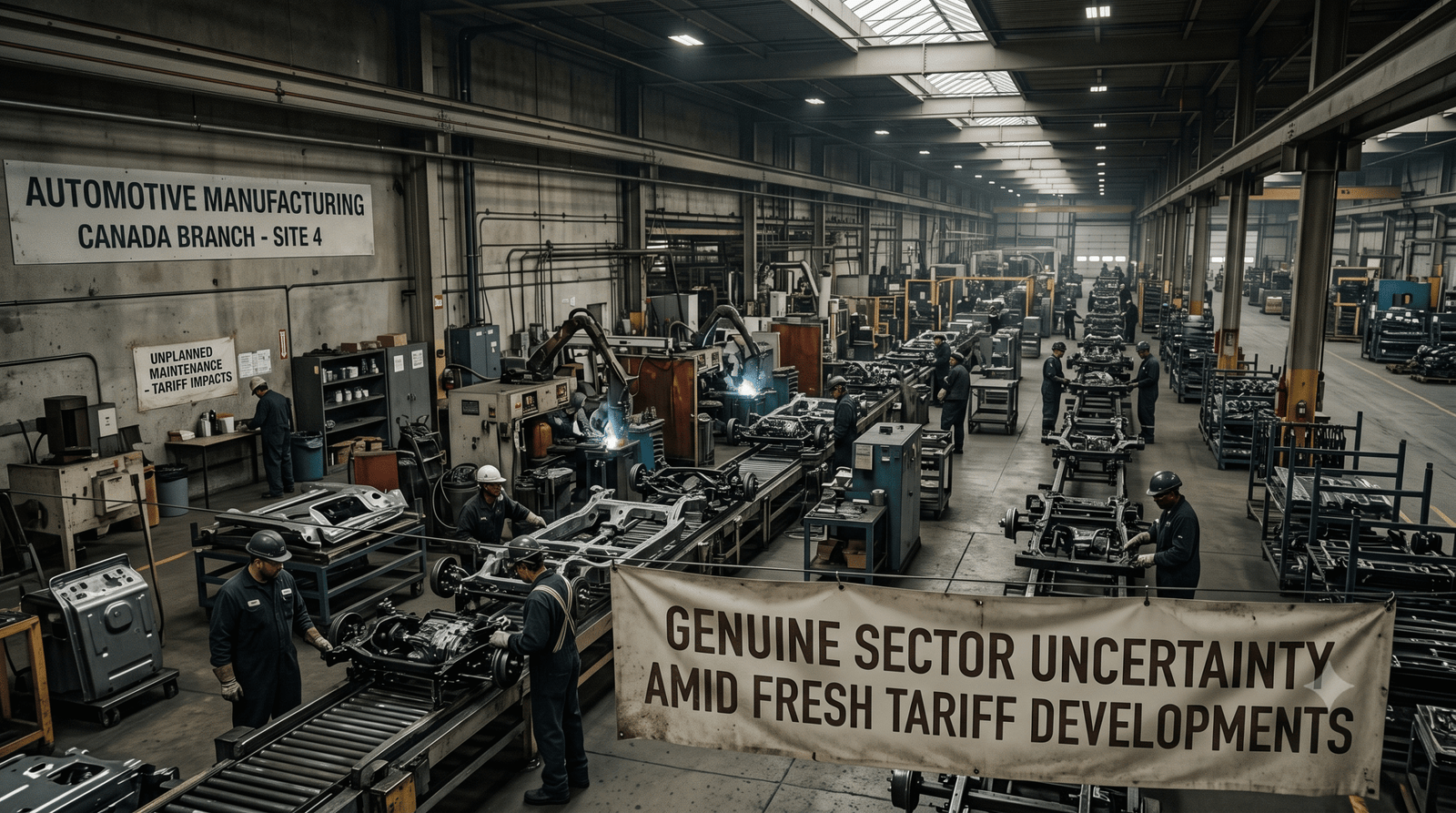
Canada’s electric vehicle sector enters September 10 in a market environment that is simultaneously more hostile and more instructive than at any point in 2026. The trade war with the United States has escalated dramatically — Trump signed new tariff proclamations this week targeting Canadian alcohol, motorcycles, whey products, and molasses, while imposing 50% tariffs on a broader range of Canadian goods including dairy, paper, wood, aluminum, and furniture, effective September 29. For Canadian EV manufacturers, that escalation creates a specific and acute challenge: the U.S. market is, for most transit-focused EV companies, either the primary revenue market or the most important growth destination. Trade barriers that make Canadian-manufactured vehicles, components, and services more expensive in the U.S. represent a direct headwind to the sector’s commercial model.
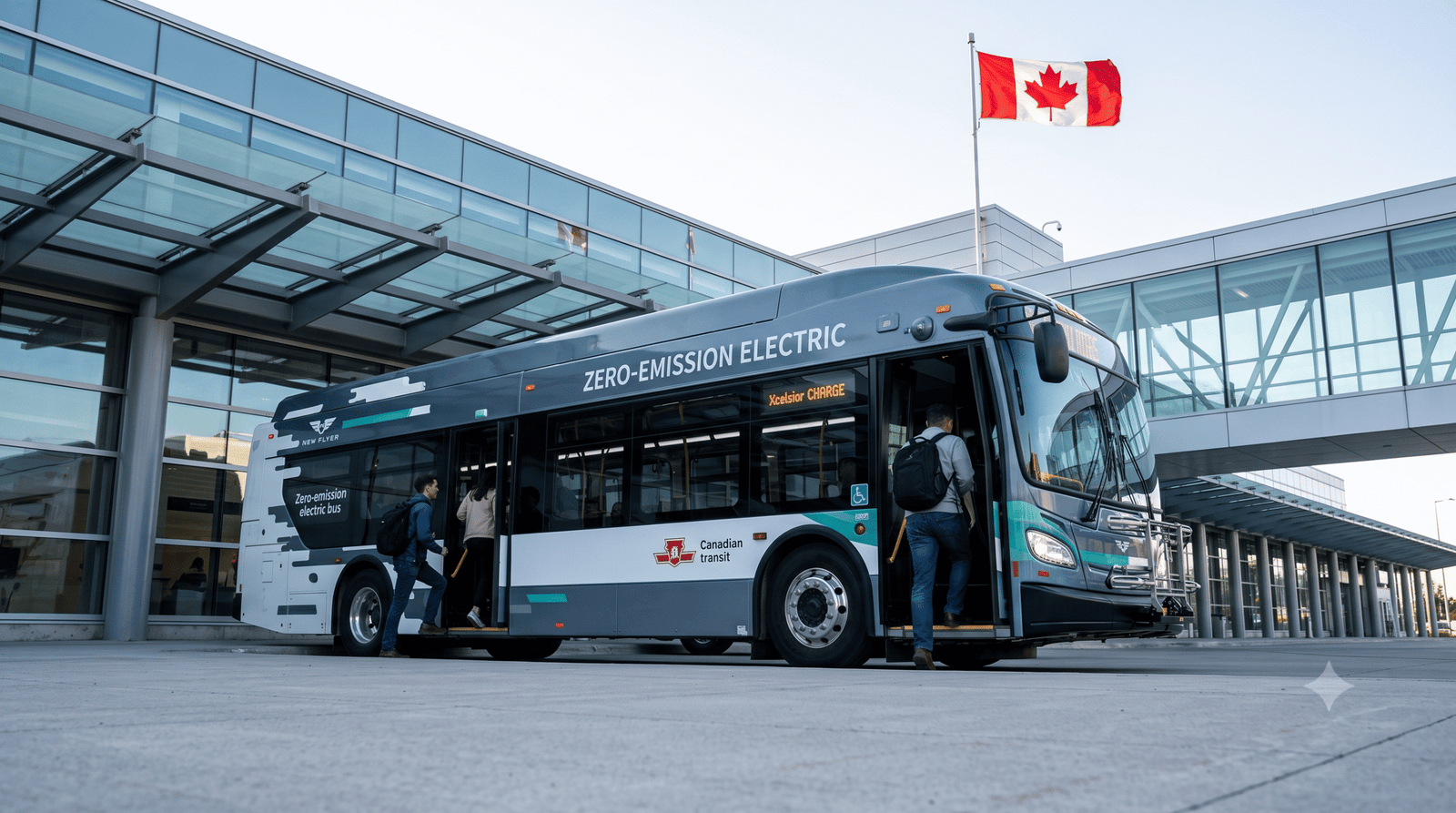
Yet the same week that brought new tariff escalation also delivered one of the strongest institutional validation stories in NFI Group’s (TSX:NFI) 2026 commercial calendar. On September 4, Alexander Dennis — NFI’s Scottish subsidiary — was selected by the Liverpool City Region Combined Authority as the supplier for at least 207 new low-emission buses, in one of the largest single UK transit procurements of the year. On September 8 — the same day Canada’s retaliatory tariffs took effect — New Flyer of America Inc., NFI’s U.S. manufacturing subsidiary, won an order supporting the East Colfax Bus Rapid Transit project, specifically described as strengthening a long-standing partnership and advancing U.S. manufacturing. That U.S. manufacturing emphasis is analytically important: NFI’s roughly 50 global facilities across 10 countries include significant U.S. production capacity, providing a degree of insulation from the Canadian-origin tariff threat that purely Canada-based manufacturers cannot access.
NFI’s record backlog of approximately CA$13.7 billion — reported in the company’s 2025 annual summary — reflects sustained institutional demand for zero-emission transit solutions across North America and Europe. That backlog is the most important single indicator of NFI’s near-term revenue visibility, and the Liverpool and East Colfax wins confirm that new orders continue flowing into a pipeline that is already at record levels.
What Happened
In the past 24 hours, the dominant EV-sector developments involve both NFI’s commercial wins and the broader tariff escalation that complicates the sector’s outlook. Trump signed new tariff proclamations on September 9 and 10 adding Canadian alcohol, motorcycles, and whey products to the restricted list, with 50% tariffs on a broader range of Canadian goods taking effect September 29 — a further escalation that compresses the window between the current tariff environment and an even more restricted one. For NFI, the New Flyer of America East Colfax win — specifically highlighting U.S. manufacturing — may represent the company’s conscious effort to position its U.S. production footprint as a tariff-mitigation mechanism. Electrovaya Inc. (TSX:ELVA), the Mississauga-based lithium-ion battery technology company that supplies battery systems for EV and warehousing applications, has been trading near CA$13.92 and remains a watchlist name as the battery technology market evolves. The broader EV market context involves continued pressure on small EV manufacturers globally — Lion Electric entered creditor protection in late 2024 and is effectively no longer an active TSX listing — concentrating investor attention on the survivors with institutional-scale backlogs and manufacturing diversification.
Why It Matters
NFI’s Geographic Manufacturing Diversification Is Its Most Valuable Trade War Asset
NFI’s ability to fulfil the East Colfax BRT order through its New Flyer of America subsidiary — manufacturing in the United States rather than importing finished vehicles from Canada — is the clearest expression of why geographic manufacturing diversification is the single most important strategic advantage for Canadian EV companies in the current trade war environment. A company that manufactures in both the U.S. and Canada, under both U.S. and Canadian regulatory frameworks, and with both U.S. and international customer relationships, is fundamentally less exposed to bilateral tariff escalation than a company that manufactures exclusively in Canada and sells exclusively into the U.S. market. NFI’s CA$13.7 billion backlog is distributed across this globally diversified operational model, which provides structural earnings resilience that purely domestic EV manufacturers cannot replicate.
The Liverpool Win Illustrates Europe’s Role as a Trade-War Independent Growth Market
Alexander Dennis’s Liverpool City Region selection for 207 low-emission buses demonstrates that NFI has access to growth markets that are entirely outside the Canada-U.S. bilateral trade dispute. European transit agencies — operating under their own procurement frameworks, funded by EU infrastructure programmes, and buying vehicles from Alexander Dennis’s Scottish manufacturing facilities — are unaffected by Trump’s tariff proclamations. For investors assessing NFI’s long-term earnings resilience, the European dimension of its revenue base is an underappreciated buffer against the North American trade war’s commercial damage.
Sector Breakdown
The Canadian EV stock universe as of September 10 is considerably narrower and more institutionally grounded than it was two years ago. Lion Electric’s creditor protection in late 2024 removed the sector’s most prominent small-cap commercial truck and bus name. NFI Group — Winnipeg-headquartered, with brands including New Flyer, Alexander Dennis, MCI, and ARBOC — is now the dominant Canadian EV public company by revenue scale, backlog size, and institutional investor recognition. Its record CA$13.7 billion backlog and double-digit delivery growth in 2025 provide the strongest near-term revenue visibility in the Canadian EV universe. Electrovaya offers a battery technology angle with its lithium-ion systems for EV and materials-handling applications, trading near CA$13.92 with a smaller revenue base and more speculative growth profile. For investors seeking EV exposure with real earnings and contractual revenue certainty, NFI represents the credible institutional option; for those seeking earlier-stage battery technology exposure, Electrovaya carries commensurate higher risk.
Risks to Watch
The most immediate risk for NFI specifically is the expanding U.S. tariff schedule. Trump’s September 29 tariff expansion — adding 50% duties to a wider range of Canadian goods — increases the potential for Canadian-manufactured components in NFI’s supply chain to face tariff costs even where finished vehicles are assembled in the United States. Supply chain analysis will be required to understand the full scope of that exposure. For Electrovaya, the primary risk is competition from much larger battery manufacturers — particularly Chinese producers whose government-subsidised economics can undercut independent Canadian battery makers — alongside the execution risk of scaling a technology business with a relatively small revenue base. The broader EV sector headwind of rising oil prices — Brent now above US$100 — is analytically complex: higher oil prices make EV operating economics more attractive to fleet operators, which should support long-term demand, but they also raise inflationary concerns that tighten government budgets for transit capital expenditure.
Also Read: Top Canadian tech AI stocks
What to Watch Next
NFI’s next quarterly earnings release will provide the most important update on backlog conversion rates, delivery volumes, and the specific tariff impact analysis on its North American supply chain. The September 29 effective date for Trump’s expanded Canadian tariff list is a critical regulatory watchpoint. Any update to NFI’s U.S. manufacturing footprint — specifically whether the company accelerates its American production investment in response to the tariff environment — would be a significant strategic signal. Electrovaya investors should watch for any commercial contract announcements that demonstrate the company’s ability to scale its battery technology business beyond its current revenue base.
Final Outlook
Canada’s EV sector in September 2026 is a story of institutional resilience amid genuine structural challenge. NFI Group’s CA$13.7 billion backlog, its U.S. manufacturing presence through New Flyer of America, and its European growth platform through Alexander Dennis provide a three-dimensional defensibility that the current tariff environment cannot fully penetrate. The Liverpool and East Colfax wins this week confirm that the commercial pipeline continues to grow even as the bilateral trade relationship deteriorates. Electrovaya remains an earlier-stage watchlist candidate with real technology but limited scale.
The trade war’s escalation is real and its impact on Canadian EV companies with U.S. supply chains will require careful management. But NFI’s geographic diversification is precisely the structural hedge that was built for this kind of environment.
Verdict: Cautiously constructive on NFI Group’s institutional EV franchise with geographic manufacturing diversification. Electrovaya is a watchlist candidate, not a broad buy signal. Monitor the September 29 tariff expansion for supply chain cost implications.
Sign Up For our Newsletters to get latest updates