

Table of Contents
- Market Context
- What Happened
- Why It Matters
- Sector Breakdown
- Risks to Watch
- What to Watch Next
- Final Outlook
Market Context
Canadian equities are in a consolidation phase. The S&P/TSX Composite reached an all-time high of 37,069 in August and sits about 2.6% below that level, while remaining roughly 20% above where it stood a year ago. The index is not in trouble, but it has been pulled in different directions by oil, bond yields, trade headlines and rate expectations. This report takes stock of where investors stand after two contrasting sessions. Monday’s decline and Tuesday’s rebound together offer a clean snapshot of what is currently moving the market.
The common thread is energy. Oil prices influence inflation, inflation influences the Bank of Canada, and the central bank’s path influences how investors value nearly everything else.
What Happened
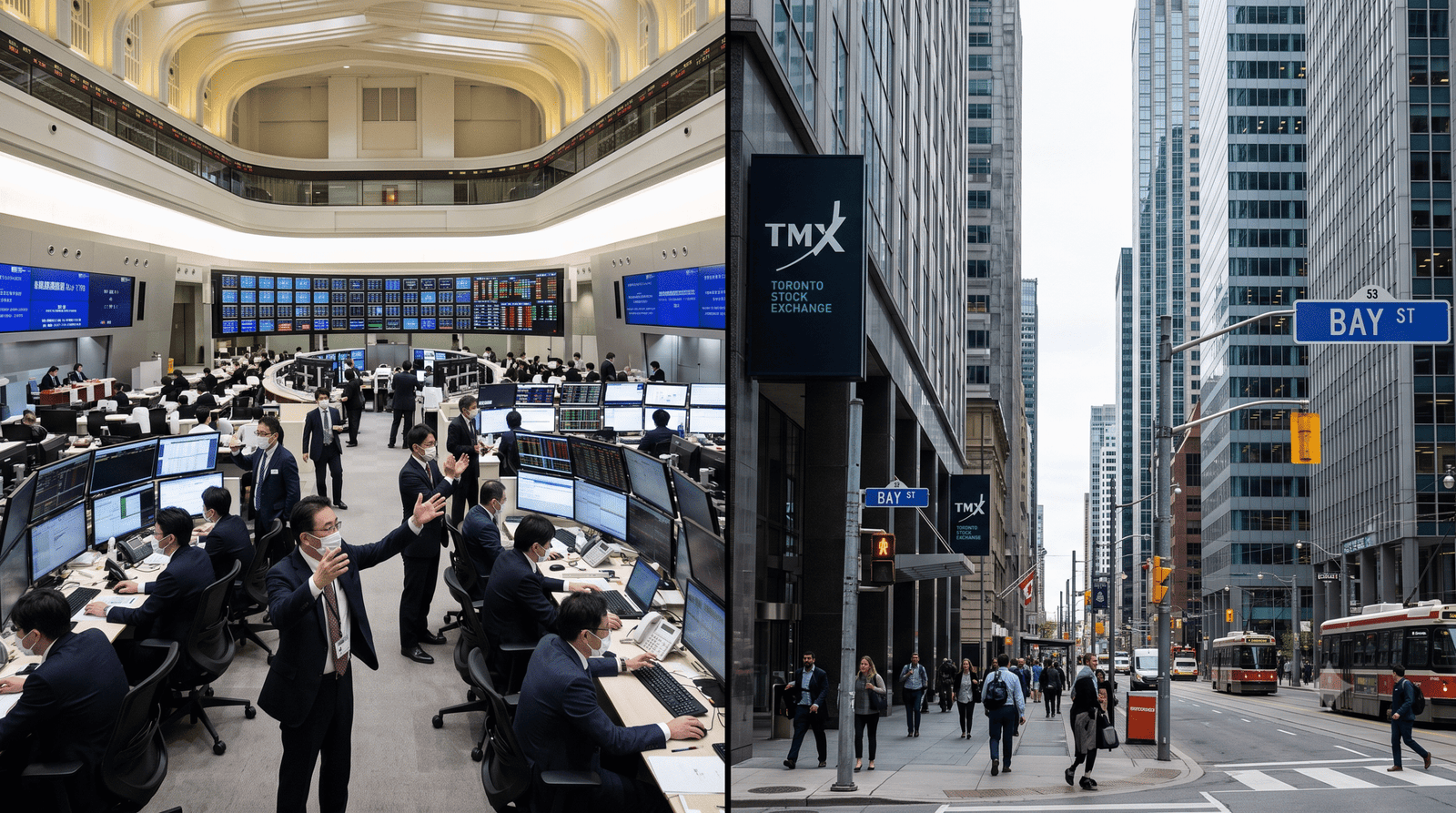
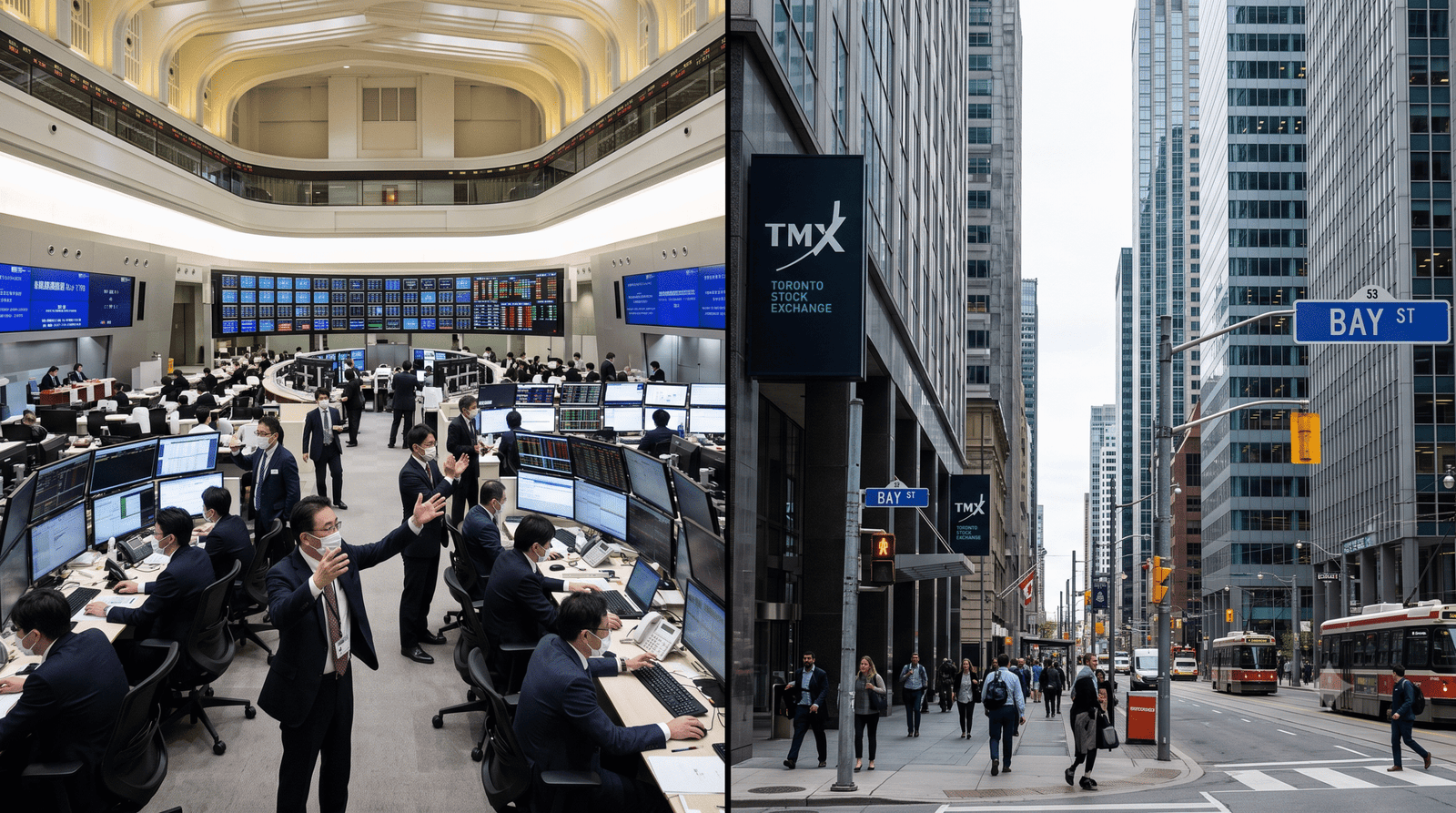
On Monday the TSX fell 248 points, or 0.7%, to 35,929, as utilities, consumer staples, real estate and mining shares led a broad retreat amid rising Treasury yields and weaker commodity prices. Tuesday brought a rebound of 179 points, or 0.5%, to 36,108, led by financials as the oil rally cooled.
The TSX 60 gained about 0.6%. Banks led, with Royal Bank up about 1% and TD about 1.2%. Pipelines and infrastructure advanced, with TC Energy up about 1.3%, and retailers also rose, including Alimentation Couche-Tard up about 1.9%. Technology was resilient, with Constellation Software up roughly 2.6% and Shopify about 1%. Energy producers and miners lagged. The Canadian dollar strengthened to about 71.15 cents US from 70.94, and on Wall Street the Dow gained about 1% while the S&P 500 rose about 0.3%.
Also Read: Safe investments for new investors
Why It Matters
A rotation, not a retreat
Tuesday’s leadership was telling. Rate-sensitive banks and infrastructure outperformed while commodity producers eased, a pattern consistent with investors reacting to cooler oil rather than abandoning the market.
Policy is the swing factor
September inflation came in at 3.1%, just below expectations, and the central bank decides on rates October 28. Markets lean toward a hold, with a hike priced for December. Any shift in that expectation could rearrange sector leadership quickly.
Sector Breakdown
Financials remain the index’s heaviest weighting and its most important swing group. Their relief on Tuesday came from easing yields and lower oil-related inflation fears. Energy and materials, which have powered much of 2026, took a breather, with gold softer and crude retreating from its highs.
Technology offered a bright spot despite a selloff in U.S. chipmakers and hyperscalers, with Celestica slipping about 0.5%. Industrial and consumer names such as Waste Connections and Loblaw added breadth to the advance. Reports of U.S.-Iran diplomacy helped calm energy-driven worries, but they remain unconfirmed headlines, and investors are watching how they develop.
Risks to Watch
Geopolitics is the dominant risk, since a breakdown in U.S.-Iran discussions could send oil sharply higher again. Canada-U.S. trade tension is the second, with a Bank of Canada survey showing business sentiment deteriorating after trade talks collapsed. Valuation risk is present after a strong year, and a rate hike, if it comes, could pressure interest-sensitive sectors. Earnings season adds company-specific uncertainty.
What to Watch Next
The calendar is busy. The Bank of Canada’s October 28 decision comes with a full forecast, third-quarter earnings from banks, energy producers and miners are building, and investors should monitor oil, gold and bond yields daily. Developments in Canada-U.S. trade negotiations remain a wild card.
Final Outlook
The TSX looks healthy but range-bound, with leadership shifting between sectors as macro signals change. That kind of market tends to reward diversification and patience over concentrated bets.In the near term, the October 28 central bank decision looks like the key catalyst, and positioning ahead of it may keep volatility elevated.
Verdict: Neutral with selective opportunities. Monitor the 36,000 level, the August record of 37,069 and the October 28 Bank of Canada decision.
Sign Up For our Newsletters to get latest updates