

Table of Contents
- Market Context
- What Happened
- Why It Matters
- Sector Breakdown
- Risks to Watch
- What to Watch Next
- Final Outlook
Market Context
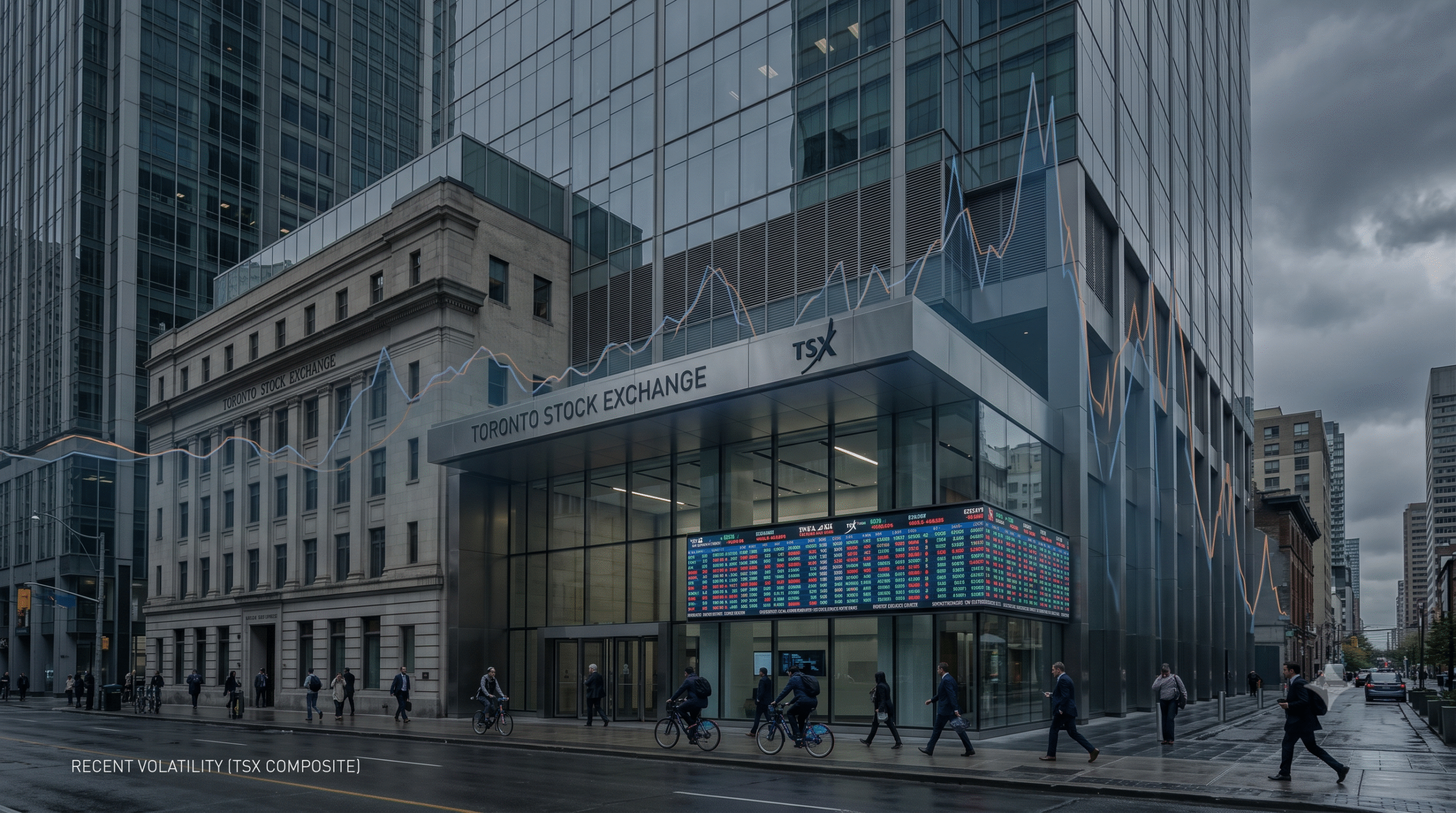
The S&P/TSX Composite Index closed Monday October 5 at approximately 35,441.80 — down 0.2% on the session — in a market that was simultaneously processing three major competing signals. Oil fell on the reduced energy-inflation-driven rate-hike fears that followed the soft U.S. September jobs data, dragging the TSX’s largest commodity-producing sector lower. Technology rose 1.9% as the same rate repricing that pushed October FOMC hike probability to approximately 20% — from 87% in mid-September — supported growth equity multiples. And two of the TSX’s most significant energy companies announced corporate transactions that generated company-specific moves far larger than the headline index number: Suncor –1.2% on a US$1.2 billion offshore asset sale to Ithaca Energy, and Cenovus –4.1% on a CA$5.7 billion acquisition of Athabasca Oil, which in turn surged more than 15%.
The juxtaposition of a –0.2% headline decline and a +1.9% technology sector advance is the week’s most important analytical signal. It confirms what the TSX’s sector composition has been demonstrating throughout 2026: the headline index is not a good proxy for what any individual sector is doing. Investors who held technology names on Monday gained substantially. Those who held energy names absorbed losses. Those who held the M&A participants — Cenovus shareholders lost 4.1%, Athabasca Oil shareholders gained 15%+ — experienced the sector restructuring story directly. And those who held bank stocks navigated a modestly positive session as reduced rate-hike bets supported financial sector valuations.
Stepping back, the TSX remains 17.03% above year-ago levels despite September’s 2.1% monthly loss that broke the five-month winning streak. The October 5 session’s 0.2% decline is modest relative to September’s sequential shocks. The market is demonstrating the structural resilience of a diversified index whose sector composition — energy, financials, materials — has been specifically advantaged by 2026’s extraordinary geopolitical and commodity environment.
What Happened
The TSX’s Monday October 5 session closed at approximately 35,441.80, down 34.86 points from the prior session’s close, in what The Globe and Mail described as a session where “lower oil prices weighed on the energy sector” while “gains in technology shares limited losses.” The Globe reported that at 12:11 p.m. ET, the TSX was down 0.1% at 35,468.32 before the close. The energy sector fell 0.9% and materials declined 0.8%, while information technology rose 1.9% — the largest sector divergence of the session. Suncor Energy (TSX:SU) fell 1.2% after announcing the sale of interests in three offshore oil assets to Ithaca Energy for US$1.2 billion. Cenovus Energy (TSX:CVE) fell 4.1% after announcing a CA$5.7 billion cash-and-stock acquisition of Athabasca Oil Corporation (TSX:ATH), which surged more than 15% on the acquisition premium. The Federal Reserve’s October rate-hike probability stood at approximately 20% — down dramatically from the 87% probability that had prevailed just before the September 16 FOMC meeting — after the soft U.S. September non-farm payrolls reduced near-term rate-hike bets.
Also Read: Safe investments for new investors
Why It Matters
The 20% October Fed Hike Probability Is the Most Important Number in Canadian Markets Right Now
The collapse of October FOMC rate-hike probability from 87% to 20% in three weeks is the most consequential macro repricing for Canadian equity markets since the Fed’s September 16 unanimous hike itself. In September, the 87% hike probability drove gold mining stocks lower, compressed technology multiples, and pressured dividend equity valuations through bond yield competition. At 20%, those headwinds are materially reduced — and the technology sector’s 1.9% Monday advance is the most visible expression of that repricing in real time. For the TSX overall, a continued 20% (or declining) hike probability through October would mean that the September macro shocks — which broke the five-month winning streak — were a temporary trough rather than the beginning of a sustained valuation contraction.
Suncor-Ithaca and Cenovus-Athabasca Are the Energy Sector’s Generational Restructuring Moment
The simultaneous announcement of two major energy transactions on the same Monday — Suncor selling US$1.2 billion of offshore assets and Cenovus acquiring Athabasca Oil for CA$5.7 billion — marks a structural consolidation in Canadian energy that investors should interpret as a generational rather than a tactical event. Canada’s oil sands producers are using their extraordinary free cash flow — generated at WTI above US$80 — to reshape their portfolios: divesting non-core, higher-complexity assets (Suncor’s offshore interests) and consolidating the highest-return Alberta plays (Cenovus adding Clearwater production through Athabasca). That strategic discipline at elevated commodity prices is exactly the behaviour that maximises long-term shareholder value in resource sector investing.
Sector Breakdown
The TSX’s October 6 sector picture provides a comprehensive Q4 opening frame. Technology — led by Celestica (CA$551.69, +3.89% Monday), Shopify (CA$173.23), and BlackBerry (CA$12.60) — is the clear rate-repricing beneficiary, with the 20% October hike probability improving growth stock discount rate assumptions. Energy — Suncor and Cenovus absorbing M&A-driven declines alongside oil price pressure — is navigating a structural transformation that will create value over multiple quarters even as near-term stock prices reflect transactional uncertainty. Financials — with Big Six banks positively receiving the reduced rate-hike probability — are the steady, dividend-growing anchor of the index. Materials — gold and copper names — are watching whether the 20% hike probability provides enough rate relief to sustain a gold price recovery above US$4,183. Consumer Staples — Dollarama with its October 9 ex-date and analyst fair value well above current prices — is attracting income and value positioning heading into the trade-war tariff-driven consumer trade-down thesis.
Risks to Watch
The 20% October FOMC probability is not a guarantee of a hold — it is market pricing of the most likely outcome given September’s soft jobs data. Any data between now and the October meeting (CPI, PPI, retail sales) that re-accelerates inflation expectations could rapidly rebuild hike probability toward 50%+. The Cenovus-Athabasca CA$5.7 billion transaction introduces integration risk into the energy sector’s most significant M&A story of 2026. The TSX’s energy sector –0.9% on Monday confirms that commodity price direction remains the dominant driver — and oil below US$80 on a Hormuz resolution would create additional energy sector headwinds independent of corporate transaction quality. Canada’s September 29 tariff expansion is beginning to filter through corporate cost structures, with Ag Growth International’s 11.32% October 1 decline being the first clear example of company-level earnings impact from the expanded tariff schedule.
What to Watch Next
October FOMC meeting — at approximately 20% hike probability — is the month’s primary monetary policy event. U.S. October CPI will be the most important data point between now and the FOMC meeting. Suncor’s communication on US$1.2 billion offshore proceeds deployment and Cenovus’s first integrated guidance incorporating Athabasca production will determine how quickly the market shifts from transactional uncertainty to strategic value recognition. Celestica’s October 27 Investor and Analyst Day remains the technology sector’s most important structured corporate event of the month. Bank of Canada October 28 rate decision will set the domestic monetary policy framework for Q4.
Final Outlook
The TSX’s –0.2% Monday decline obscures the genuine constructiveness of October’s opening macro configuration. A 20% October Fed hike probability — dramatically reduced from September’s crisis-level 87% — is the most important rate development for Canadian equity valuations since the September 16 hike confirmed the hiking cycle. The energy sector’s M&A week — Suncor and Cenovus simultaneously announcing transformative transactions — will create multi-quarter strategic value even as near-term stock prices reflect uncertainty. Technology’s +1.9% Monday advance confirms that growth stock investors are already acting on the improved rate environment.
Verdict: Cautiously constructive heading into October. The rate repricing is the most important macro tailwind available. Energy M&A requires patience rather than near-term enthusiasm. Technology’s rate-repricing benefits are being confirmed in real time. Monitor October CPI and October 28 BoC as the month’s defining policy events.
Sign Up For our Newsletters to get latest updates