


Unlock Premium Articles for Exclusive Insights!
You are reading a free article. Enter your details to unlock full access.
By submitting your details to unlock full access.
What Happened
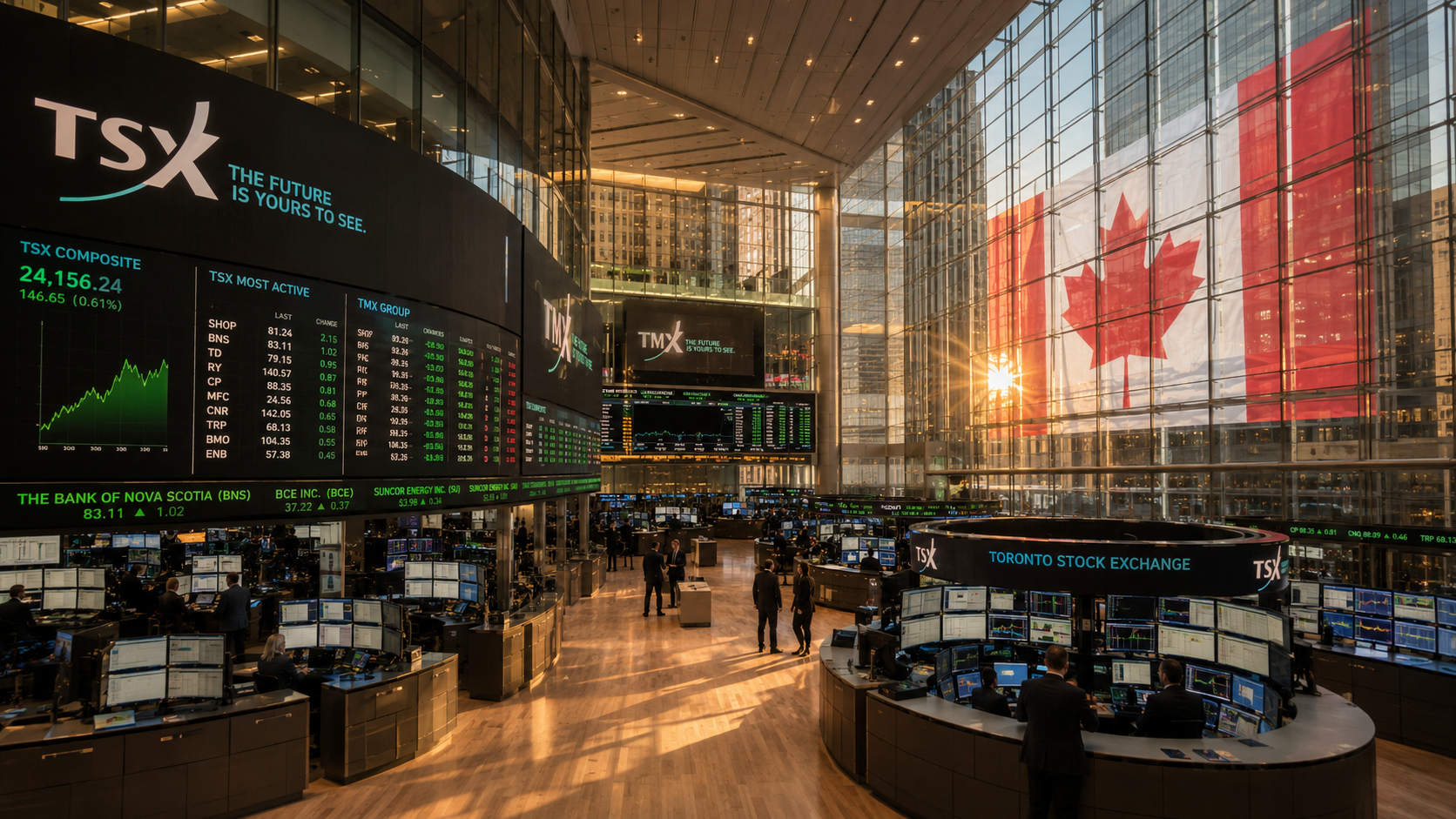
The TSX edged up 0.18% to close at 34,471 on Friday, with cautious signs of progress in U.S.-Iran negotiations. U.S. Secretary of State Marco Rubio cited “some good signs,” though major disagreements remained over Tehran’s uranium stockpile and control of the Strait of Hormuz. Lower gold prices pressured mining shares as inflation fears reinforced expectations of a possible U.S. interest rate hike later this year.
Statistics Canada’s preliminary estimate of March GDP flagged flat growth. The first quarter of 2026 showed a strong performance driven by a robust rebound in the manufacturing sector, which posted a 1.8% increase following a 1.3% decline in January. That manufacturing rebound is an encouraging signal, suggesting Canadian industry is adapting to the new trade reality even as overall growth remains constrained. The CAD/USD rate closed at approximately 0.7236 — down 0.34% on the week — reflecting modest dollar strength and ongoing uncertainty about the Bank of Canada’s divergence from U.S. rate policy.
Why It Matters
The Inflation-Rate Nexus
The Bank of Canada could be forced to tighten policy if inflation reaccelerates or if geopolitical developments begin to lift inflation expectations. We expect the policy rate to stay at the lower end of the neutral rate at 2.25% throughout the year despite markets pricing in rate hikes for the back half of 2026, partly driven by concerns that oil-related inflation might force the BoC’s hand. For Canadian equity investors, this matters enormously: rate increases would raise discount rates on future earnings, compress dividend stock multiples, and increase borrowing costs for consumers and businesses alike.
Trade Policy as a Structural Drag
The conflict in the Middle East and adverse oil supply shocks have mixed effects for Canada’s economy — supporting energy incomes and government revenues, while raising costs for households, businesses, and governments and adding to near-term uncertainty. Canada’s position as a major energy exporter means it receives some cushion from high oil prices, but the cost pass-through to consumers — through fuel, heating, and transportation — creates a genuine squeeze on household purchasing power that will eventually show up in retail sales and credit data.
Canada’s GDP is expected to grow by a modest 1% in 2026. Consumer spending, which accounts for approximately 60% of GDP, will once again be the primary driver of economic growth. This consumer spending is supported by interest rates that have reached their lowest level in a year, a relatively strong job market, and wage increases that contributed to a boost in household disposable income in 2025.
Sector Breakdown
From an economic read-through perspective, the TSX’s sector composition reflects the Canadian economy’s own mixed picture. Energy stocks are benefiting from the geopolitical oil premium but facing questions about sustainability. Financial stocks are posting strong earnings but are watchful of credit quality as mortgage refinancing stress builds. Technology and growth names are navigating the rate sensitivity of high valuations. Mining stocks face the unusual situation of geopolitical risk that is simultaneously driving gold demand and threatening the cost structures (through energy inflation) that determine profitability. The healthcare and consumer staples sectors — less represented on the TSX than in the U.S. — are providing quiet stability for defensive allocations.
Risks to Watch
The median probability of a recession in Canada stands at 25% in the next zero to six months and 30% in six to 12 months. Increase in trade tensions was selected by 79% of respondents as a downside risk. Market participants forecast annual CPI inflation of 2.6% by the end of 2026. These numbers are not alarming in isolation, but they represent a meaningful downside tail that investors should not dismiss. A combination of elevated inflation, rate hikes, and a trade shock could produce an economic outcome substantially worse than the base case projections.
Canada’s era of easy, proximity-based trade with the U.S. came to an end and exposed a massive preparedness gap among Canadian businesses, particularly in sectors that relied on frictionless access to U.S. customers and supply chains. This structural shift may dampen business investment and hiring intentions for longer than current consensus projections suggest.
What to Watch Next
The Bank of Canada’s June rate decision and the accompanying Monetary Policy Report will be the most consequential domestic macro event of the coming weeks. Any revision to growth or inflation forecasts — particularly if the Bank signals a willingness to raise rates in the second half of 2026 — would have immediate implications for Canadian equity valuations across all sectors. Statistics Canada’s next GDP release, CPI data, and labour force survey results will all provide critical inputs to that decision. On the geopolitical side, U.S.-Iran negotiations are the primary external variable; a genuine breakthrough would be disinflationary for oil and, therefore, broadly positive for Canadian consumer spending capacity.
Also Read: Safe investments for new investors
Final Outlook
Canada’s economic outlook for 2026 is best characterised as cautiously resilient. The structural advantages — energy export wealth, a diversified banking system, stable consumer demographics — are real. So are the headwinds: trade disruption, inflation risk, softening labour markets, and the mortgage refinancing cycle that will continue to test Canadian household balance sheets through the year.
Also Read: Best long term Canadian stocks
For equity investors, the economic backdrop supports a defensive growth orientation — favouring businesses with genuine pricing power, strong free cash flow generation, and manageable debt levels. The Bank of Canada’s next moves will likely determine whether the second half of 2026 is remembered as the period when Canada navigated its challenges successfully or as the beginning of a more difficult adjustment.
Sign Up For our Newsletters to get latest updates