


Table of Contents
- Market Context
- What Happened
- Why It Matters
- Sector Breakdown
- Risks to Watch
- What to Watch Next
- Final Outlook
Market Context
Canadian energy stocks have spent the past several weeks reacting to an unusually volatile sequence of U.S.-Iran headlines, but Monday marked a clear escalation in both the scale of the news and the market’s reaction to it. Rather than another round of strikes, markets were confronted with a formal U.S. policy announcement carrying direct implications for global oil supply, and the result was one of the sharpest single-session commodity moves of the year.
What Happened
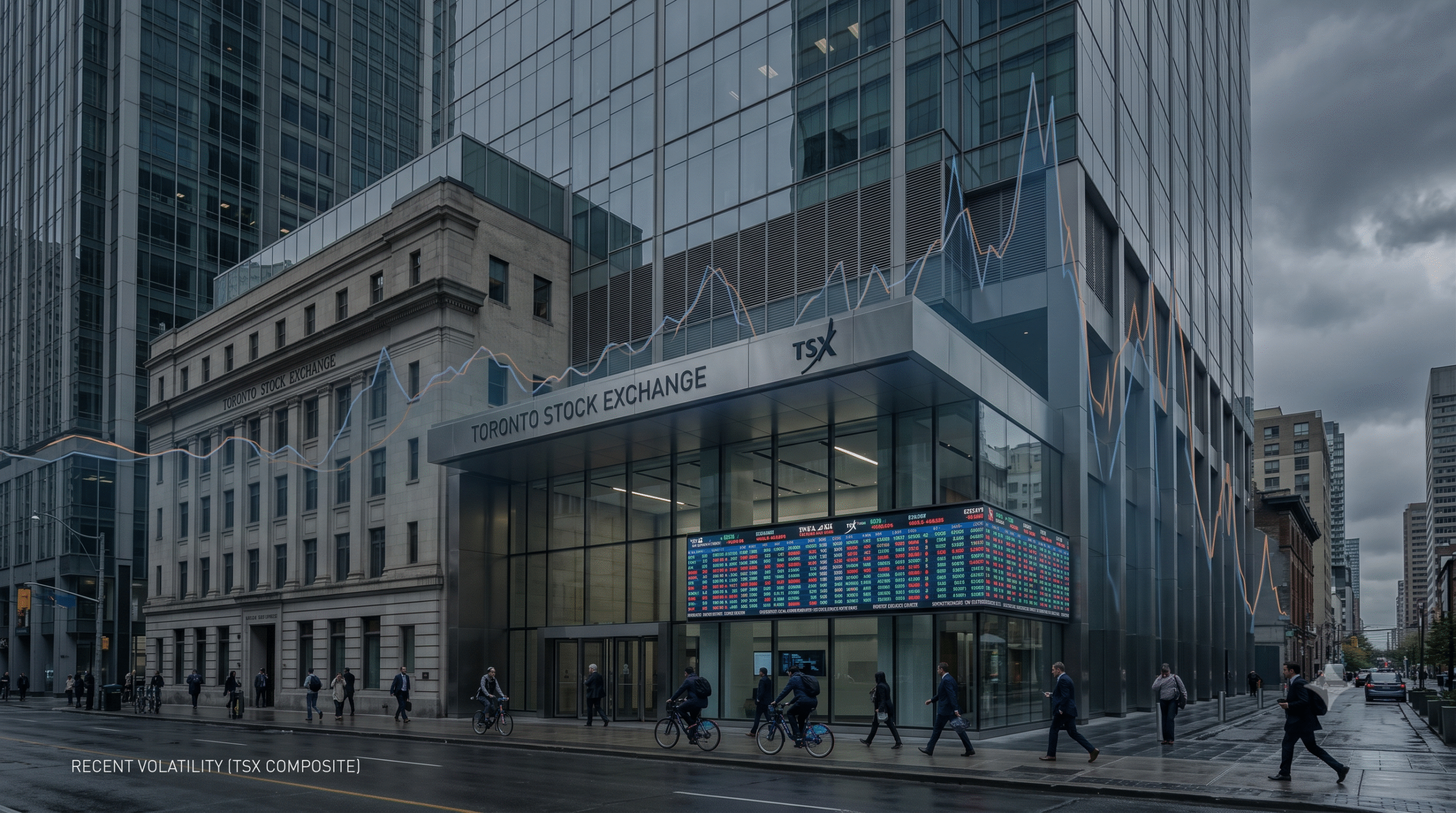
President Trump announced Monday that the U.S. is reinstating a blockade on Iranian shipping through the Strait of Hormuz, imposing a 20% toll on all cargo transiting the waterway. Oil prices surged in response, with West Texas Intermediate rising 9.4% to top $78 a barrel and Brent crude climbing 9.6% to above $83, the highest level for crude in roughly a month. On the TSX, the energy sector rose just over 3% on the day, providing a partial offset as the broader S&P/TSX Composite slipped 0.15% to close at 35,252.72, down from Friday’s 35,305.31. Bond markets moved in tandem with the inflation implications of pricier crude: the yield on the U.S. 10-year note rose to 4.62%, while Canada’s five-year government bond yield, which directly influences fixed mortgage rates, climbed to 3.190%, its highest level since May.
Also Read: Best long term Canadian stocks
Why It Matters
Higher oil prices flow through unevenly across Canada’s energy sector. Producers with direct commodity exposure stand to benefit most quickly from Monday’s move, while pipeline and infrastructure operators, whose cash flows are largely insulated by long-term contracts, see a more muted near-term impact but also carry less downside risk if oil prices reverse.
Rising bond yields complicate the picture for capital-intensive energy infrastructure. Canada’s five-year yield hitting its highest level since May adds a headwind for companies with significant debt loads, even within a sector that is otherwise benefiting from the day’s dominant headline.
Sector Breakdown
Producers stand to see the most direct near-term benefit from Monday’s price surge, with companies exposed to spot and near-term oil pricing seeing improved cash flow assumptions almost immediately. Infrastructure names, whose revenue is largely contracted and toll-based, are less sensitive to any single day’s oil price move but remain exposed to the broader rise in bond yields that accompanied Monday’s session, given their reliance on debt financing for large capital programs. Refining-exposed names occupy a middle ground, since higher crude costs can pressure margins even as overall energy sector sentiment improves.
Risks to Watch
The most significant risk is that Monday’s price spike proves temporary. Trump’s blockade announcement disputes Iran’s own claim about the strait’s status, and prior escalations this year have repeatedly been followed by partial reversals once diplomatic channels reopened. A sustained period of high oil prices could also feed into inflation in ways that complicate the Bank of Canada’s policy path, an outcome that could ultimately weigh on broader equity sentiment even within a sector currently benefiting from the headline. Rising yields present an additional risk specifically for debt-financed infrastructure operators.
Also Read: Safe investments for new investors
What to Watch Next
Investors should watch whether the blockade takes effect as announced and how it affects actual shipping traffic through the strait in the coming days. Today’s U.S. CPI report and Fed Chair Kevin Warsh’s testimony before Congress will both offer signals on how policymakers are interpreting oil-driven inflation risk. Wednesday’s Bank of Canada rate decision is a particularly important domestic catalyst given this week’s jump in Canadian bond yields.
Final Outlook
Monday’s session delivered a clear, if likely temporary, tailwind for Canada’s energy sector, even as the broader market absorbed the accompanying inflation and rate concerns less favourably. Investors should watch the durability of both the blockade and the resulting price move rather than treating Monday’s levels as a new baseline
Sign Up For our Newsletters to get latest updates