

Table of Contents
- Market Context
- What Happened
- Why It Matters
- Sector Breakdown
- Risks to Watch
- What to Watch Next
- Final Outlook
Market Context
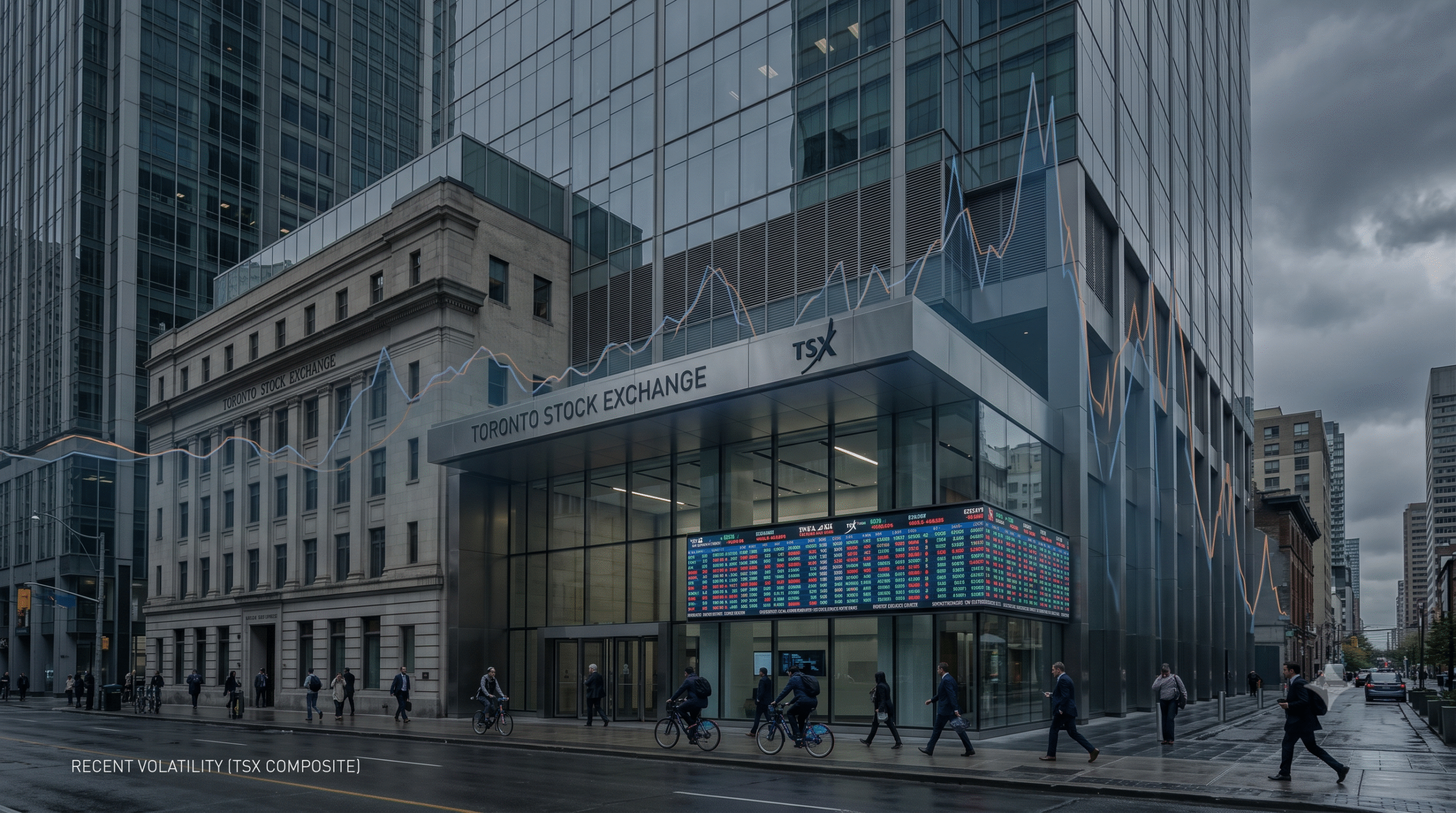
The S&P/TSX Composite enters this week sitting close to record territory, having closed Friday at 35,305, up 0.3% on the session and supported by a stronger-than-expected June jobs report. That strength, however, is being tested almost immediately by a fast-moving geopolitical story: a weekend escalation in the conflict between the United States and Iran that has sent oil prices sharply higher and weighed on global risk appetite to start the new week.
Also Read: Top Canadian tech AI stocks
What Happened
Friday’s session saw the TSX Composite gain 0.3% to 35,305.31, with the index trading within a 52-week range of 26,846.70 to 35,629.90, not far off its all-time high. Financials led that advance, with Royal Bank up 1% and Bank of Nova Scotia gaining nearly 2%, while the Canadian dollar strengthened modestly against the U.S. dollar. Over the weekend, the picture shifted: U.S. and Iranian forces exchanged fresh strikes near the Strait of Hormuz, with Iran declaring the waterway “closed until further notice” and U.S. Central Command disputing that claim. The resulting oil price jump, with Brent rising more than 4% toward $79 a barrel Monday, coincided with a broader risk-off tone globally, as U.S. stock futures fell, Asian markets including Japan’s Nikkei and South Korea’s Kospi dropped sharply, and government bond yields rose, with the U.S. two-year yield climbing to its highest level since February 2025.
Why It Matters
Energy strength and broader risk-off sentiment are pulling the TSX in different directions this week. Canada’s heavy weighting in energy and financials means the index could see support from higher oil prices even as global risk appetite deteriorates, a dynamic that has played out repeatedly during past Middle East-driven market shocks this year.
This week’s central bank calendar adds another layer of complexity. With the U.S. Federal Reserve already leaning hawkish amid sticky inflation, and the Bank of Canada’s own rate decision due Wednesday, oil-driven inflation risk is colliding directly with monetary policy uncertainty on both sides of the border.
Sector Breakdown
Energy and financials, the TSX’s two largest sector weightings, are likely to be the most directly affected by this week’s developments, with energy names positioned to benefit from higher oil prices while financials remain sensitive to the path of interest rates. Materials, including gold miners, face a more complicated setup, since gold has recently fallen alongside rising oil prices and Treasury yields, as investors weigh inflation risk against safe-haven demand. Technology names tied to global sentiment, including those with exposure to the AI infrastructure theme, are likely to track the broader risk-off tone seen in U.S. and Asian markets Monday.
Risks to Watch
The most immediate risk is further escalation in the U.S.-Iran conflict, which could extend both the oil price spike and the broader equity market volatility seen to start the week. A hawkish surprise from either the Federal Reserve or the Bank of Canada this week could compound that pressure, particularly if Tuesday’s U.S. CPI print comes in hotter than the forecast cooldown to 3.9%. Elevated bond yields, with the U.S. two-year note already at its highest level since early 2025, also pose a risk to equity valuations more broadly if the trend continues.
What to Watch Next
Investors should watch Tuesday’s U.S. CPI report and Wednesday’s Bank of Canada rate decision as the two most significant scheduled catalysts this week, alongside any further developments in the Strait of Hormuz situation. The start of the second-quarter earnings season this week, with growth broadly projected to be strong, will also offer a read on whether corporate fundamentals can offset macro-driven volatility.
Also Read: Best long term Canadian stocks
Final Outlook
The TSX heads into this week from a position of relative strength, having closed Friday near record highs, but faces a genuinely uncertain few days as an oil shock and two major central bank events collide. The index’s heavy energy weighting could provide some offset to broader risk-off pressure, though the outcome will likely hinge on how quickly this weekend’s conflict either escalates further or moves back toward de-escalation.
Sign Up For our Newsletters to get latest updates