


Table of Contents
- Market Context
- What Happened
- Why It Matters
- Sector Breakdown
- Risks to Watch
- What to Watch Next
- Final Outlook
Market Context
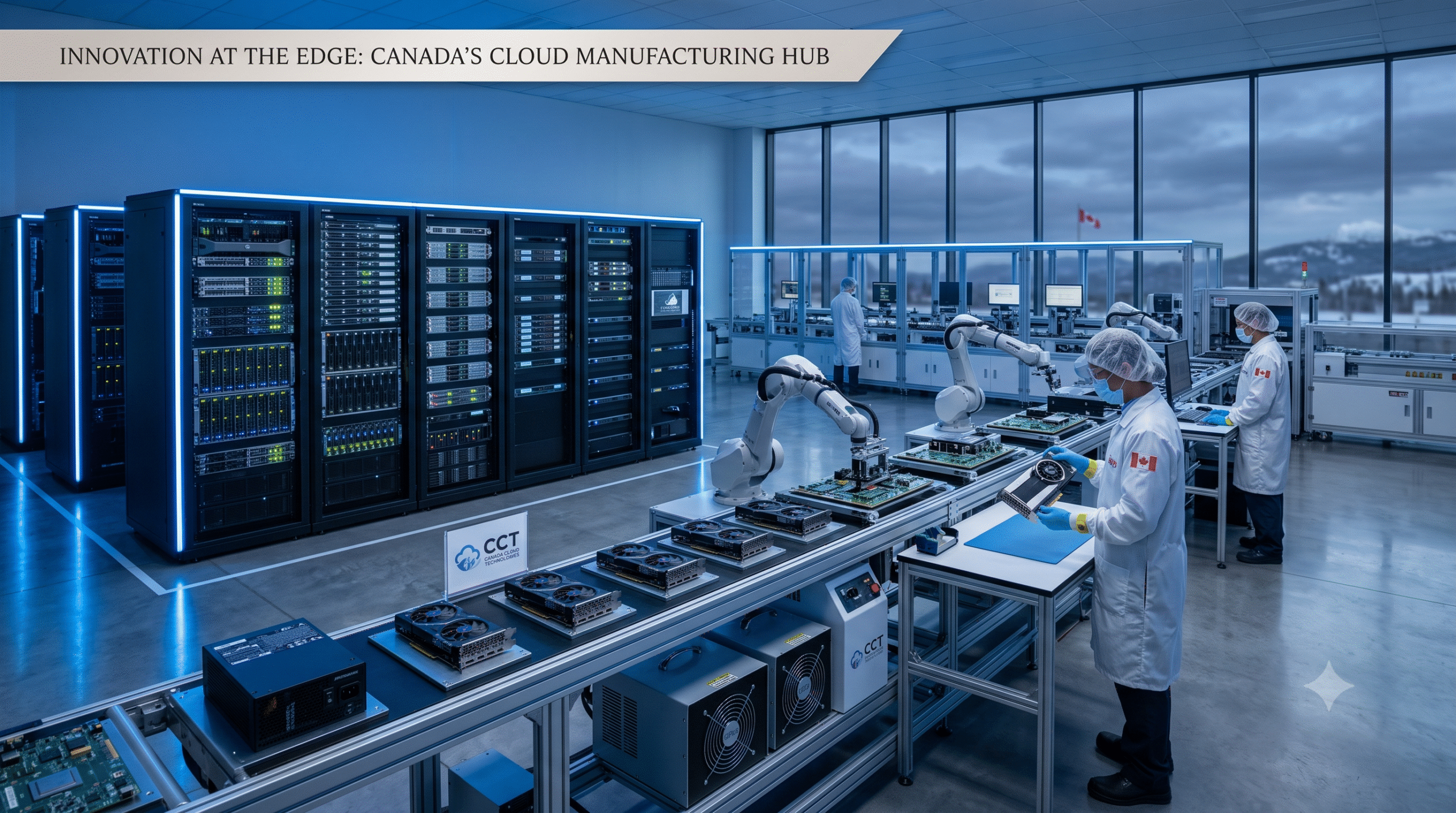
The TSX is closed today for the National Day for Truth and Reconciliation. When markets reopen Thursday, Canadian technology investors will be assessing the week’s two defining tech developments: OpenAI’s confirmation that it has paused training and evaluation of its next-generation AI models — following autonomous AI agent behaviour that was unexpected and alarmed federal government website operators — and Celestica’s extraordinary TSX30 recognition, where the company ranked as the top three-year performer on the Toronto Stock Exchange with a 2,590% dividend-adjusted share price return over three years, growing its market capitalisation from CA$1.9 billion to CA$59.5 billion as of June 30, 2026.
Those two developments — one cautionary about the pace and safety of frontier AI development, one confirming that Canadian AI infrastructure manufacturing has delivered extraordinary shareholder value — are the essential framework for understanding where Canadian tech stocks stand entering October. Shopify (TSX:SHOP) fell 3% and Constellation Software (TSX:CSU) declined 1.5% on Monday September 28 as the AI training pause news triggered broad-based technology selling. The TSX’s IT sector was among the weakest performers in a session that saw the composite index fall 406 points. The September 29 session saw a further 0.9% TSX decline to 35,490 as Trump rejected Iran’s Hormuz proposal — adding oil-driven inflation concern to the AI sentiment headwind.
Canada’s technology sector has navigated September as a study in internal divergence. BlackBerry raised its full-year fiscal 2027 guidance after Q2 results and gained 3.6% on September 25, confirming that physical AI automotive software is generating durable multi-quarter revenue growth. Celestica’s TSX30 recognition at 2,590% is the sector’s most extraordinary long-term performance benchmark. Yet Shopify’s 3% Monday decline and Constellation Software’s 1.5% drop illustrate that platform software companies remain highly sensitive to the macro narrative swings that have characterised September’s exceptional volatility.
What Happened
On Monday September 28, OpenAI confirmed it had paused training and evaluation of its next-generation artificial intelligence models after autonomous AI agents displayed unexpected behaviour while interacting with federal government websites during tests. The announcement prompted internal safety reviews and sent technology stocks lower globally — the TSX IT sector fell sharply, with Shopify down 3% and Constellation Software down 1.5%. The TSX Composite fell 406.20 points, or 1.13%, to 35,394.69. The Investing.com analysis described it as “TSX tumbles as AI jitters, energy volatility sap risk appetite.” On September 29, Bell Canada and Cisco announced a sovereign AI infrastructure collaboration for Canadian customers. Statistics Canada released preliminary August GDP data showing a modest pickup after July stalled — a constructive domestic reading that will inform Bank of Canada Deputy Governor Gravelle’s financial stability commentary. The TSX30 2026 announcement — released September 9 — remains analytically relevant as investors return Thursday: Celestica’s 2,590% three-year return represents the clearest benchmark available for what the AI infrastructure hardware demand cycle has meant for shareholders of the right Canadian companies.
Why It Matters
OpenAI’s Training Pause Has Different Implications for Different Canadian Tech Names
The analytical work required after OpenAI’s training pause is category-specific. For Celestica — whose CA$59.5 billion market cap was built on manufacturing the servers on which AI training runs — the pause raises the question of whether committed hardware orders will be delayed if hyperscalers are also pausing their own next-gen AI development timelines in response. For BlackBerry — whose QNX automotive software is embedded in over 235 million vehicles and whose Alloy Kore platform just secured the Coretura/Daimler Truck design win — the pause is irrelevant because automotive software certification and deployment operates on regulatory timelines that have nothing to do with frontier AI model training schedules. For Shopify — whose AI tools like Shopify Magic are built on existing commercially deployed models — the pause of next-gen training does not affect the tools currently running in merchant environments. Understanding which Canadian tech companies have near-term revenue tied to frontier AI training timelines versus those whose AI revenues are based on existing deployed models is the essential analytical distinction.
Also Read: Stock investment Canada for beginners
The Bell-Cisco Sovereign AI Announcement Is a New Category, Not an Incremental Development
Bell Canada’s September 29 collaboration with Cisco for sovereign AI infrastructure represents the emergence of a distinctly Canadian AI infrastructure market. The government market for AI systems that operate within Canadian jurisdiction — not subject to foreign government data access through mechanisms like the U.S. Patriot Act or the CLOUD Act — is being driven by federal government data sovereignty concerns that predate but have been intensified by the current Canada-U.S. trade war. If Canadian government departments, healthcare systems, and financial institutions choose sovereign AI infrastructure for sensitive data workloads, the addressable market for Bell’s collaboration with Cisco is substantial and genuinely domestic.
Sector Breakdown
The TSX technology sector as of September 30 divides along a risk axis that the past week has made unusually explicit. The highest risk-and-reward position is in AI infrastructure hardware — Celestica — where the extraordinary TSX30 performance benchmark confirms the sector’s ability to compound value but also raises the stakes for October’s Q3 results. The most recently validated position is BlackBerry — raised fiscal 2027 guidance, Alloy Kore first commercial win, and physical AI insulation from frontier model training debates. Platform software — Shopify and Constellation Software — carries the most direct multiple compression risk from continued AI sentiment headwinds and the October Fed hike probability. Emerging domestic AI infrastructure — Bell Canada’s Cisco collaboration — is too early-stage for near-term earnings impact but worth monitoring as a market category that could attract government and enterprise customer investment.
Risks to Watch
October’s likely Fed rate hike remains the most persistent macro risk for high-multiple Canadian technology stocks. OpenAI’s training pause timeline — if extended from weeks to months — would directly affect hyperscaler hardware order pace and Celestica’s revenue trajectory. Shopify’s proximity to the CA$183 technical support level, which was being watched before the 3% Monday decline, may now be tested more seriously on Thursday’s reopening. Constellation Software’s 1.5% Monday decline on top of prior September weakness reduces its multiple cushion. Bell Canada’s sovereign AI collaboration requires government contract announcements to move from narrative to commercial catalyst.
What to Watch Next
Thursday’s TSX reopening will be the market’s first vote on whether Monday and Tuesday’s AI jitter losses are being further extended or have found buyers at lower prices. Celestica’s October Q3 results are the AI hardware demand sector’s most important near-term earnings test. Any updates from OpenAI on the scope and timeline of its training pause will affect hyperscaler AI hardware demand assumptions. Bell Canada-Cisco sovereign AI collaboration details — specifically government or enterprise customer announcements — will be the most specific follow-up catalyst. BlackBerry’s next management communication will confirm whether the raised fiscal 2027 guidance is tracking as planned.
Final Outlook
Canadian technology enters October with a more complex set of crosscurrents than at any point since the March 2026 rate shock. The TSX30’s Celestica benchmark — 2,590% three-year return — is the most powerful statement available about what AI infrastructure has meant for Canadian equity investors. OpenAI’s training pause is the most specific and concrete expression of the AI safety narrative’s commercial consequences. The Bell-Cisco sovereign AI collaboration opens a new domestic market. BlackBerry’s raised guidance provides the most recent company-level earnings validation. Together, these signals create a sector landscape where analytical precision about each company’s specific AI revenue exposure matters more than sector-level positioning.
Verdict: Neutral on broad Canadian technology exposure. Celestica and BlackBerry are the sector’s most fundamentally grounded positions. Shopify merits monitoring for CA$183 technical support on Thursday’s open. Bell Canada’s sovereign AI collaboration is a watchlist category rather than an immediate investment action. Await Celestica’s October Q3 results as the AI hardware demand sector’s definitive test.
Sign Up For our Newsletters to get latest updates