


Table of Contents
- Market Context
- What Happened
- Why It Matters
- Sector Breakdown
- Risks to Watch
- What to Watch Next
- Final Outlook
Market Context
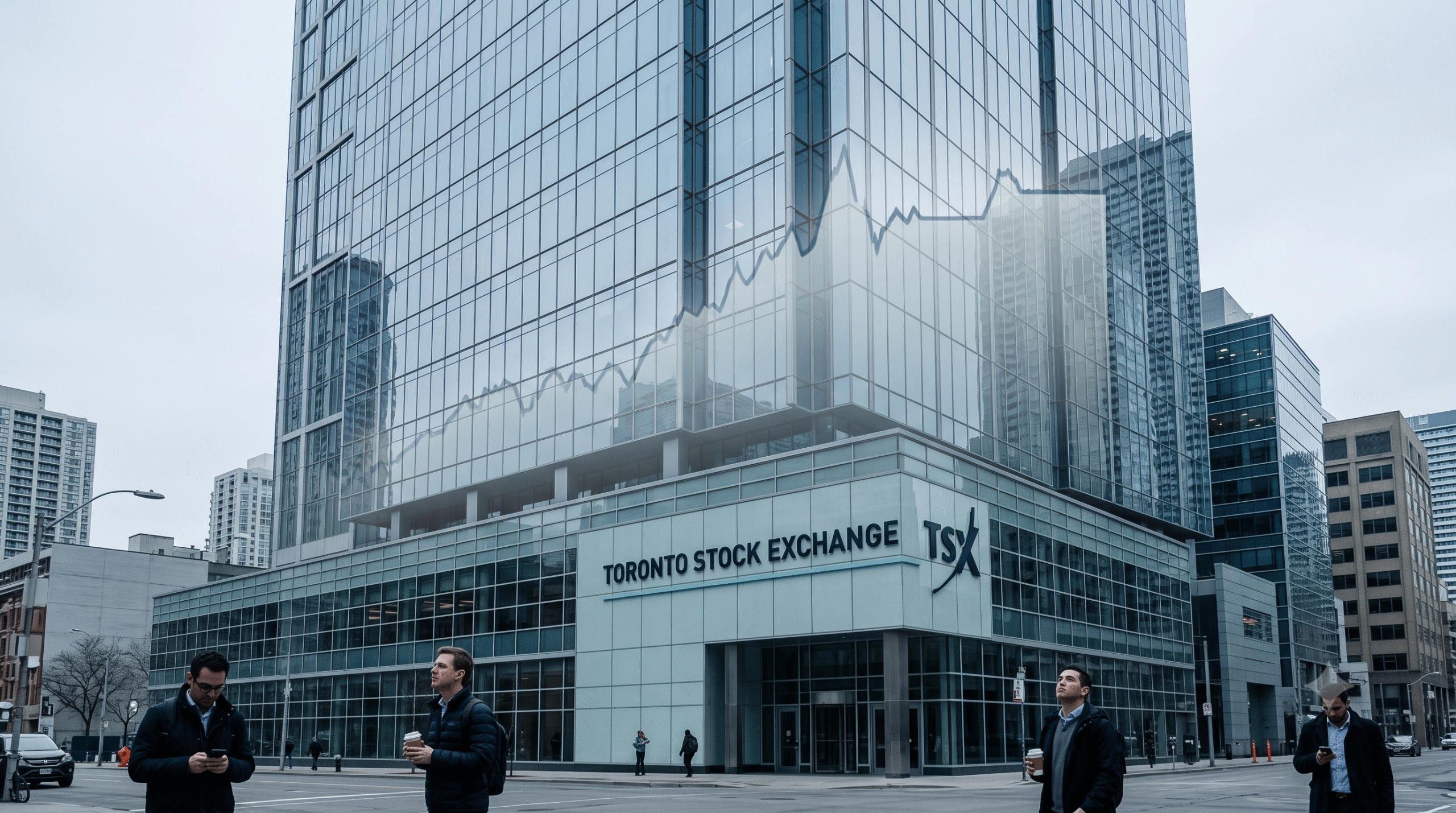
The S&P/TSX Composite has spent much of 2026 grinding toward record territory, and Friday’s session pushed it right back to the edge of that milestone. The index has returned more than 11% through the first half of the year, a run supported by strength in financials, materials, and a resilient domestic economy even as global markets wrestled with periodic volatility in technology and semiconductor stocks. That volatility has been especially visible over the past week, as a historic corporate listing south of the border collided with one of the most closely watched domestic data releases of the summer: Canada’s June employment report.
What Happened
The S&P/TSX Composite gained 0.3% on Friday, July 10, to close at 35,305, moving the index back within close range of its all-time high after Statistics Canada reported that Canadian employment rose by 18,200 in June, comfortably ahead of the roughly 10,000 gain economists had expected, and building on May’s outsized increase of 88,000 jobs. The unemployment rate unexpectedly fell to its lowest level in nearly two years. Financials led the advance, with Royal Bank up about 1%, TD Bank adding 0.7%, Bank of Montreal gaining 1.1%, and Brookfield rising 1.6%. Retailers also participated, with Alimentation Couche-Tard up 0.8% and Loblaw adding 1.2%.
The same session carried a second, arguably bigger global story: SK Hynix, the world’s second-largest memory chipmaker, completed a $26.5 billion American depositary receipt offering on the Nasdaq — the largest-ever first-time U.S. stock sale by a foreign company. The ADRs priced at $149 and surged as much as 15% to 17% above that level in their debut, trading above $171 within hours, as investors piled into direct exposure to SK Hynix’s dominant position in high-bandwidth memory chips that power AI infrastructure. That enthusiasm spilled directly into Toronto trading: Shopify jumped 4% and Constellation Software gained 2.4%, both riding the wave of renewed appetite for technology and AI-infrastructure-linked names. Gold miners moved the other way, with Agnico Eagle down 1.6%, Barrick off 0.6%, and Franco-Nevada down 1.4% as gold prices retreated.
Also Read: Safe investments for new investors
Why It Matters
A strong jobs report complicates the rate-cut narrative. With unemployment at its lowest level in nearly two years and employment growth running well ahead of forecasts for a second straight month, the case for near-term Bank of Canada rate cuts has weakened, even as markets had previously priced in a fairly dovish path.
The SK Hynix listing is a signal event for the entire AI supply chain. A capital raise of this scale, executed successfully despite recent chip-sector volatility, suggests investor appetite for AI infrastructure exposure remains intact — and Friday’s rally in Shopify and Constellation Software shows Canadian tech names are not immune to that sentiment, in either direction.
Sector Breakdown
Financials were the clearest beneficiary of Friday’s jobs data, with strength across the Big Six pointing to renewed confidence in the domestic economy’s resilience, even as a stronger economy could reduce the urgency for the Bank of Canada to ease policy further. Technology stocks told a more global story: Shopify’s 4% gain and Constellation Software’s 2.4% advance appear tied more directly to the SK Hynix-driven wave of optimism around AI infrastructure spending than to any Canada-specific catalyst. Materials and precious metals moved in the opposite direction, with gold miners broadly lower as gold prices softened — a reminder that the same “risk-on” sentiment lifting tech stocks can simultaneously pressure safe-haven assets.
Risks to Watch
A stronger-than-expected domestic economy carries its own risk: if the Bank of Canada reads this jobs report as reducing the need for further rate cuts, that could weigh on rate-sensitive sectors and dampen enthusiasm elsewhere in the market. On the technology side, SK Hynix’s dramatic post-listing surge raises the question of whether the broader AI infrastructure trade has become overheated again, given how quickly sentiment shifted from the chip-sector caution seen earlier in the month to Friday’s rally. Gold’s pullback is also worth watching, since mining remains a significant weighting within the TSX Composite, and a sustained reversal in bullion prices could offset strength elsewhere in the index.
What to Watch Next
Investors should watch for the Bank of Canada’s commentary following this jobs report, particularly any signal about how the stronger labour market data factors into its next rate decision. SK Hynix’s trading behaviour in the days following its debut, along with any read-through to other AI infrastructure names, will likely continue to influence sentiment in Shopify, Constellation Software, and similar TSX-listed technology names. Gold price direction and broader U.S. dollar strength are also worth monitoring given their impact on the index’s substantial materials weighting.
Also Read: Stock investment Canada for beginners
Final Outlook
Friday’s session captured two of the more significant threads running through markets this summer: a Canadian economy proving more resilient than expected, and a global AI infrastructure trade that just received a substantial vote of confidence via the largest foreign listing in U.S. history. Both developments point to underlying strength, but the speed of Friday’s moves — in jobs data, in SK Hynix’s post-listing pop, and in gold’s pullback — suggests continued volatility around each of these storylines rather than a settled direction.
Sign Up For our Newsletters to get latest updates