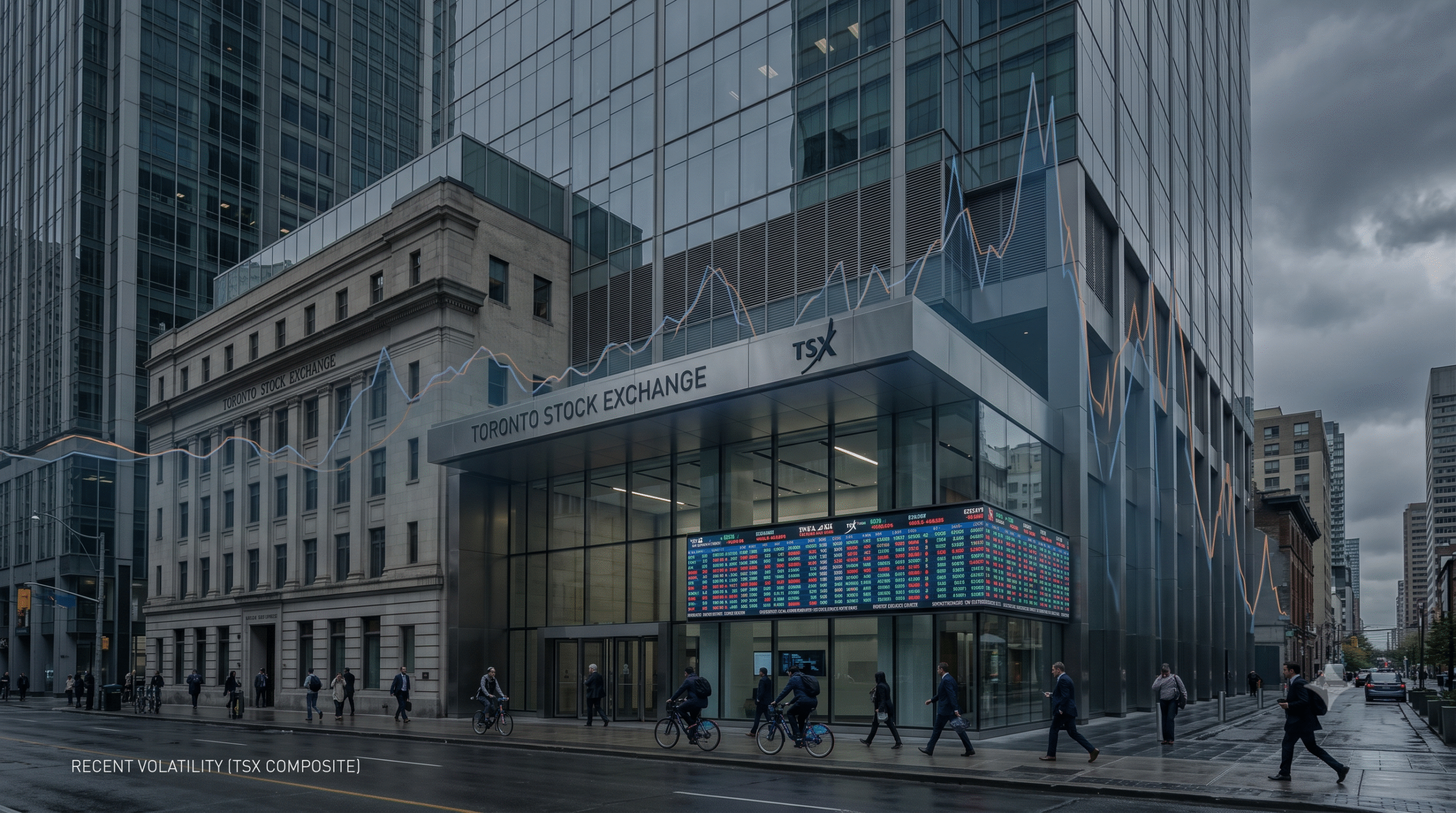
The Toronto Stock Exchange closed Thursday at 34,052 points, down 103 points in a session marked by conflicting signals from geopolitical developments and sector rotation. The modest decline came despite President Trump announcing a 10-day ceasefire between Israel and Lebanon, alongside progress on reopening the Strait of Hormuz.

Energy stocks led the gains as oil prices climbed on supply uncertainty stemming from the Middle East conflict. Canadian Natural Resources advanced nearly 1% to extend recent momentum, while the broader energy sector absorbed much of the positive sentiment from rising crude prices. Oil market dynamics shifted as investors weighed potential supply disruptions against diplomatic progress in the region.
Also Read: Long term investing in Canada
Canadian banking stocks pulled back from recent highs, with TD Bank and BMO both trading lower by 0.20% and 0.40% respectively. The weakness in financials reflected profit-taking after recent gains and ongoing concerns about economic growth. Royal Bank of Canada and Bank of Nova Scotia also closed in negative territory, contributing to the index’s overall decline. The banking sector’s retreat offset energy sector strength, highlighting the challenge investors face in rotating capital amid conflicting macro signals.
Also Read: Dividend paying stocks Canada
Looking ahead, investors will monitor Bank of Canada commentary and employment data for clues on monetary policy direction. The TSX has climbed 3.41% over the past month and sits up 40.75% compared to last year, suggesting underlying strength despite Thursday’s pullback. With earnings season approaching and commodity prices volatile, sector rotation is likely to intensify as portfolio managers reposition for the second quarter.
Sign Up For our Newsletters to get latest updates