

Unlock Premium Articles for Exclusive Insights!
You are reading a free article. Enter your details to unlock full access.
By submitting your details to unlock full access.
What Happened
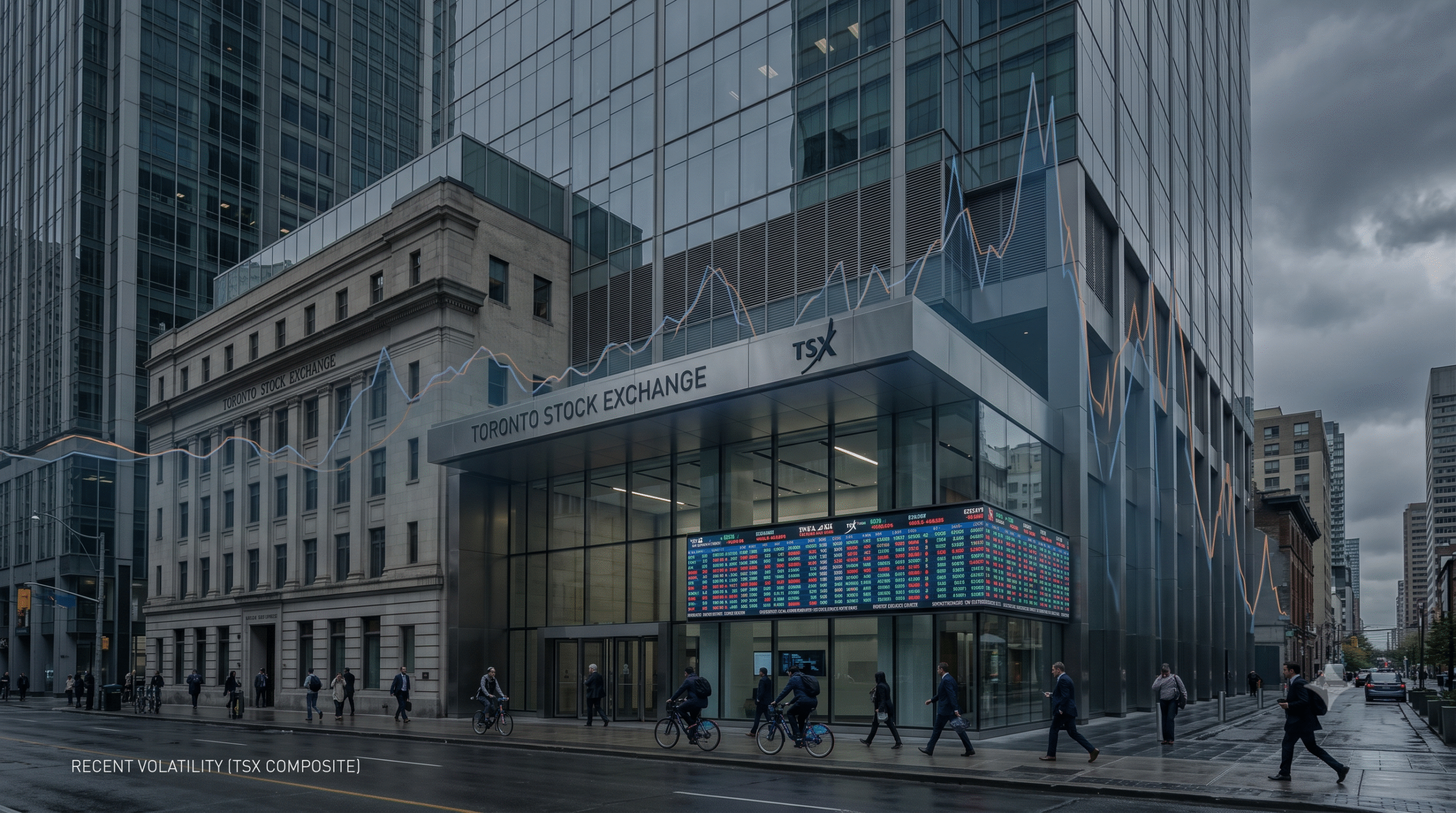
The TSX erased its early-week losses as investors welcomed signs of easing geopolitical tensions. The S&P/TSX Composite Index rebounded by 421 points to 34,162, driven by hopes of a U.S.-Iran diplomatic breakthrough and recovering metals prices, despite falling oil prices impacting energy stocks.
Tehran confirmed it is reviewing the latest U.S. peace proposal, which generated cautious optimism. However, renewed threats from Iran’s Revolutionary Guard about extending the conflict beyond the region if U.S. attacks resume kept geopolitical risks elevated. This is the pattern that has defined Canadian market sessions for months: brief hope, followed by measured scepticism, followed by another positioning reset.
On the U.S. side, the macro backdrop adds a layer of complexity. U.S. stocks are slipping after oil prices rebounded and cranked up the pressure from the bond market, with the S&P 500 on track for a fourth drop in five days.
Why It Matters
The Inflation-Rate-Equity Triangle
The relationship between the Iran conflict, oil prices, inflation, and central bank policy has become the central tension in financial markets globally. The U.S. 10-year Treasury yield hit its highest point in a year, rising above 4.60%, stoked by worries about a return of decades-high inflation. The 30-year Treasury is at its highest since 2007. For the Bank of Canada, these developments complicate the rate cut calculus — lower rates would support Canadian equities and mortgaged households, but premature easing in the face of imported inflation carries its own risks.
Energy Stocks: The Double-Edged Sword
The TSX’s energy complex has experienced extraordinary volatility. The S&P/TSX Capped Energy Index fell 2.34% on May 20, even as crude oil stayed above US$100. The dynamic is straightforward: any credible peace signal causes energy stocks to reprice downward, as the geopolitical risk premium in oil deflates. Investors who own energy names are, in effect, also making an implicit bet on the continuation of the conflict — a morally and analytically uncomfortable position.
Sector Breakdown
The TSX’s sectoral performance on May 20 captures the complexity of the current environment. Financials led the advance, with the S&P/TSX Capped Financial Index rising 1.85%, as lower inflation expectations supported the view that rate relief is coming. Metals and mining stocks also contributed to the rally, supported by recovering gold and base metals prices.
Energy, as noted, was the laggard despite elevated crude prices — a disconnect between commodity prices and equity performance that reflects the market’s forward-looking assessment of a potential Strait of Hormuz reopening. Technology stocks are watching quietly to see whether a rate-friendly macro outcome can reignite their multiples.
In a previous TSX rally driven by ceasefire hopes, lower bond yields reduced credit concerns and supported financial stocks, while lower oil prices pressured energy producers. Gold advanced to a near three-week high as the ceasefire sparked a reassessment of risks, lifting mining stocks. Today’s session appears to be echoing that pattern.
Risks to Watch
The asymmetry of the current market is significant. A durable ceasefire would likely produce a sustained rally in financials and technology but a sharp decline in energy and, potentially, gold. A conflict escalation would do the opposite — and could push oil prices to levels that trigger genuine economic damage to Canadian consumers and businesses. Neither scenario is priced as a certainty, which is precisely why the market continues to gyrate on each headline.
The IEA has warned that commercial oil inventories are depleting rapidly with only a few weeks’ worth remaining due to the Iran war, and that strategic reserve releases — adding 2.5 million barrels per day — are finite. The market has not fully priced the scenario in which strategic reserves are exhausted before a diplomatic resolution is reached.
Also Read: Safe investments for new investors
What to Watch Next
Today’s most important data point is U.S. manufacturing and services PMI, which will provide the first hard read on how the Middle East disruption is flowing through to the American economy. With no major domestic economic releases due, TSX investors will keep an eye on the latest manufacturing and services data from the U.S. this morning.
Beyond today, investors should monitor Iran’s formal response to the U.S. peace proposal, crude oil inventory data, any Bank of Canada communication, and the TSX’s ability to hold the 34,000 level as a technical support floor.
Also Read: Best long term Canadian stocks
Final Outlook
The TSX’s 421-point rally on May 20 was a reminder of how quickly Canadian equities can move when the macro stars align — even briefly. Yet the structural uncertainties that have defined this market all year remain unresolved. Geopolitical risk, bond yield pressure, and energy price volatility are not going away in the near term.
Canadian investors who maintain a diversified, quality-focused portfolio are better positioned to navigate this environment than those making binary bets on conflict outcomes. The market rewards patience and discipline more than tactical brilliance in conditions like these.
Sign Up For our Newsletters to get latest updates