


Unlock Premium Articles for Exclusive Insights!
You are reading a free article. Enter your details to unlock full access.
By submitting your details to unlock full access.
What Happened
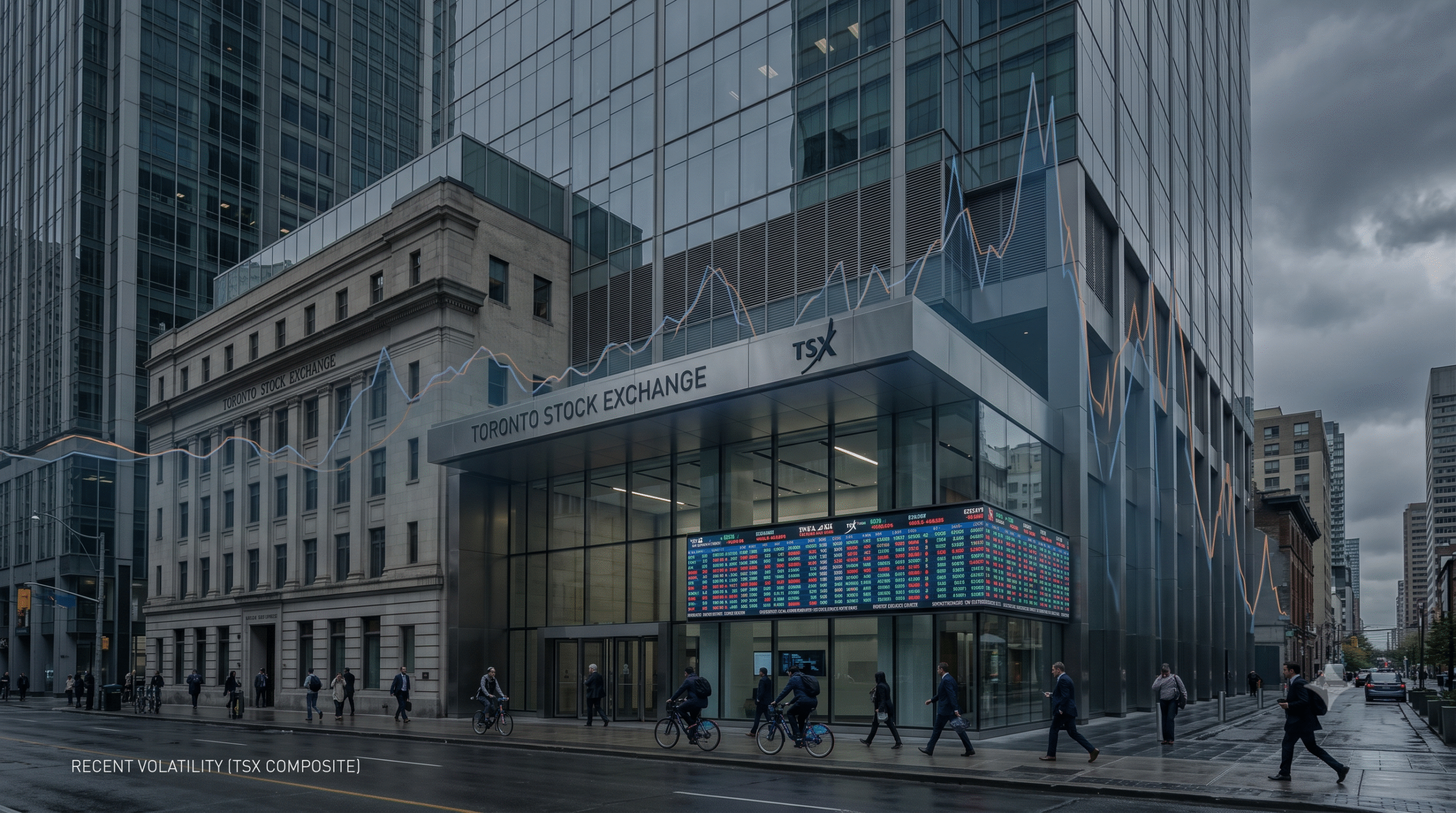
The dominant market driver of the past 24 hours has been the interplay between Middle East geopolitics and macro repricing. The US stock market fell from record heights on Monday while oil prices jumped following escalations in the Middle East that may undermine the ceasefire in the war with Iran. Those same forces were transmitted directly to the TSX, where energy and financials — the two largest sector weightings — both faced selling pressure.
Bank of Canada Governor Tiff Macklem’s hawkish tone from last week continues to reverberate through markets, with his warning that “consecutive increases” in the policy rate may be needed if energy prices continue to rise shifting expectations materially. The Bank held its policy rate at 2.25% at its last meeting, but the language represented a clear departure from the more accommodative framing of recent months.
On the corporate side, Shopify is reporting earnings this morning — a major event for the TSX technology sector — while investors continue to process the wave of Q1 results that came in largely below expectations through the final days of April.
Why It Matters
The Iran Premium in Canadian Markets
Canada’s markets have a unique and complicated relationship with the Iran conflict. On one hand, Canadian energy producers benefit directly from higher oil prices. One of the world’s largest credit rating agencies noted that surging global energy prices related to the Iran war could help tackle the deficit in Newfoundland and Labrador, illustrating how broadly the commodity shock is being felt in fiscal calculations. On the other hand, the same conflict is pushing inflation higher, threatening rate hikes that could slow an already modest domestic economy.
What the GDP Report Told Us
The domestic GDP report released last week delivered a cautionary message. Consumer spending growth has weakened, with the Bank of Canada itself noting in its survey data that a third of consumers reported cutting or postponing major spending because of the impact of the Iran war. That demand destruction, if it persists, will eventually show up in corporate revenues — particularly for consumer-facing and financial sector companies.
Sector Breakdown
Energy remains the most watched sector on the TSX today, with crude near US$105 per barrel but OPEC+ supply additions in June creating uncertainty about whether current prices are sustainable. Canadian Natural edged down and Suncor fell approximately 0.5% in Monday’s session, suggesting that even at these elevated commodity prices, equity markets are forward-looking and already pricing in some supply-side normalisation.
Financials — banks in particular — are absorbing the combined pressure of slowing consumer activity and rate-hike repricing. Gold miners moved lower in Monday’s session despite gold remaining historically elevated. Technology, buoyed by Shopify’s pending earnings report, is the sector to watch most closely today.
The Bank of Canada’s policy rate is at 2.25%, with oil prices at approximately US$105 per barrel and unemployment remaining elevated, creating a competing set of signals for the central bank’s June decision.
Risks to Watch
The primary near-term risk is a Bank of Canada rate hike earlier than expected. Markets are now pricing in close to two 25-basis-point increases by October, which would represent a significant pivot from the easing cycle that characterized much of 2025. A second risk is a disorderly move in oil prices — either a sudden spike if the Strait of Hormuz situation deteriorates further, or a sharp decline if peace talks succeed and supply normalises quickly. Either scenario would require rapid sector rotation on the TSX.
The US-CUSMA trade review this summer looms as a longer-dated but potentially severe risk. The Bank of Canada’s forecast depends on tariffs staying at current levels, but trade tensions between Canada and the US have been escalating, and a negative outcome from the trade review could materially alter the growth trajectory for export-oriented Canadian industries.
What to Watch Next
Today’s Shopify earnings call is the single most important corporate event on the TSX calendar this week. The Bank of Canada’s next rate decision on June 10 is the key macro date. Investors should also monitor any developments in US-Iran peace negotiations, OPEC+ commentary ahead of the June output decision, and Statistics Canada data releases — particularly the April inflation reading, which will help determine whether the March CPI spike was a one-month anomaly or the start of a sustained rise.
Prime Minister Carney’s pipeline announcement is worth following for longer-term implications on Alberta energy infrastructure and the capital projects pipeline for TSX-listed contractors and producers.
Also Read: Long term investing in Canada
Final Outlook
The TSX is in a period of genuine strategic uncertainty — not crisis, but a market that demands more analytical rigour than the broadly rising tide of the past 12 months required. The index’s year-over-year gain of approximately 36% is extraordinary, but the conditions that drove it — falling rates, recovering energy prices, improving earnings — are now more complicated.
For investors managing Canadian equity positions today, the key strategic question is whether to lean into the commodity strength while accepting rate-hike risk, or to rotate toward defensives and dividend payers and accept lower near-term returns in exchange for reduced volatility. Neither path is obviously superior given the current information set.
Also Read: Stock investment Canada for beginners
What is clear is that Canada’s market is being tested in ways that reward patience, diversification, and a rigorous focus on company fundamentals over macro speculation.
Sign Up For our Newsletters to get latest updates