

1. Market Context — A Market in Transition
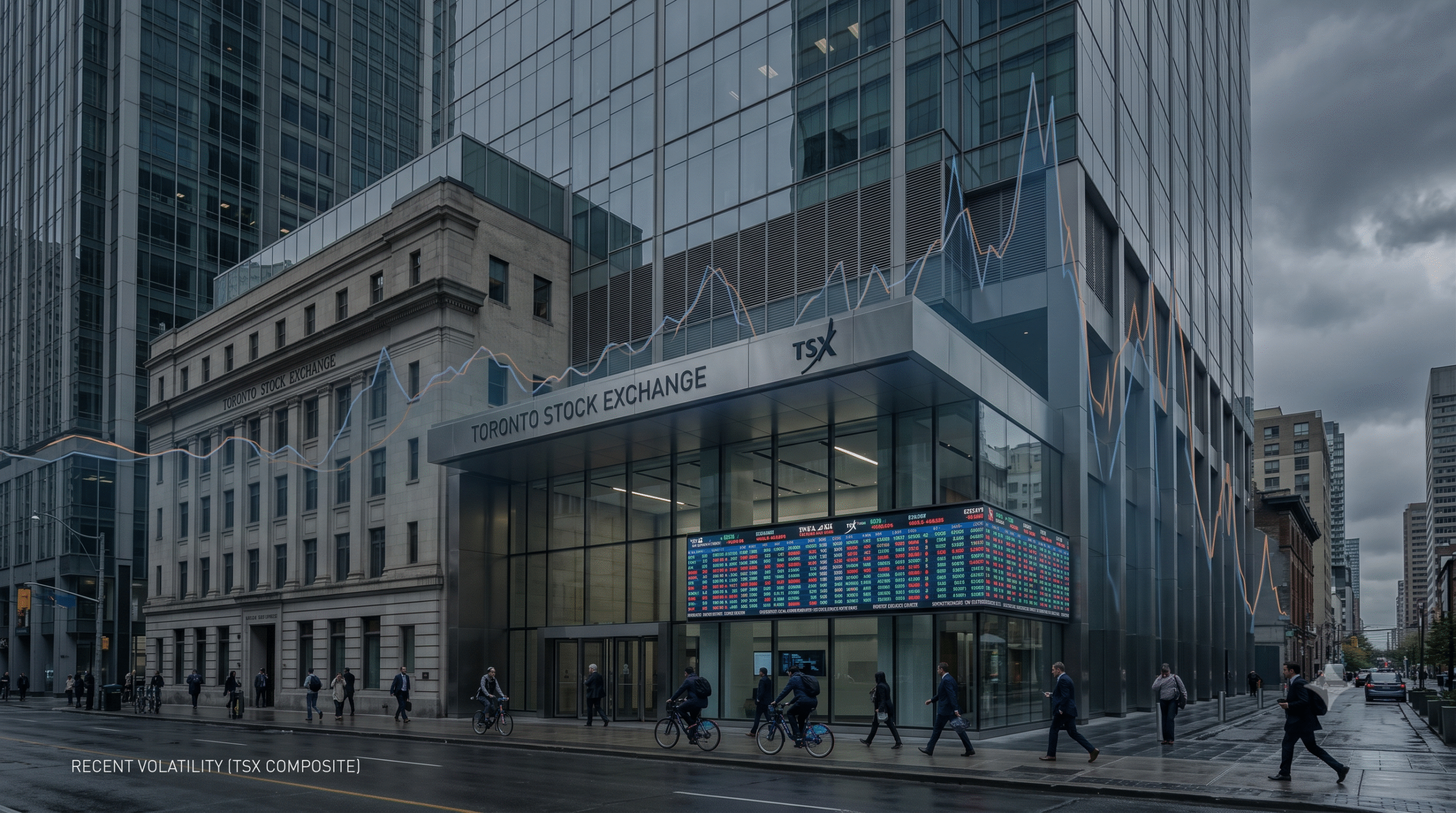
The S&P/TSX Composite has entered a phase of measured recalibration, with investors balancing the Bank of Canada’s ongoing rate posture against mixed signals from commodity markets. Energy and financials — the two heaviest anchors of the index — are pulling in different directions, creating an environment where stock selection matters more than index-level positioning.
Global macro pressure from slowing U.S. manufacturing data and unresolved trade policy uncertainty continues to weigh on export-sensitive Canadian sectors, while domestic consumer resilience provides a partial offset.
Unlock Premium Articles for Exclusive Insights!
You are reading a free article. Enter your details to unlock full access.
By submitting your details unlock full article.
2. What Happened — Recent Index Movement
The TSX pulled back modestly from recent highs before stabilizing, driven by rotation out of technology-adjacent names and into defensive utilities and telecom. Trading volumes remained near seasonal averages, with no single catalyst responsible for the directional shift.
Materials stocks saw renewed interest as gold prices held firm above key technical support, drawing capital back into senior producers. Meanwhile, the energy sub-index faced compression as WTI crude softened on demand concerns tied to slowing Chinese industrial output.

3. Why It Matters — Structural Significance
This pattern of internal rotation signals that institutional investors are not exiting Canadian equities — they are repositioning within them. Defensive inflows typically precede periods of earnings scrutiny, and with Q1 results beginning to filter through, that scrutiny is warranted.
For retail investors tracking the TSX, the takeaway is straightforward: broad index performance may appear flat while meaningful moves occur beneath the surface at the sector level.
Also Read: Top Canadian tech AI stocks
4. Sector Breakdown
Financials: Canada’s Big Six banks remain under watch as net interest margin compression continues to be debated. Loan growth is slowing, but credit quality has not materially deteriorated.
Energy: Integrated producers are better positioned than pure-play E&Ps given downstream diversification. Natural gas names are benefiting from LNG Canada timelines coming into focus.
Materials/Gold: Senior gold producers continue to generate strong free cash flow at current spot prices. Cost discipline across the sector has improved relative to the 2020–2022 cycle.
Utilities: Defensive inflows are consistent with late-cycle positioning. Regulated utilities with rate-base growth visibility are outperforming merchant power names.
Technology: Canadian tech remains thinly represented on the TSX relative to U.S. peers. Names with recurring revenue and positive operating leverage are holding up better than pure-growth stories.
Also Read: Dividend paying stocks Canada
5. Risks to Watch
The most significant near-term risks for TSX investors are external rather than domestic. A sharper-than-expected U.S. slowdown would compress commodity demand and weigh on the Canadian dollar simultaneously. Renewed tariff escalation between the U.S. and Canada remains a tail risk with direct margin implications for manufacturers and exporters. Domestically, the housing market’s delayed adjustment to higher rates creates uncertainty around consumer credit quality, feeding directly into bank provisioning assumptions.
6. What to Watch Next
- Bank of Canada rate decision and accompanying statement language
- Q1 earnings reports from major Canadian banks and energy producers
- WTI and natural gas price trajectory heading into summer demand season
- U.S. Federal Reserve posture and its effect on CAD/USD exchange rate
- Gold spot price relative to $2,000 USD support levels
7. Final Outlook
The TSX does not appear to be setting up for a directional break in either direction in the near term. The more likely scenario is continued sector rotation, with defensive and commodity names absorbing capital that exits rate-sensitive and growth-oriented positions. Investors focused on quality, dividend sustainability, and balance sheet strength are better positioned than those chasing momentum.
This article is for informational purposes only and does not constitute financial advice. Always consult a qualified advisor before making investment decisions.
Sign Up For our Newsletters to get latest updates