

Table of Contents
- Market Context
- What Happened
- Why It Matters
- Sector Breakdown
- Risks to Watch
- What to Watch Next
- Final Outlook
Market Context
The TSX is closed today for the National Day for Truth and Reconciliation, giving investors in Canadian electric vehicle stocks a moment to absorb the extraordinary TSX30 2026 announcement from September 9 — which provided an institutional validation snapshot of Canada’s most commercially durable companies across every sector. For the Canadian EV sector, the TSX30’s specific inclusions and the broader category of technology companies represented within the ranking provide important context for assessing which Canadian companies have genuinely demonstrated the multi-year compounding that institutional investors identify as the hallmark of durable competitive advantage.
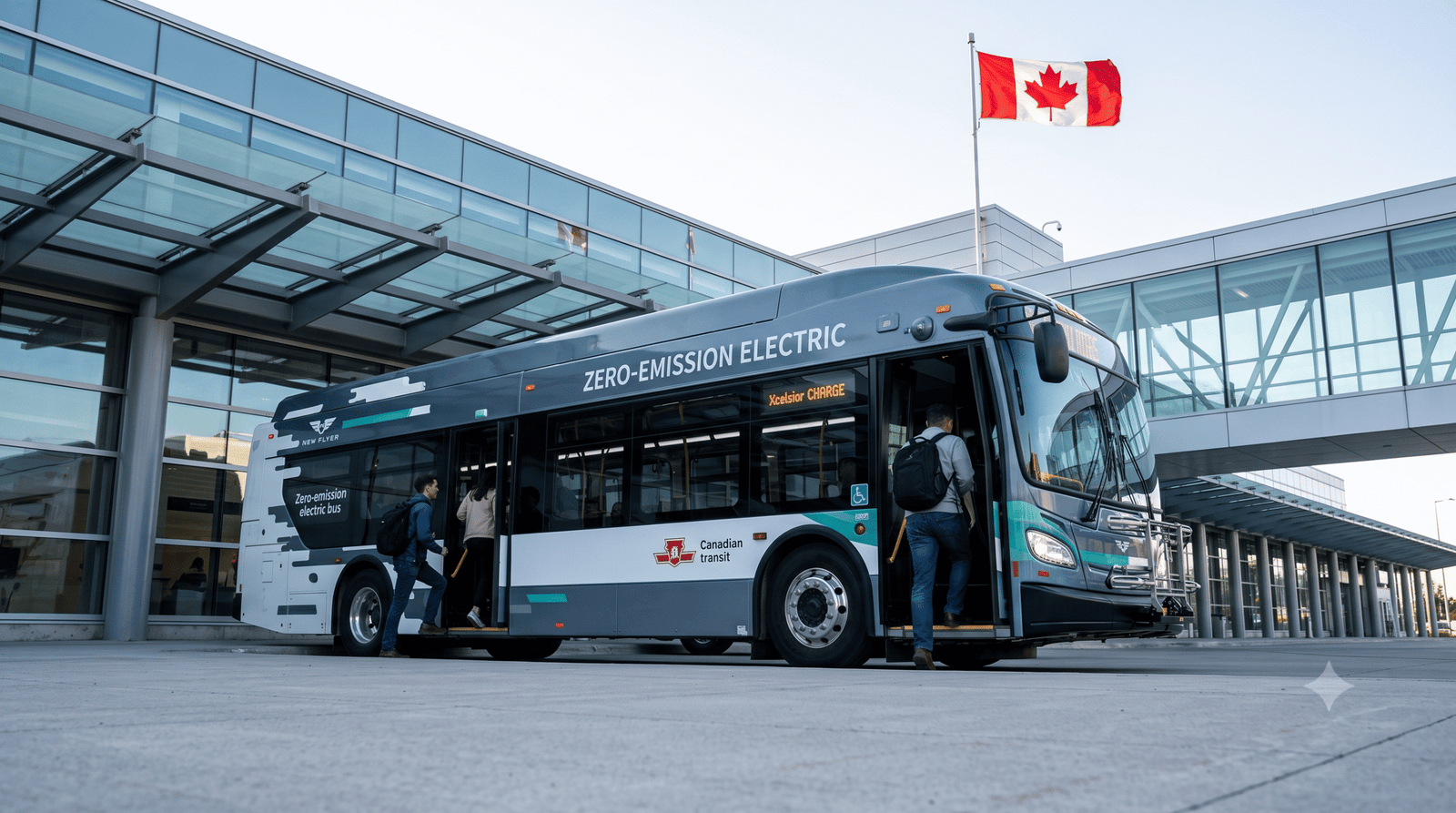
The 2026 TSX30 — the Toronto Stock Exchange’s annual ranking of the 30 top-performing companies based on three-year dividend-adjusted share price performance — confirmed that technology companies appeared across AI, space, aerospace, and digital infrastructure categories. NFI Group (TSX:NFI), Canada’s largest publicly traded manufacturer of electric transit buses and coaches, has been identified in Motley Fool Canada’s September 29 analysis as a name that investors are watching within the Canadian EV and transportation infrastructure space. The company’s record CA$13.7 billion backlog — confirmed in recent reporting — and its double-digit delivery growth in recent years position it as one of the few Canadian EV-adjacent companies with the scale and institutional customer base to sustain revenue growth independently of daily commodity price movements and AI sector sentiment swings.
The EV sector’s broader context heading into the TSX’s October 1 reopening is shaped by the same macro forces that have defined September: the Fed’s September 16 rate hike compresses long-duration growth equity multiples, the tariff war’s September 29 expansion adds supply chain cost uncertainty, and diesel prices at historic highs — reported by BNN Bloomberg as “on a big upward swing” — actually improve the economic case for fleet electrification over the long run. When diesel reaches new price highs, the total cost of ownership advantage of electric transit buses over diesel-powered alternatives widens, strengthening the commercial rationale for transit agencies to accelerate their zero-emission fleet transitions.
What Happened
In the sessions immediately preceding today’s statutory holiday, NFI Group’s underlying business continued to advance on the strength of contract wins — the East Colfax BRT project order from September 8 and Alexander Dennis’s 207-bus Liverpool City Region win from September 4 — that confirm the company’s CA$13.7 billion backlog is actively being replenished rather than simply converting into deliveries. Diesel prices reaching historic highs, as reported by BNN Bloomberg on September 29, reinforce the economic argument for transit fleet electrification that underpins NFI’s order flow. Electrovaya Inc. (TSX:ELVA) — the Mississauga-based lithium-ion battery technology company — has been trading at approximately CA$13.92 and continues developing its battery systems for EV and materials-handling applications. The Bell Canada-Cisco sovereign AI collaboration announced September 29 is relevant to the EV sector indirectly: sovereign AI infrastructure will ultimately be integrated into connected and autonomous vehicle systems, and Bell’s positioning as a domestic AI infrastructure provider could include future collaboration on the wireless infrastructure that next-generation electric and autonomous transit vehicles require.
Why It Matters
Diesel at Historic Highs Is the EV Sector’s Most Powerful Long-Term Commercial Catalyst
BNN Bloomberg’s September 29 report that diesel prices are “on a big upward swing, rising to historic levels over the past month and filtering through to all corners of the economy” is the most directly constructive development for Canadian EV economics in September. Transit agencies — NFI’s primary customer base — make fleet procurement decisions based on multi-decade total cost of ownership projections. When diesel prices reach historic highs and zero-emission electric buses have declining battery costs and established charging infrastructure, the economic case for accelerating EV fleet adoption strengthens significantly. Every transit agency that has been evaluating a zero-emission fleet transition on a five-year timeline has a commercial incentive to accelerate that timeline when fuel costs surge. NFI’s CA$13.7 billion backlog is the direct financial expression of that economic calculus having already been made by hundreds of transit authorities.
The TSX30’s Technology Category Validates Infrastructure-Grade EV Manufacturing
The 2026 TSX30 announcement confirmed that technology companies in AI, space, aerospace, and digital infrastructure categories generated some of the most extraordinary three-year returns in Canadian equity history. NFI’s position as an electric vehicle manufacturer with global institutional customers — including the U.S. Federal Transit Administration, multiple Canadian provincial transit agencies, and UK local authorities — is less dramatically captured in the TSX30’s technology category than Celestica’s AI hardware story, but it reflects a similar structural truth: companies that manufacture or enable critical infrastructure transformation generate durable returns when the infrastructure investment cycle is structurally underway. The global net-zero transportation commitment has not been reversed by any trade war or interest rate cycle, and NFI’s backlog confirms that the conversion is proceeding.
Sector Breakdown
Canada’s EV stock universe on September 30 is more concentrated than a year ago, with Lion Electric’s creditor protection in late 2024 having narrowed the field to companies with real revenue and institutional backing. NFI Group is the clear large-cap anchor of the Canadian EV landscape, with its CA$13.7 billion backlog, multi-brand international manufacturing operations across New Flyer, Alexander Dennis, MCI, and ARBOC, and a dividend that confirms cash flow generation. Electrovaya provides the battery technology dimension — lithium-ion systems for EV and warehousing applications that are relevant as charging infrastructure for NFI-type electric buses continues expanding. The Bell-Cisco sovereign AI infrastructure announcement creates an indirect EV connectivity angle: Bell’s 5G and AI network infrastructure will eventually be the communications backbone for smart electric transit systems in Canadian urban environments. HIVE Digital Technologies (TSXV:HIVE) sits at the computational infrastructure intersection — not EV directly, but relevant to the AI and data centre energy demand that is increasing the pressure on energy grids that electric vehicle charging systems also draw upon.
Risks to Watch
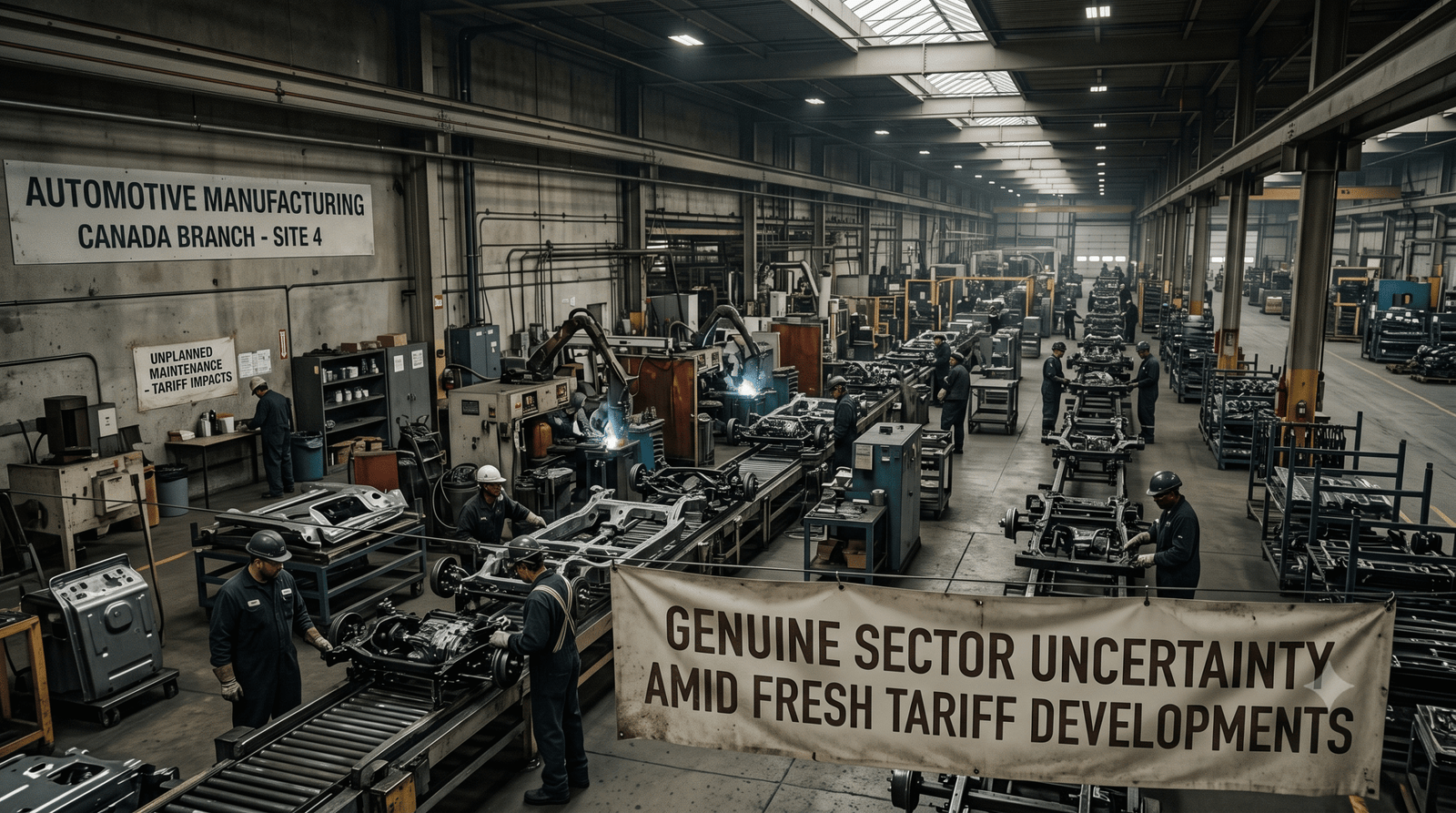
NFI’s most significant near-term risk is the September 29 tariff expansion — which targets aluminum, among other goods — and its impact on the supply chain costs for bus manufacturing that relies on aluminum body structures and components. If Canadian-originating aluminum faces 50% U.S. duties in both directions — U.S. duties on Canadian aluminum and Canadian duties on U.S. aluminum — NFI’s integrated North American manufacturing supply chain may face incremental cost pressures. The Fed’s September 16 rate hike and elevated October hike probability creates a higher cost of capital for transit agency capital budgets, which are typically debt-financed at bond rates. Higher municipal borrowing costs could potentially slow the pace of new EV procurement approvals. Electrovaya’s relatively small revenue base makes it vulnerable to any slowdown in the battery system adoption curve.
Also Read: Best long term Canadian stocks
What to Watch Next
NFI’s next quarterly earnings release will be the most important company-specific event — specifically whether the CA$13.7 billion backlog is sustaining delivery volumes and whether the tariff-driven aluminum cost increases are affecting margins. Diesel price trajectory will be the most visible commercial tailwind signal for EV fleet adoption economics. Bell Canada’s sovereign AI collaboration with Cisco will generate follow-up announcements on specific deployment contracts that may include transportation sector digital infrastructure. U.S. federal infrastructure spending on zero-emission transit — which is not affected by the bilateral tariff dispute because it flows through U.S. federal transport programmes to U.S. transit agencies using NFI’s U.S. manufacturing capacity — remains an important revenue stream to monitor.
Final Outlook
Canada’s EV sector closes September in a position defined by genuine commercial traction at NFI Group and genuine technology potential at Electrovaya, against a macro backdrop that is simultaneously creating near-term supply chain cost headwinds and long-term demand tailwinds through diesel price spikes. The historic diesel price levels reported this week are the clearest possible market signal that zero-emission alternatives are moving from preference to economic necessity for fleet operators — a tailwind that outlasts any interest rate cycle or tariff schedule.
Verdict: Cautiously constructive on NFI Group’s institutional EV franchise. The record CA$13.7 billion backlog, diesel-driven fleet electrification tailwind, and geographic manufacturing diversification provide a durable investment case that is not materially disrupted by September’s macro shocks. Monitor tariff-related aluminum supply chain costs as the most specific near-term risk to margins.
Sign Up For our Newsletters to get latest updates