

Table of Contents
- Market Context
- What Happened
- Why It Matters
- Sector Breakdown
- Risks to Watch
- What to Watch Next
- Final Outlook
Market Context
The TSX is closed today for the National Day for Truth and Reconciliation. U.S. markets remained open through Wednesday September 30 — the final trading day of the month and Q3 2026. For Canadian investors, September 30’s U.S. session carries particular significance: it closes the books on one of the most volatile quarters in the Canada-U.S. bilateral relationship since CUSMA was renegotiated, and the data and market prices at the end of Wednesday’s U.S. session will set the framework within which Canadian investors return to markets Thursday, October 1.
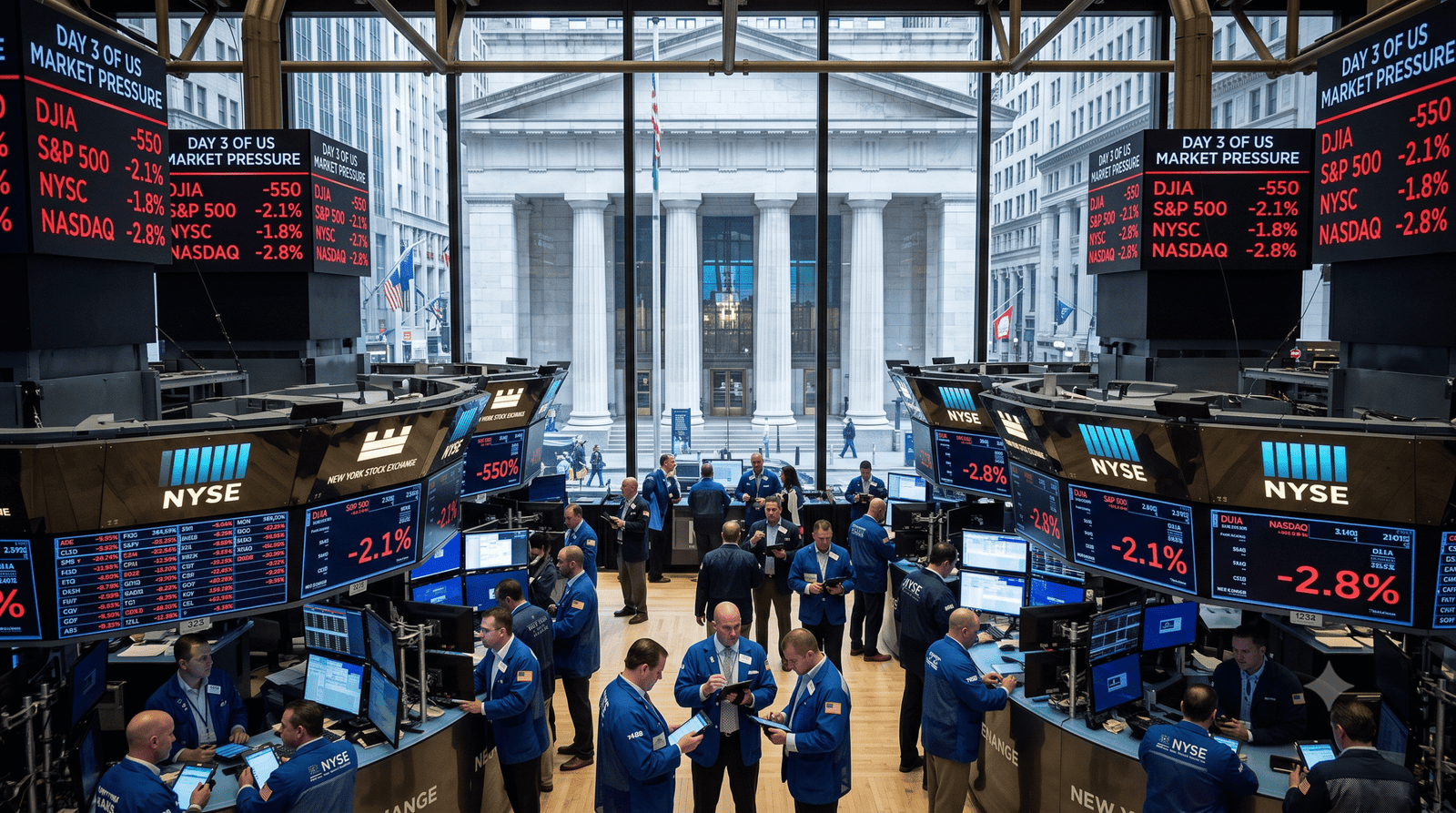
Trump’s September 28 rejection of Iran’s latest Hormuz proposal was the week’s most significant individual macro event in the U.S. context. The rejection — which sent oil prices rallying back after Friday September 25’s decline on Iranian diplomatic progress — reversed the constructive inflation outlook that had briefly supported bank stocks and credit-sensitive sectors. The S&P 500 shed 0.5% to 7,707.28 points and the NASDAQ slipped on Monday September 28 as the dual impact of Trump’s Hormuz rejection and OpenAI’s AI training pause created two simultaneous technology headwinds: higher oil reviving inflation and rate-hike fears, and AI frontier training concerns reducing hyperscaler spending optimism. The TSX tumbled 406 points on the same combination.
For U.S. market watchers specifically, the September close carries the statistical weight of quarterly portfolio rebalancing — the systematic buying and selling by institutional investors that accompanies calendar quarter-end to adjust portfolios to target allocations. That mechanical rebalancing can amplify both gains and losses in the final week of September, and the combination of AI jitters and Hormuz reversal created conditions where rebalancing flows may have been concentrated toward defensive sectors — healthcare, consumer staples, utilities — and away from technology and materials.
What Happened
Trump rejected Iran’s latest proposal to reopen the Strait of Hormuz on September 28, renewing concerns that energy-driven inflation shocks could keep interest rates higher for longer, according to Trading Economics. Oil prices resumed their rally after the rejection. The S&P/TSX Composite Index fell 0.9% to close at 35,490 on Tuesday September 29 as a result — its lowest level in eight weeks before the statutory holiday closure today. OpenAI had confirmed on September 28 that it paused training and evaluation of its next-generation AI models following unexpected autonomous AI agent behaviour on federal government websites, with the dual AI and oil shock sending the TSX tumbling 406.20 points on Monday. In the U.S., the S&P 500 fell 0.5% on Monday and the NASDAQ slipped alongside declining Shopify (–3%) and Constellation Software (–1.5%) on the TSX. Statistics Canada released preliminary August GDP data on September 29 showing a modest pickup after July stalled — a domestic reading that U.S. investors tracking Canada-U.S. economic divergence are monitoring as a signal about whether the Bank of Canada’s October 28 decision will involve any policy change.
Why It Matters
Trump’s Hormuz Rejection Changes the Diplomatic Timeline for the Energy-Inflation Cycle
When Iran made its seven-day Hormuz reopening offer, markets began pricing a near-term resolution of the energy supply disruption that has been the Fed’s primary justification for September’s rate hike and the potential October follow-up hike. Trump’s rejection of that offer extends the timeline for Hormuz normalisation indefinitely — with the U.S. apparently maintaining its position that Iran’s conditions (easing military pressure) are not acceptable in the current diplomatic context. For U.S. markets, that means the energy-driven inflation risk remains alive, October rate-hike probability stays elevated, and the Treasury yield pressure on equity multiples continues. The TSX’s two-day, 700-point combined decline on Monday and Tuesday reflects markets processing the reversal of the hopeful Iran signal from the prior week.
The U.S. Quarter Close Matters for Canadian Capital Flows
September 30’s U.S. quarter close is relevant for Canadian markets through the capital flow channel. U.S. institutional investors who hold Canadian equities as part of international or North American mandates participate in the same quarter-end rebalancing that affects U.S. domestic portfolios. If the September quarter closes with Canadian equity allocations above target — likely, given the TSX’s 20.29% year-over-year outperformance relative to the S&P 500 — U.S. institutional rebalancing into the new quarter could involve selling Canadian positions to restore target allocations. That technical selling pressure, if it materialises, would be incremental to the fundamental macro headwinds when Canada’s TSX reopens Thursday.
Also Read: Safe investments for new investors
Sector Breakdown
The U.S. market’s September close creates specific implications for Canadian equity categories. Energy names — which gained on Monday’s Hormuz rejection as oil rallied — may face profit-taking pressure as quarter-end rebalancing out of energy outperformance could be concentrated in the first week of October. Technology — which fell on the AI training pause and oil-inflation combination — may attract value buyers at cheaper multiples if investors view the training pause as temporary rather than structurally bearish for AI hardware demand. Healthcare — the most defensive U.S. sector through September’s volatility — has attracted safe-haven capital that may be sustained into October if the Iran diplomatic situation remains unresolved. Canadian banks — which benefit from easing oil but face credit quality concerns — are the most watched Canadian sector for U.S.-based investors monitoring the bilateral economic relationship.
Risks to Watch
The primary risk from the U.S. market’s September close is that quarter-end technical selling, combined with the Iran rejection oil spike and the AI training pause, creates a compounding opening pressure on the TSX when it reopens Thursday. U.S. markets are open Wednesday September 30, and their closing price will be the overnight signal that Canadian investors process before Thursday’s open. The October FOMC meeting’s elevated hike probability — sustained by Trump’s Hormuz rejection keeping energy inflation alive — remains the most persistent macro headwind for both U.S. and Canadian equities heading into Q4. Trump’s announcement of a US$15 billion Iowa steel mill — designed as a domestic manufacturing showcase ahead of November midterms — signals that the administration is committed to the “America First” manufacturing narrative that underlies the Canada-U.S. tariff dispute.
What to Watch Next
U.S. market closing prices on Wednesday September 30 will be the overnight signal Canadian investors assess before Thursday’s TSX reopening. October FOMC meeting date and the economic data between now and then — particularly U.S. September CPI — will determine the next rate-hike conviction level. November 3 U.S. midterm elections remain the earliest political inflection point for Canada-U.S. trade talks. Bank of Canada Deputy Governor Gravelle’s September 29 remarks on financial stability will be reviewed for any signal of the BoC’s assessment of the bilateral economic impact. Canada’s August employment data — expected in October — will be the first comprehensive labour market read that captures post-tariff hiring decisions.
Final Outlook
The U.S. market’s September close arrives with a distinctly less constructive tone than September’s middle weeks had briefly suggested. Trump’s Hormuz rejection has extended the energy-inflation-rate-hike cycle; the OpenAI training pause has complicated the AI hardware demand narrative; and the Canada-U.S. tariff war’s September 29 expansion has added to the cumulative economic damage being absorbed on both sides of the border. For Canadian investors returning Thursday, the U.S. market’s Wednesday close will be the most important overnight input — and the direction of U.S. technology and energy names will set the tone for whether Thursday’s TSX opening represents a buying opportunity or a further extension of September’s decline.
Verdict: Cautiously defensive heading into Thursday’s TSX reopening. The Hormuz reversal, AI training pause, and tariff expansion create three simultaneous headwinds that may require Canadian investors to wait for U.S. September 30 closing prices before making allocation decisions. Healthcare and regulated income names remain the most defensible positions for investors who must commit capital before October’s data provides further clarity.
Sign Up For our Newsletters to get latest updates