


Table of Contents
- Market Context
- What Happened
- Why It Matters
- Sector Breakdown
- Risks to Watch
- What to Watch Next
- Final Outlook
Market Context
Canadian financial stocks face a genuinely more complicated backdrop this week, following the collapse of Canada-U.S. trade talks over the weekend and rising bond yields that have added fresh uncertainty just as markets were beginning to find more stable footing.
What Happened
The S&P/TSX Composite closed roughly flat at 36,620 Monday after trade talks between the U.S. and Canada collapsed over the weekend, with Canadian Prime Minister Mark Carney stating he would match U.S. tariffs after the U.S. imposed 50% tariffs on selected Canadian goods, including furniture, plastics, plywood, and electrical equipment, adding to existing tariffs on steel, lumber, and autos. Financials traded mostly lower amid uncertainty surrounding imminent U.S. sanctions against Iran, which materialized Monday when Treasury Secretary Scott Bessent announced sweeping new measures. South of the border, the U.S. 10-year Treasury yield traded near a 20-month high of 4.74%, keeping borrowing costs across mortgages, credit cards, and business loans relatively elevated. U.S. markets closed mixed Monday, with the S&P 500 falling 0.28% to 7,652.86, the Nasdaq Composite dropping 0.76% to 25,980.19, and the Dow Jones Industrial Average gaining 0.26%, or 140.15 points, to 53,417.16.
Why It Matters
The collapse of Canada-U.S. trade talks represents a genuinely significant escalation from the “continuing negotiations” narrative that had supported markets just days earlier, and financials are among the sectors most directly exposed to the resulting economic uncertainty. Banks’ loan books and broader credit conditions are sensitive to trade-driven economic slowdowns, meaning this weekend’s breakdown carries real implications beyond the immediate tariff-affected industries.
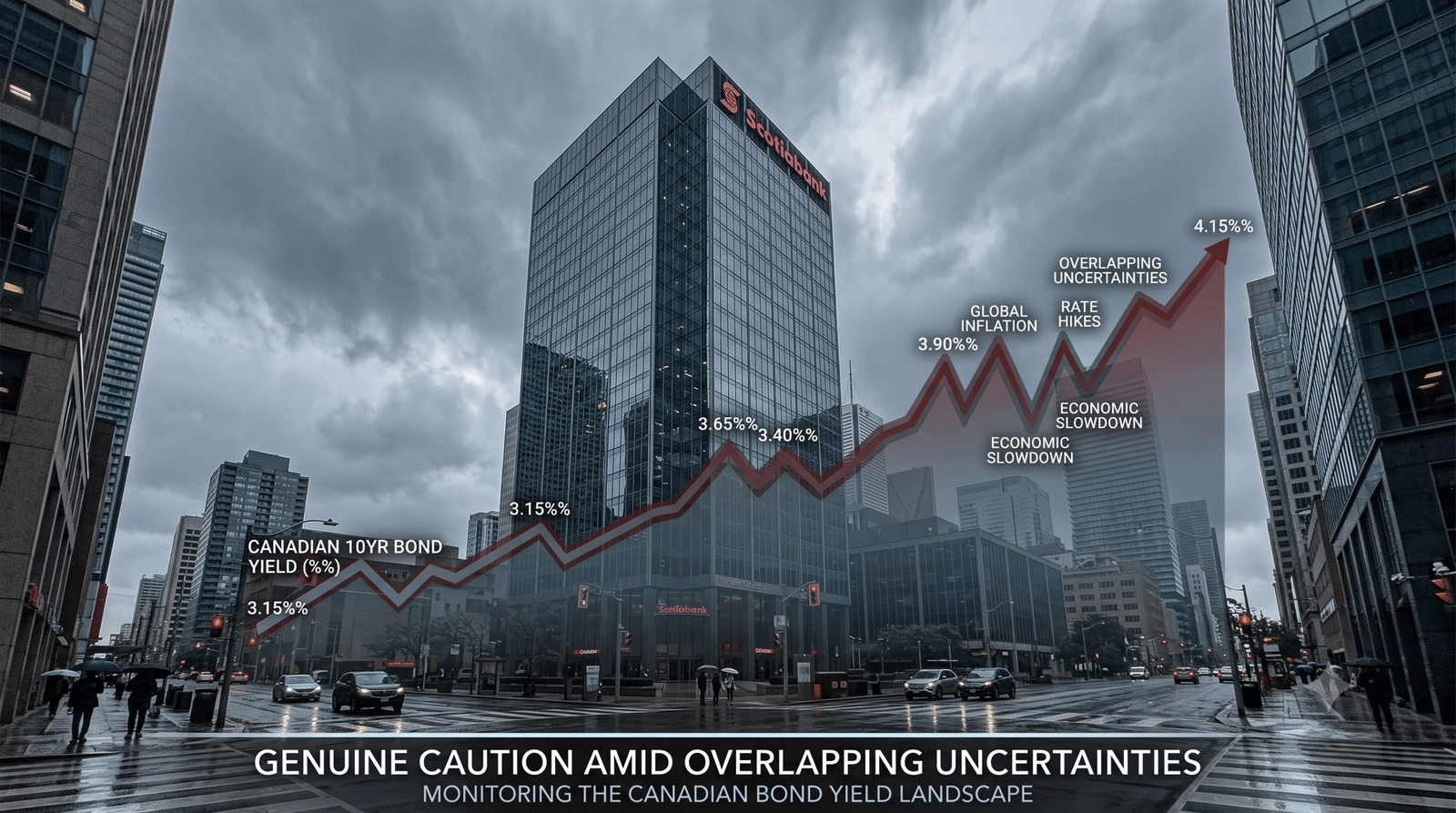
Elevated bond yields near a 20-month high create a genuinely difficult environment for financial sector valuations, even as higher rates can theoretically support net interest margins. The combination of trade uncertainty and persistently high borrowing costs represents a more challenging setup than markets faced just a week ago, when rate hold expectations had provided a more straightforwardly supportive backdrop for the sector.
Also Read: Best long term Canadian stocks
Sector Breakdown
Among Canada’s major banks, this week’s pressure reflects both direct trade-related uncertainty and the broader bond yield environment, a genuinely more complex combination than the single-factor rate-hold narrative that had supported the sector in prior weeks. Within diversified financial holdings, companies with meaningful cross-border exposure face additional scrutiny given the collapsed trade talks and Carney’s stated intention to retaliate with matching tariffs. The broader financial sector’s performance this week will likely depend heavily on how quickly, if at all, trade negotiations resume, given how directly this weekend’s breakdown has shifted market sentiment.
Risks to Watch
The most significant risk is that this weekend’s trade talks collapse proves durable rather than a temporary rupture, particularly given Trump’s stated intention Monday to raise tariffs on Canadian autos, auto parts, and steel to 50% starting January 1, 2027. Continued elevated bond yields, near a 20-month high, pose an ongoing risk to financial sector valuations and broader economic activity if the trend persists. The combination of trade uncertainty and rising rates creates a genuinely more challenging environment than either factor would produce independently.
What to Watch Next
Investors should watch closely for any signals of renewed Canada-U.S. trade engagement following this weekend’s breakdown, given its significant implications for the broader financial sector. Continued Treasury yield trends, following this week’s approach to a 20-month high, will remain important for gauging borrowing cost pressures. This week’s key U.S. inflation report will also be closely watched for its implications for the broader rate environment.
Final Outlook
Canadian financials face a genuinely more challenging backdrop this week, navigating both collapsed trade negotiations and elevated bond yields simultaneously. Investors should watch closely for signs of trade talks resuming, given how directly this weekend’s breakdown has shifted the sector’s near-term outlook.
Verdict: Neutral with selective opportunities, given the genuine uncertainty introduced by this week’s overlapping trade and rate developments.
Sign Up For our Newsletters to get latest updates