


- Market Context
- What Happened
- Why It Matters
- Sector Breakdown
- Risks to Watch
- What to Watch Next
- Final Outlook
Market Context
The TSX Venture Exchange enters the week of June 8 with an unusually loaded macro backdrop. The TSX composite closed Friday at 34,413.45, down 2.28% on the day, following a broad risk-off selloff triggered by Broadcom’s underwhelming AI chip demand update and a simultaneous spike in bond yields after Canada’s May jobs report crushed expectations. For penny stock investors, that combination creates a difficult near-term environment: risk appetite is contracting, liquidity at the small-cap end of the market is thin, and bond yield pressure is making every small name with debt or negative cash flow harder to defend.
And yet the week ahead contains the single most important domestic catalyst of the quarter — the Bank of Canada’s June 10 rate decision at 9:45 a.m. ET. Markets currently assign a very low probability to a hike, with a hold expected across most forecasts. But the tone of the statement will matter as much as the rate number itself. Any language acknowledging that energy-driven inflation could require a future tightening would be read as hawkish and would compound the existing pressure on high-risk Venture names.
Beneath the macro noise, the TSX Venture penny segment is generating company-specific stories of genuine analytical interest. Americas Gold and Silver’s Friday session was one of the more counterintuitive events of the month: a drill result showing grades up to five times the current resource estimate sent the stock down nearly 20%, not up. Understanding why that happened reveals something important about how the penny segment prices geological good news in a complex balance-sheet context.
Also Read: Top Canadian tech AI stocks
What Happened
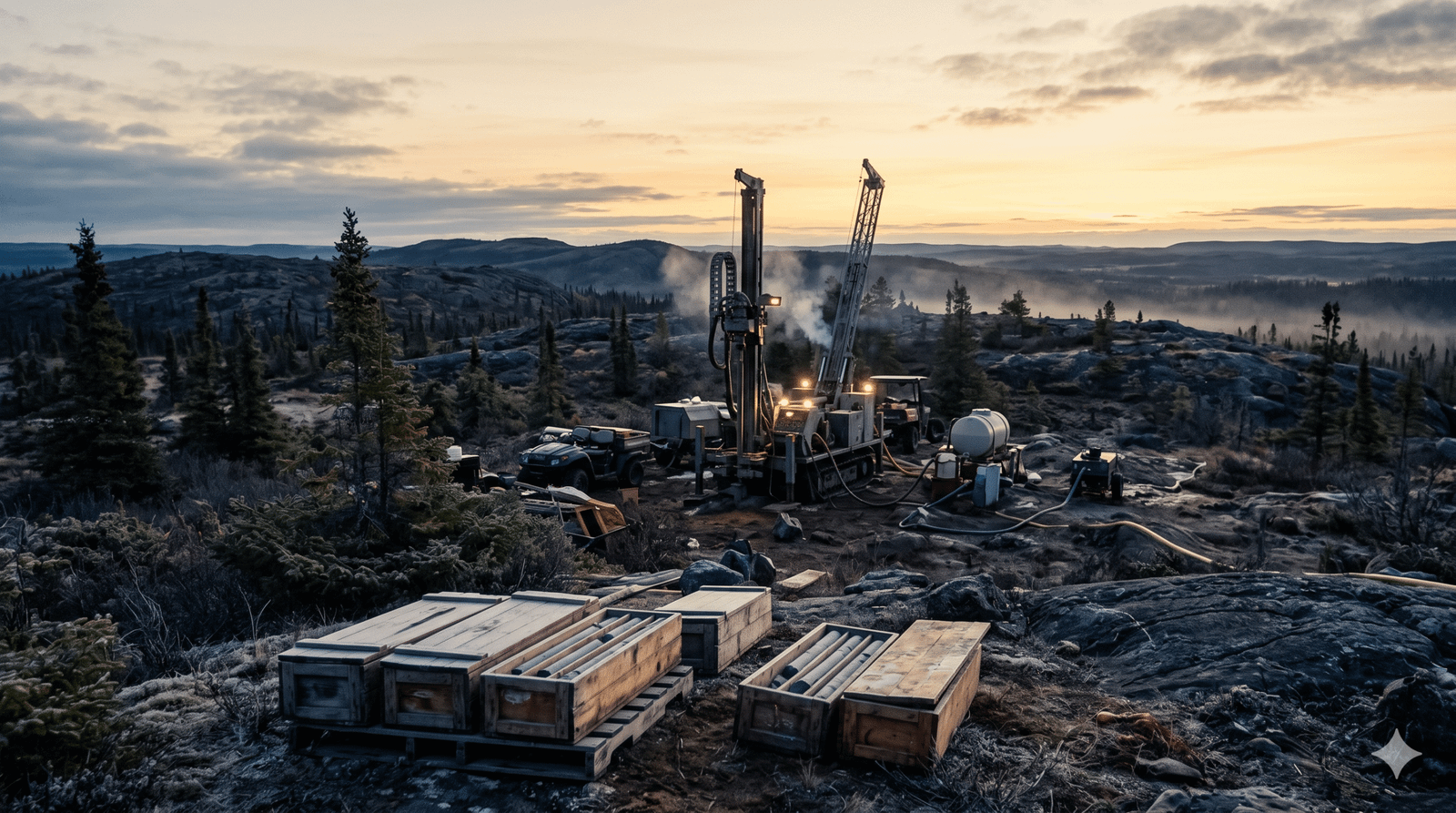
Americas Gold and Silver fell 19.7% after releasing high-grade silver drill results from its Cosalá complex. The intercepts showed silver grades up to five times above current resource estimates — figures that would typically excite the exploration community. However, the market reacted negatively, and the reasoning is instructive. These high-grade intercepts are not yet incorporated into the company’s reserve estimates or near-term production forecasts, meaning they add geological potential without adding near-term cash flow. The company targets 2026 silver production of between 3.2 and 3.6 million ounces, and that target does not benefit from drill results that require years of permitting, engineering, and capital deployment before they reach a mine plan. Meanwhile, the company carries a heavy debt load, meaning investors are not simply buying optionality on a promising ore body — they are also buying the financing risk associated with getting that ore body into production. The result was a steep selloff despite unambiguously good geological news.
West Fraser Timber saw a more modest but still meaningful development, with major analysts trimming their price targets — CIBC and TD Securities both revised down slightly — citing increased caution on execution risks, while maintaining their overall positive outlook on the company. West Fraser’s 2025 Sustainability Report highlighted significant emissions reductions and innovation in autonomous trucking pilots, reinforcing competitive positioning, but the target trim signals that the analyst community is applying more conservative assumptions to near-term delivery.
On the more constructive side, Hemisphere Energy continues to offer a different kind of penny stock profile. The company remains debt-free, with quarterly net income of approximately CA$7.87 million, and maintains a consistent dividend yield of approximately 5%. The narrative here is not explosive growth but rather capital-light resilience — a characteristic that stands in stark contrast to the leveraged names in the segment.
Why It Matters
Good Geology Is Not the Same as Good Investment
The Americas Gold and Silver selloff on a positive drill result is a textbook illustration of a principle that small-cap investors sometimes forget: geological upside and investment upside are different things. A company with high-grade drill results but a heavy debt load, no near-term production contribution from those results, and a market that is already pricing in elevated risk may see a positive operational announcement treated as a dilution or financing event — not a value creation event. Investors in the Venture segment would be well-served to always hold the balance sheet alongside the geology when evaluating small-cap resource names.
Analyst Target Trims Signal Execution Caution
West Fraser’s modest target trimming by CIBC and TD is a different but equally important signal. When two major Canadian bank analysts revise downward on execution risk — not on fundamentals — it often means the market premium assigned to a recovery or growth narrative is being recalibrated against the real-world difficulty of delivering on the operational plan. For penny investors tracking timber and forest products names, this is a prompt to revisit the basis for any optimism embedded in current prices.
Also Read: Best long term Canadian stocks
Sector Breakdown
The TSX Venture penny space this week spans three distinct sub-themes. The resource exploration names — Americas Gold and Silver is the most visible example — are struggling with the gap between promising geology and the capital and time required to monetise it, particularly against a backdrop of elevated debt costs. The timber and forest products names, including West Fraser, are navigating a transition where sustainability credentials are building long-term value but short-term execution risk is being priced with less generosity than it was six months ago. And the energy-adjacent penny names — Hemisphere Energy most clearly — are benefitting from elevated oil prices while their conservative financial structures allow them to absorb volatility that would impair more leveraged peers. The contrast between these three sub-themes is unusually sharp right now, and it makes broad-brush approaches to the Venture board particularly unreliable.
Risks to Watch
The Bank of Canada’s June 10 decision carries the most immediate risk for the Venture segment. A hawkish tone would pressure risk assets broadly, and thin-liquidity penny names would feel that pressure disproportionately. Americas Gold and Silver faces the compounding challenge of near-term silver price volatility — prices fell Friday as bond yields rose — against a debt-heavy balance sheet that reduces its ability to wait out market cycles. West Fraser’s execution risk is real and acknowledged by its own analyst community. And for the broader segment, the USMCA review on July 1 adds trade exposure risk for any small-cap with cross-border revenue or supply chain dependencies, a category that includes multiple timber and materials names.
What to Watch Next
June 10 is the dominant near-term event for Venture sentiment. Investors monitoring Americas Gold and Silver should watch for any update on when the high-grade drill intercepts might be incorporated into a formal resource estimate revision — that is the milestone that would translate geological good news into investable financial upside. West Fraser’s next earnings report will be watched for confirmation that analyst execution concerns are not materialising in actual results. For Hemisphere Energy, the oil price trajectory in the wake of any Iran ceasefire developments remains the primary external variable, as production economics are closely tied to WTI benchmarks.
Also Read: Stock investment Canada for beginners
Final Outlook
The TSX penny segment entering the week of June 8 is one of genuine dispersion: the best stories are demonstrating balance sheet resilience and real cash flows; the riskiest are sitting at the intersection of elevated debt, speculative geology, and a tightening risk-appetite environment. That dispersion demands individualised analysis rather than sector-level positioning.
Hemisphere Energy’s combination of no debt, positive cash flow, and a 5% dividend yield makes it one of the more defensible Venture names in the current environment. Americas Gold and Silver illustrates how geological promise and investment opportunity can diverge sharply when balance sheet quality is insufficient to bridge the gap. The June 10 Bank of Canada decision will set the tone for risk appetite across the segment for weeks to come.
Sign Up For our Newsletters to get latest updates